Blog Archives
LYL: côte d’azur cure-all soup
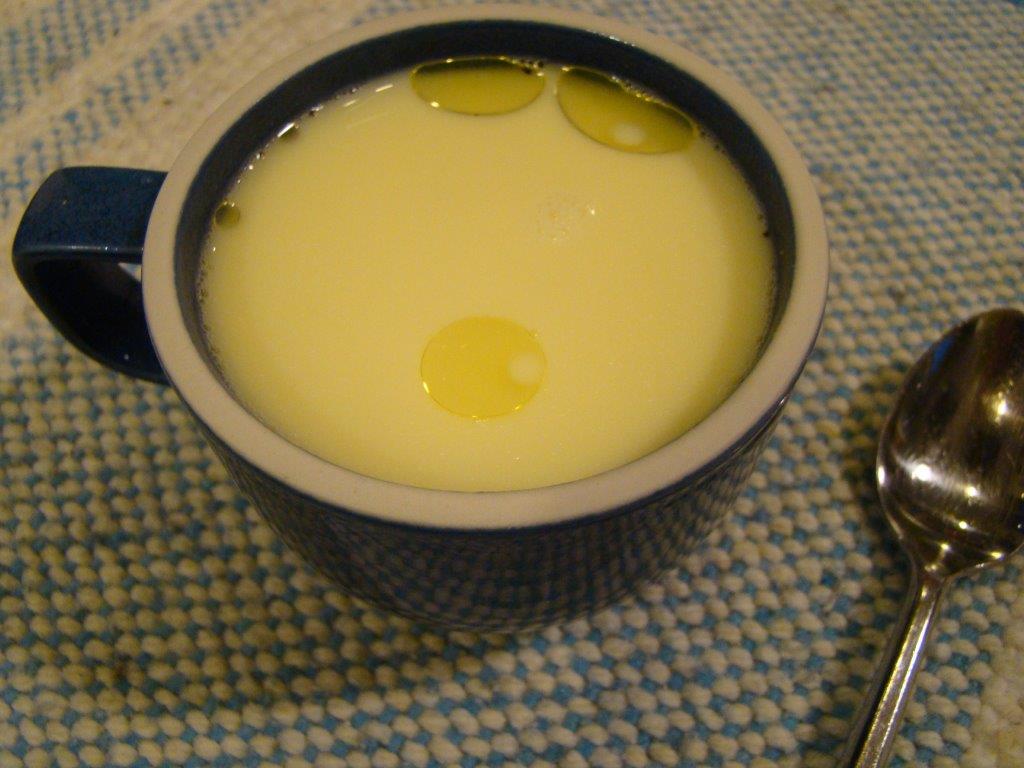
Last week, Howard and I took a brief tropical interlude from winter, visiting our parents in South Florida. When we returned mid-week, the snow piles were noticeably smaller, but Old Man Winter has made it clear that even today, on the first day of spring, he’s not quite ready to give up his grip on cold weather. It’s been downright cold with a dusting of snow expected later today.
Fortunately, this week’s recipe for French Fridays with Dorie was the perfect antidote to days of the typical vacation diet (too much) and readjusting to cold temperatures. Côte d’Azur Cure-All Soup reminded me of the “stone soup” story. Who would think that a head of garlic and some herbs simmered in water would be something good to eat? Though the ingredients didn’t seem promising, this is truly a recipe for making something from practically nothing.

You start by slicing an entire head of garlic into thin slices. This step was tedious, but not terrible. Oh, was I ever missing the never-used mini-garlic mandoline that I discarded in my last kitchen drawer purge… You really never know when you’ll need something. I wish I’d put in the box with the spaetzle press that turned out to be so useful, rather than the Goodwill bag.
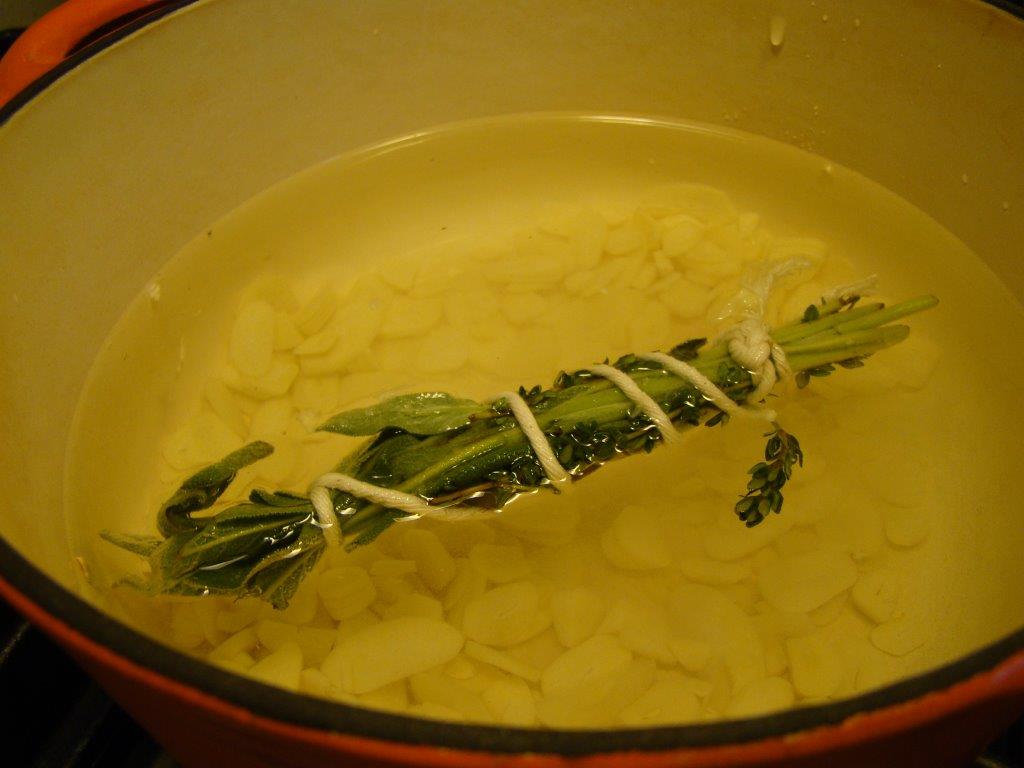
The slivered garlic, a bouquet garni of thyme and sage sprigs and some bay leaves, and some salt are simmered in water for half an hour. I was surprised by how much flavor the resulting broth had. It definitely tasted of garlic, but mellow with no residual sharpness or bitterness.
Dorie gives the option to puree or not to puree. (I chose not to puree which is said to be more traditional.) To finish the soup, egg yolks are whisked with grated Parmesan cheese. (More egg whites to use, getting tired of croquants!) Then the cheesy blob is tempered with some warm soup before whisking it back into the broth.

I wasn’t sure what would end up in the pot with the various warnings and caveats in the recipe. The egg yolks were meant to thicken the soup. The warm soup mixed with the egg mixture was meant to prevent curdling. I was imagining something between Chinese egg drop soup and Greek Avgolemono soup. When the egg and cheese mixture was mixed back in, the soup became opaque and a pale lemony yellow. It remained smooth and thickened only slightly. I could have added more egg yolks to make it thicker, but I decided not to.
I drizzled some olive oil from Provence on each bowl and served this as a starter before a quick version of cassoulet for our first post-vacation home-cooked meal, one with a French twist.
The soup was light and flavorful. Even though it was good, I’m not sure I’d make it again. I’d be more likely to try the imagined egg drop or Avgolemono soup, neither of which I’ve made before.
To see how my Dorista friends made out with their restorative soups, check out their links here. You can also find the recipe in Dorie Greenspan’s book Around My French Table.
(not veal) pork marengo {ffwd}
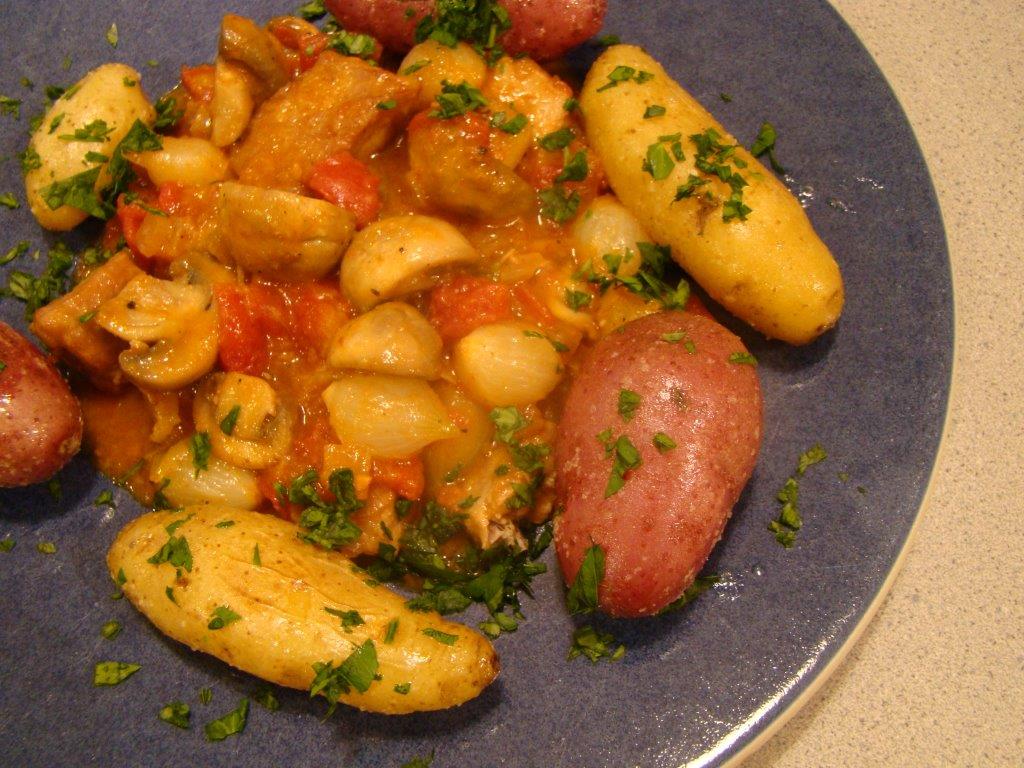
It makes me sad to say it, but with this week’s recipe for French Fridays with Dorie, we begin the countdown of the final 10 recipes in the book. I won’t get overly reflective yet, but it is hard to believe the end of this journey is in sight.
This week, spring’s been in the air. There are still huge mounds of melting filthy snow, but the air is different. I think I can smell the lovely scent of dirt. In the transition from winter into spring, a bowl of stew can still be satisfying if it’s not too heavy or light. Veal Marengo fits that bill.
Marengo is an old French classic, created by Napoleon’s chef to celebrate victory in the Battle of Marengo. It might be classic, but I’d never had it before. I made some adjustments to it to suit our tastes, but I think it probably tastes close to the original.
We seldom eat veal, so first thing, I swapped out the veal, using chunks of pork tenderloin instead. I also thought the recipe was stingy on the vegetables. Come on, 12 pearl onions, 8 mushrooms, and 8 potatoes for a dish that serves four? I added about a pound of onions, a pound of mushrooms, and over a pound of fingerling potatoes.

To start, the meat is tossed in seasoned flour and browned in oil. Then, onions are sautéed then simmered briefly with diced tomatoes, tomato paste, white wine, and a bouquet garni. The meat is added back and cooked in a low oven until the meat is tender.

In the meantime, the onions are glazed in butter, the mushrooms are sautéed, and the potatoes are boiled, then glazed in butter. Finally the onions and mushrooms go into the skillet for the flavors to meld for a few minutes.

The Marengo is served with potatoes on the side (or in our case, around), sprinkled heavily with parsley.
We both enjoyed this meal. Howard said it reminded him of something else I’d made, but couldn’t remember what. Maybe he was thinking of the osso buco, which was tomato-based, though had different seasonings and vegetables?
To see how the other Doristas interpreted this recipe, check out their recipes here. You can find the recipe in Dorie Greenspan’s book Around My French Table. If you haven’t bought the book yet after all this time, what are you waiting for?
 A Plateful of Happiness