(oops) cheesecake tart(lets) {ffwd}
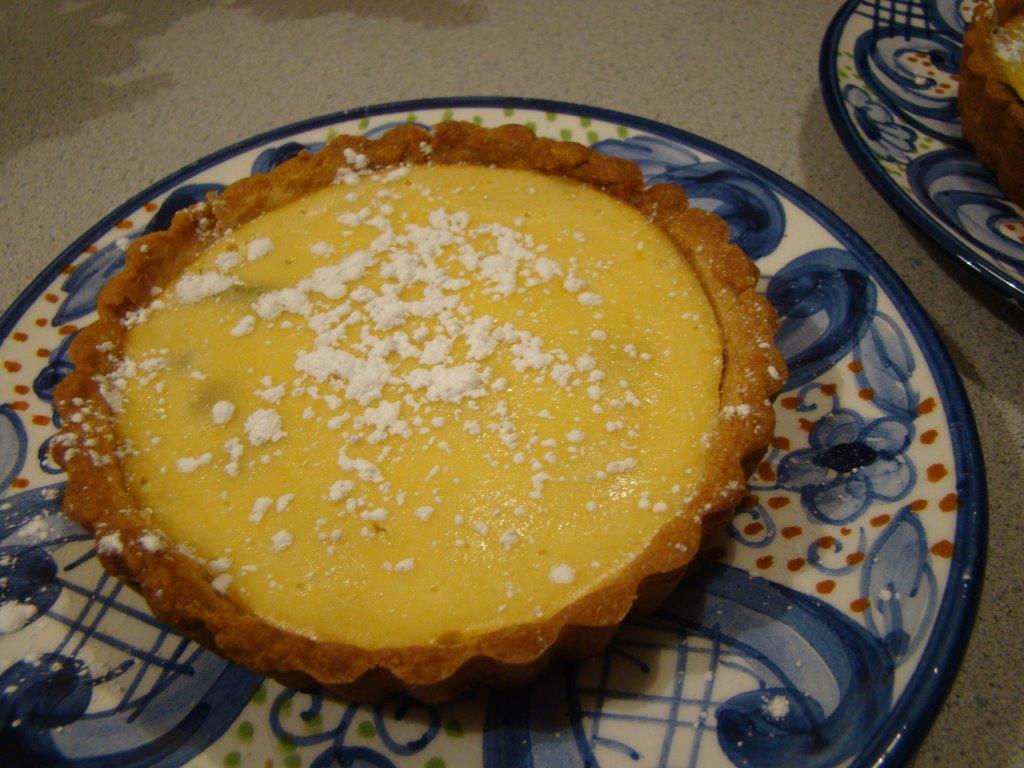
We’re all entitled to make mistakes. Even though I helped set the schedule, I went on memory and thought the dessert we were making for French Fridays with Dorie this week was the cheesecake tart. Turns out that it’s Waffles and Cream. Think of this as a preview. I’ll make the waffles when I get chance, but I might wait until the week everyone else is making the cheesecake tart.
We’ve been friends for a while now. So I’m comfortable telling you how it is. I am an adventurous eater, and there is little I won’t eat. There is one food, however, that causes me to have a visceral reaction of revulsion. I only have to think of it, not even actually see this food. Can you guess what it is? Well, I’ll tell you. It’s cottage cheese. I don’t know what it is about it. I think it’s the curds. Ricotta doesn’t bother me, or fresh goat cheese, or farmer’s cheese, but I simply cannot deal with curdy cottage cheese. That’s just the way it is.
This week, I made the cheesecake tart recipe for French Fridays with Dorie. The main ingredient is fromage blanc. Fromage blanc is a fresh low-fat cheese with a soft texture like crumbly cream cheese or farmer’s cheese. It’s not a common grocery item, but knowing that the recommended substitute was cottage cheese, I knew that I had to find the real thing.
I was looking for Vermont Creamery’s version of fromage blanc because I’ve seen it around. Instead, I found one made at Nettle Meadow Farm in the Adirondacks of New York State. (Cher, do you know the farm?) This award-winning fromage blanc is made from goat milk and flavored with honey and lavender. That seemed perfect for a dessert. I love how the package lists the different plants the goats forage on! If you can’t read the label, it says: “This cheese is a sumptuous concentration of the organic grains and wild herbs our goats and sheep eat every day, including wild raspberry leaf, nettle, kelp, comfrey, garlic, barley, goldenrod”.
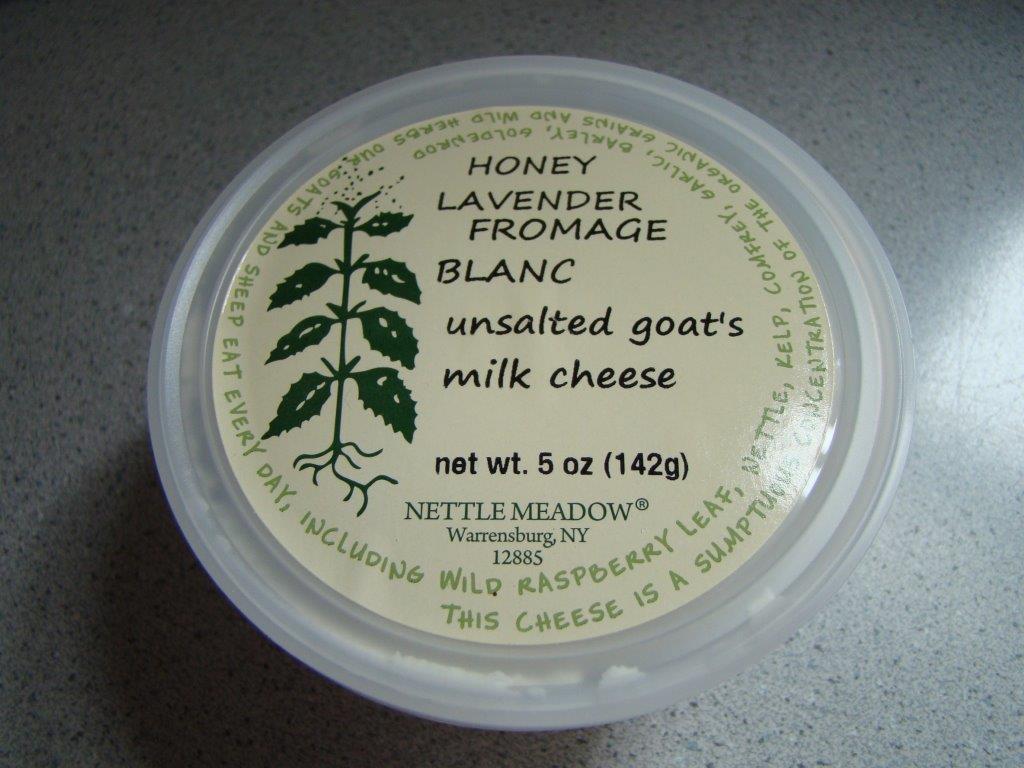
I minified this one: one third of the recipe to make 2 mini tarts. One with dried fruit for me, and one without for Howard.
The tart starts with Dorie’s Sweet Tart Dough. This pastry is one of my favorite recipes in Around My French Table. I always press it into the pan, no rolling required. And the result is like a shortbread cookie base for whatever delicious filling you choose.
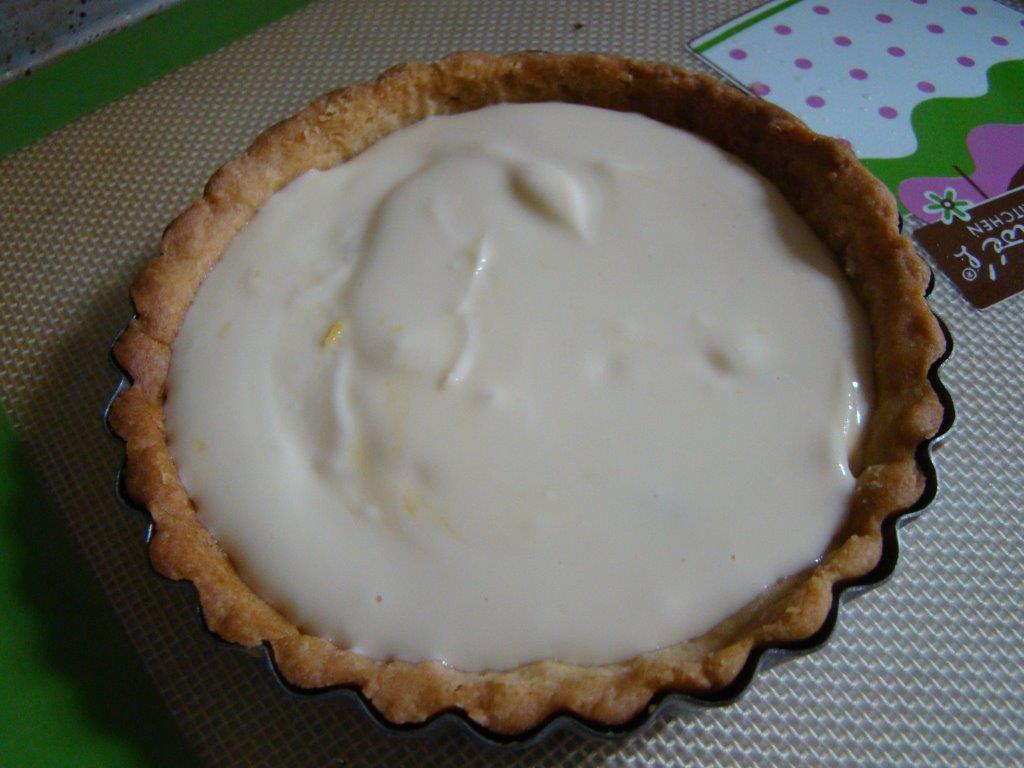
For the cheesecake tart, the creamy filling is made from processing the fromage blanc and the other ingredients until it’s smooth. A slurry of cornstarch and milk helps thicken it up.
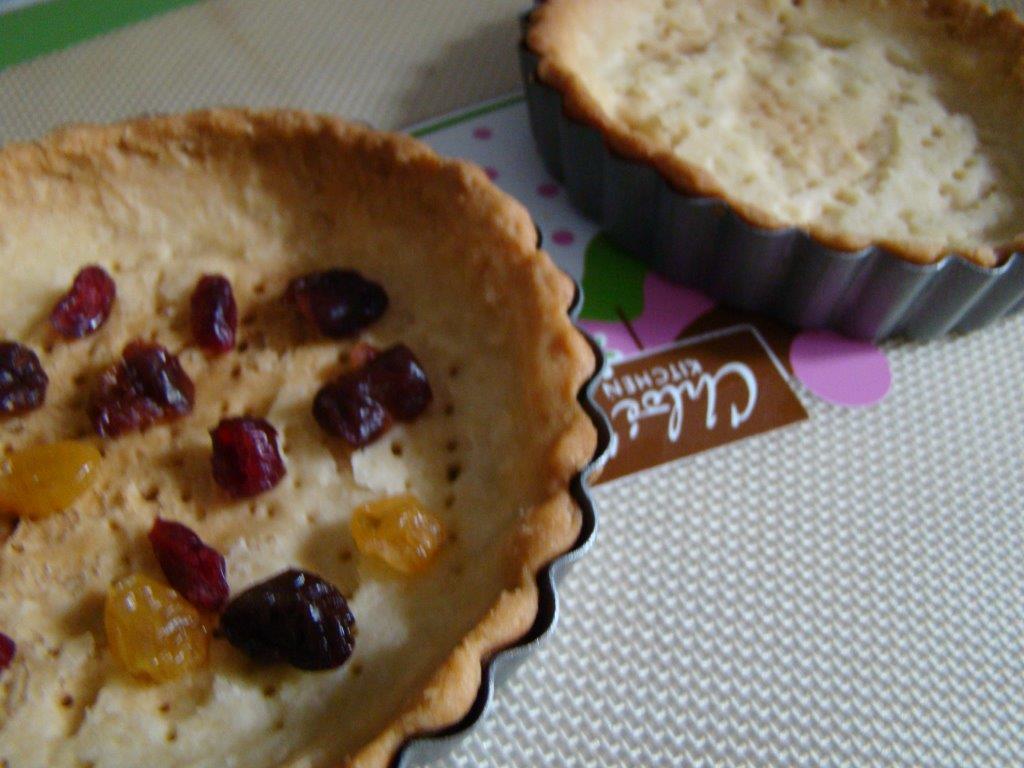
One with fruit, one without
First, you sprinkle a spoonful of dried fruit (I had a medley of golden raisins, cranberries, cherries, and blueberries) on the bottom of the tart (or not, for Howard). Then, you pour in the filling and bake it until it puffs up. Once cooled, all it needs is a sprinkle of powdered sugar before serving.
When I said I was making a cheesecake tart, Howard stopped listening after I said “cheesecake”. He was imagining a New York Cheesecake, not a French one. Once he got over the initial disappointment, we agreed that it was good, not too sweet or tart or heavy. We both liked It, though next time I’ll surprise him with that New York Cheesecake.
You’ll have to wait until next month to find out how the other Doristas’ cheesecake tarts came out, but if you’re interested in their Waffles and Cream, check out their links here. The cheesecake tart recipe is in Dorie Greenspan’s book Around My French Table.
Inspirations in Ink: The Soup Club Cookbook
 I love the serendipitous pleasure of coming across a cookbook that I’ve never heard of, one that grabs me and pulls me in. Such is the case with The Soup Club Cookbook by Courtney Allison, Tina Carr, Caroline Laskow, and Julie Peacock. From the cover depicting Weck canning jars filled with soup, to the explanation of what’s a Soup Club and how to start one, to the recipes inside, there so much to love about this book.
The authors, four friends and neighbors in New York City, formed a Soup Club, an ingenious idea where they each take turns making and delivering soup to the others. This idea allows them to share their love of food and cooking. For the cook of the week, it gives her the pleasure of sharing food from her own kitchen, and for the others, they can count on enjoying a home-cooked meal with minimal effort.
The authors lay out the basics for novices, like how to stock your pantry and how to make assorted homemade broths to serve as the foundation for the other recipes. Even an experienced cook will learn things. The tips on cooking large quantities of soup are helpful reminders as well.
In addition to recipes for simple vegetable, fish, beef, and chicken broths, you’ll find a variety of innovative soup toppers to try. At the top of my list are the Grilled Cheese Croutons and flavored Crème Fraîche.
Coming from four different home cooks with different backgrounds and tastes, the recipes cover a wide range of flavor profiles. The soups are grouped into sections based on the style of soup.
- The first group of recipes is for “Soups of Assembly” which start with broth and transform to a meal with the addition of other ingredients to create a “composed” soup, such as “faux” ramen and pho.
- Moving along to bean soups, you’ll find new (to me) variations on the standards of split pea (green or yellow), lentil, and black bean soups. I’m looking forward to trying the Spanish Chickpea and Spinach Soup.
- If you prefer smooth, pureed soups, the “Purees” section offer recipes using whatever vegetables happen to be in season. I’m glad it’s almost spring because the Roasted Asparagus Soup looks especially good.
- Hearty soups are chunkier. Recipes cover the agricultural cycle, from a creamless winter corn chowder to a summery zucchini soup with salsa flavors. The Senegalese Peanut Soup is the recipe that most intrigues me from this section.
- Summer seems a little closer when browsing the recipes for “Chilled” soups. For now, I’ll have to just imagine enjoying a refreshing bowl of Gazpacho (tomato, green, or watermelon).
- The book includes a handful of “Fish” soups, most notably a Thai Fish Curry.
- While most of the book leans towards vegetarian recipes, it is not a vegetarian cookbook. A section of “Meat” soups will satisfy the carnivores in your household with a bowl of comfort. The Filipino Healing Soup, with a full pound of ginger, is marked with a bookmark.
Each soup recipe includes suggested tips on how to package for delivery and finishing instructions for the recipient. Most of the recipes include accompanying garnishes to be added at serving time, and a few require some additions for ingredients that are best added at the last minute.
The spirit of the book wants you to share your soup, but the recipes can be reduced for single household quantities. I successfully quartered the Sun-Dried Tomato Soup, using oven-dried tomatoes and chopped basil that I’d stashed in the freezer over the summer.
As a bonus, the back half of the book gives recipes for soup accompaniments including salads and salad dressings, breads, snacks, side dishes, and even a few main dishes. As with the soup recipes, the collection of non-soup recipes make shareable quantities, so also lend themselves to casual party or potluck fare. All of the recipes are straightforward, yet interesting. In many cases, variations are suggested so you can make the recipe your own.
The different authors’ voices intertwine in the recipe headers and margin notes as the four friends talk about their recipes, their cooking strategies, and the Soup Club. Their commentary makes me want to be their friend, hanging out with them, eating, cooking, and just talking about food. In addition to the engaging text and appetizing photos, the hand-drawn illustrations made me smile.
I find the concept of the Soup Club to be appealing because I love to share the food I cook. At the moment, I can’t think of enough friends that would commit to participating. That doesn’t mean it couldn’t happen in the future. (Local friends, let me know if this is something you’d enjoy doing with me.)
If you already like soup or want to be motivated to make more of it, this book is for you. if you belong to a CSA with its steady supply of fresh seasonal vegetables, this book will help you answer the question of what to do with “all of that…” — you fill in the blank.
I can honestly say that, with exception of one recipe that contains shredded coconut (which I could omit), every recipe in the book appeals to me and is something I would possibly make for myself. I’ll let the seasons be my guide as I continue to sample the recipes in this book, using the freshest ingredients as their harvest time cycles by.
A Plateful of Happiness Rating: 4.5 plates (out of 5)
Disclosure: I received this book from Blogging for Books for this review. The opinions expressed are my own.
 A Plateful of Happiness