Cauliflower Love {CtBF}

I loved most vegetables, but there were always a few exceptions, like broccoli, cauliflower, and a few root vegetables like rutabagas and turnips. Then I discovered roasting vegetables. When the outside caramelizes and starts to scorch, the sugars come out and the texture gets creamy. All those vegetables I was unconvinced about suddenly became favorites.
This week, I had a cauliflower trifecta. It started with the latest recipe for Cook the Book Fridays: Dukkah-Roasted Cauliflower. This recipe from David Lebovitz’s My Paris Kitchen one ups simple roasted cauliflower. First, you start the cauliflower florets roasting. After about half an hour, even though I would usually consider the cauliflower done, it’s tossed with dukkah and roasted some more. When it’s done, it’s crusty on the outside and melting on the inside. Delicious!
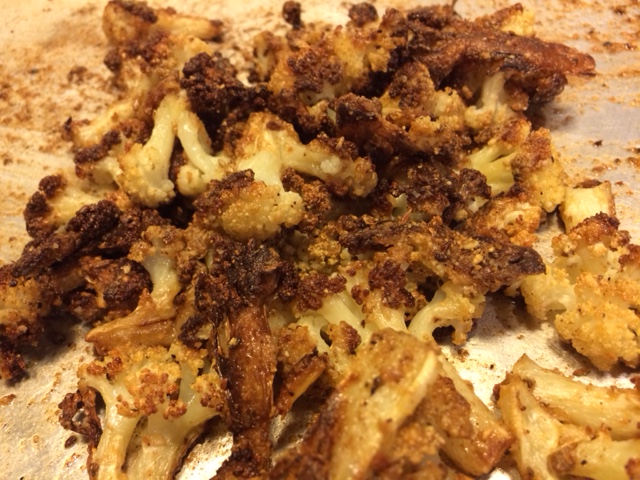
As for the dukkah, a while back, I bought a jar at Trader Joe’s. We dipped bread into olive oil and the Egyptian spice and nut mixture. It was good, but not exceptional. For the cauliflower recipe, I made my own dukkah (per David Lebovitz’s instructions), and as you might expect it was a completely different story. A mixture of toasted hazelnuts, toasted seeds (pumpkin, sesame, coriander, cumin, fennel, peppercorns) and kosher salt are ground up though not too fine. The fragrance was amazing. I can’t wait to have a chance to try dipping bread in the leftover dukkah!
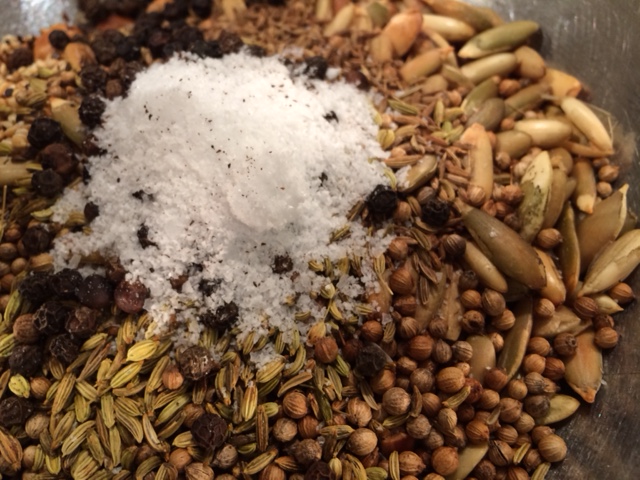
The cauliflower makes a great side dish. My cauliflower must have been small because there is no way it made 4 servings, only 2. Next time I’ll make two whole cauliflowers to ensure leftovers. This is a definitely new favorite.
The second hit was a whole roasted cauliflower with an almond-herb sauce from the New York Times by way of Joanne Weir’s new cookbook Kitchen Gypsy. The entire cauliflower is roasted in a hot cast iron pan for 1-2 hours until burnished on the outside and melting on the side. I shared it with a friend for dinner, so we just cut it in half, covered it in sauce, and served it with jasmine rice and salad. I’m seriously excited about cauliflower.
This week I’m in Philadelphia visiting my sister. The catalyst was the chance to attend the 76ers basketball game on Harvey Pollack Tribute Night with my sisters, aunt, and cousins. My great-uncle Harvey, who passed away last summer, was a unique character and a basketball legend. He wasn’t a player, rather a statistician, known affectionately in the NBA as “Super Stat”. He expanded what’s collected and “invented” many of the stats in use today (like triple-doubles). Even though the team lost the game, we all had a great time and were proud to be there to help celebrate our uncle’s achievements.


While I’m in town, my sisters and niece and I went to dinner at Zahav, a modern Israeli restaurant in downtown Philadelphia. We enjoyed a tasting menu where each dish was better than the next. One of the standout mezze we had was the fried cauliflower with an herb-and-garlic labneh for dipping. I’m inspired to try this at home with roasted cauliflower, maybe even coated with dukkah.
If you want to know how my friends enjoyed their cauliflower, check out their links here. Due to copyright considerations, I don’t publish the recipes here. You can find the cauliflower on page 224 of David Lebovitz’s My Paris Kitchen (Dukkah recipe on page 81). Or feel free to drop me a line and I’ll share it with you.
Cottage Cooking Club: February 2016


Cottage Cooking Club is in the final stretch of cooking through Hugh Fearnley-Whittingstall’s River Cottage Veg, a vegetarian cookbook filled with new ideas for eating your vegetables.
I had more hits than misses this month. I tried out three of the choices offered by the group’s leader Andrea, The Kitchen Lioness. Here are my reviews.
The Apple and Blue Cheese Toasties caught my eye as something to enjoy for a quick lunch alongside a bowl of soup. I always fall for grilled cheese, in any form. Toasties, which are melted under the broiler, are a great alternative to breaking out the frying pan.

I went all the way and baked my own no-knead whole wheat bread to use for the rustic country bread base. The topping was a mixture of grated apple, crumbled blue cheese and a touch of mayonnaise to bind it together. I love apple and cheese together, but to be honest, I found the blue cheese a bit too sharp. I made these a second time with grated cheddar cheese instead of blue which was a more appealing combination for my taste buds. I usually have all the ingredients on hand for the cheddar version, so I’ll definitely make these toasties again.
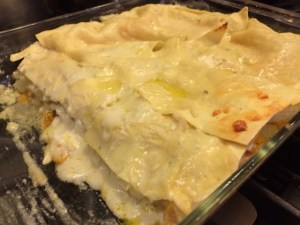
The Squash and Fennel Lasagna was also a hit. I typically make tomato-sauce-based lasagna, but have enjoyed white-sauce-based versions in the past. I love when a recipe offers a takeaway tip or technique that I can add to my arsenal to use in other dishes. Here I learned to steep the aromatics (onion, celery, bay leaf, and peppercorns) in the milk and then strain them out before making the béchamel. The flavors infused the milk and hence the sauce for an extra depth that surprised me. This lasagna has one layer of roasted butternut squash cubes and one layer of a mixture of sliced fennel and crumbled goat cheese. I ended up using a little less sauce over each layer and adding a final layer of lasagna noodles on top of the fennel-goat cheese layer, then crowning it with the remaining sauce and the Parmesan cheese. I served the lasagna with a green salad to round out the meal. I always feel like white lasagna is a “dressier” version of the dish, so one that company would enjoy. This will appear on my table again too.

The final recipe I tried this month were the DIY Pot Noodles. These were fun to put together and beautiful to look at. A canning jar is filled with quick-cooking noodles and a colorful assortment of vegetables (grated carrots, shredded lettuce, sliced scallions, a handful of frozen peas) and aromatics (veggie bouillon cube, grated garlic and ginger, a pinch of brown sugar). To pull it all together, fill the canning jar with boiling water and wait for 10 minutes, stirring occasionally. This is long enough to soften the noodles and vegetables. The final touch is a splash of soy sauce and fresh lime juice . Now, enjoy a delicious “bowl” of “instant” soup. This recipe offers a formula to play around. The combinations are endless.
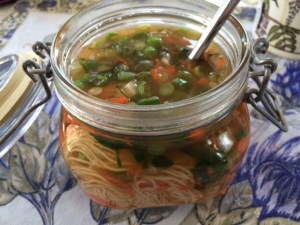
I need to solve one challenge. When I put this together right before adding the water, it was a magical bowl of hot soup. I would love to be able to assemble these jars the night before for a quick meal, at work or at home. When I tried making them ahead and keeping them ready in the fridge overnight, pouring the boiling water into the jar didn’t have the quite same effect. The contents didn’t soften completely, and the soup was lukewarm. Any suggestions for perfect this for the lunchbox?
So, another month of delicious recipes down, and a couple more left to come. As always, I’m looking forward to the recipe reviews of the other Cottage Cooking Club bloggers, which you can read here.
Due to copyright considerations, I don’t share the recipes here, but you can find them in Hugh Fearnley-Whittingstall’s cookbook River Cottage Veg.

 A Plateful of Happiness