Category Archives: Soup
Cottage Cooking Club: December 2015

I’ve been cooking with the Cottage Cooking Club since last summer as the group collectively makes their way through Hugh Fearnley-Whittingstall’s vegetarian cookbook River Cottage Veg. This month, our “chief chef” Andrea, The Kitchen Lioness, offered us half the number of selections to be sure we could fit some Cottage Cooking into the busy month of December. I was up for the challenge and incorporated a few choices into the menu.
Every month (week, day, etc.), so many new recipes catch my eye. The source is varied, perhaps one of the many cooking magazines that arrive in my mailbox each month, a cookbook on my shelf, a recipe card at the grocery store, an email newsletter in my inbox, a stack of torn out or printed out recipes in one of my numerous piles (my sisters better not laugh) or just browsing the internet. I never lack inspiration, but I have a hard time keeping track of what I want to make. This month, I’m trying a new tactic to help myself. You might already do this, but it’s new for me. I’m keeping a running list on the refrigerator. At a glance, I can be reminded of appealing recipes and plan to make one. The satisfaction of checking off what I’ve made helps me resist making the list pages and pages long! Adding the Cottage Cooking recipes to the list ensured that I made them well before the end of the month deadline. If you have a technique for keeping track of recipes you want to make, please share! I’d love to improve on my organization.
This month, I chose two recipes from Andrea’s selection. The first one I made was Chachouka, a North African tomato and pepper stew served with eggs cooked right in the stew. I had a nearly-full jar of roasted peppers in the refrigerator, so I used them instead of fresh ones – the tomatoes were canned – so this became a pantry meal as well.

I love eggs for any meal, and though this was suggested for an easy supper, I served it as a lazy weekend morning breakfast (two mornings in a row). I made the stew the night before, then reheated it before adding the eggs and popping it in the oven. I found that it took about 15 minutes for the egg whites to set. My mother-in-law has made us the Israeli version (shashouka) before. Once she adds the eggs, she just covers the pan and continues to cook it on the stovetop. Honestly, that seems simpler. As far as I remember, both recipes are equally delicious, the main difference being the toasted cumin seeds in Hugh’s. I would make this again, for breakfast, lunch, or dinner, though I would definitely double the stew base next time.

My other choice this month was the Mushroom “Stoup” – stoup being something between a stew and a soup. As much as we liked the chachouka, this was even better. This “stoup” was a simple and hearty vegetable soup with the emphasis on mushrooms. There are two kinds of mushrooms, fresh button mushrooms and dried porcinis. The recipe called for 2 ounces of porcini. At $6.50 per ounce, I opted to use just one ounce, and it was fine. I used vegetable stock made from Hugh’s recipe, intending to add mushrooms to turn it into his mushroom stock variation, but I forgot to add them in. I was surprised at the depth of flavor of the soup as the other ingredients (onion, garlic, carrot, celery) were the typical workhorse accompaniers, but nothing special.
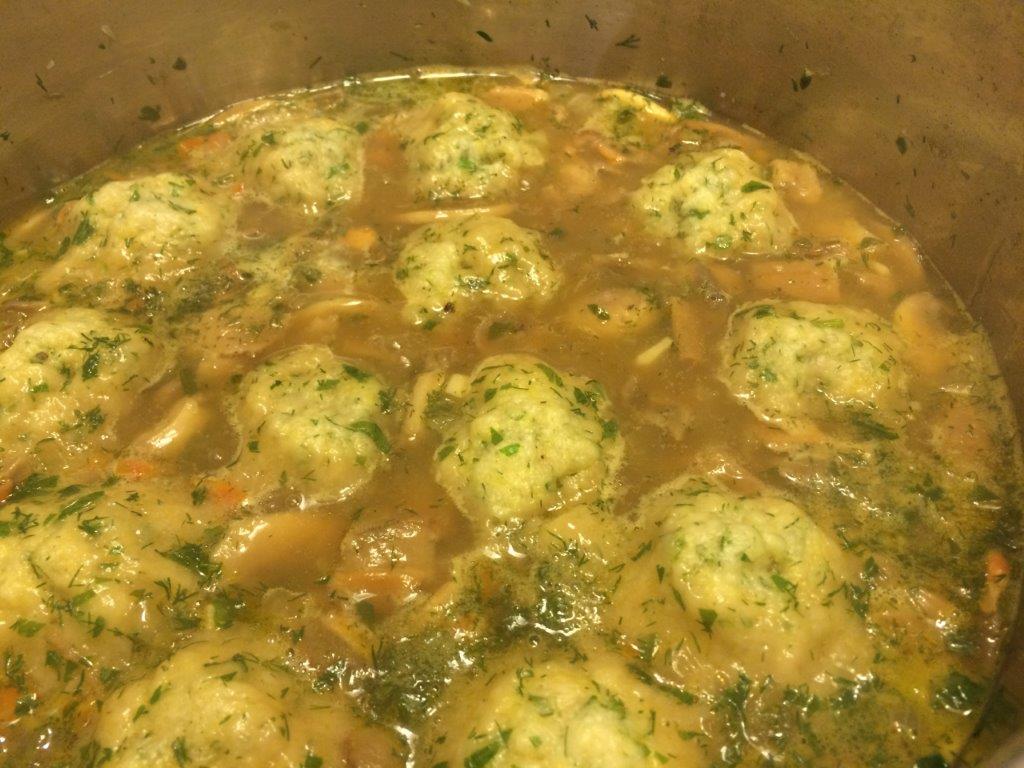
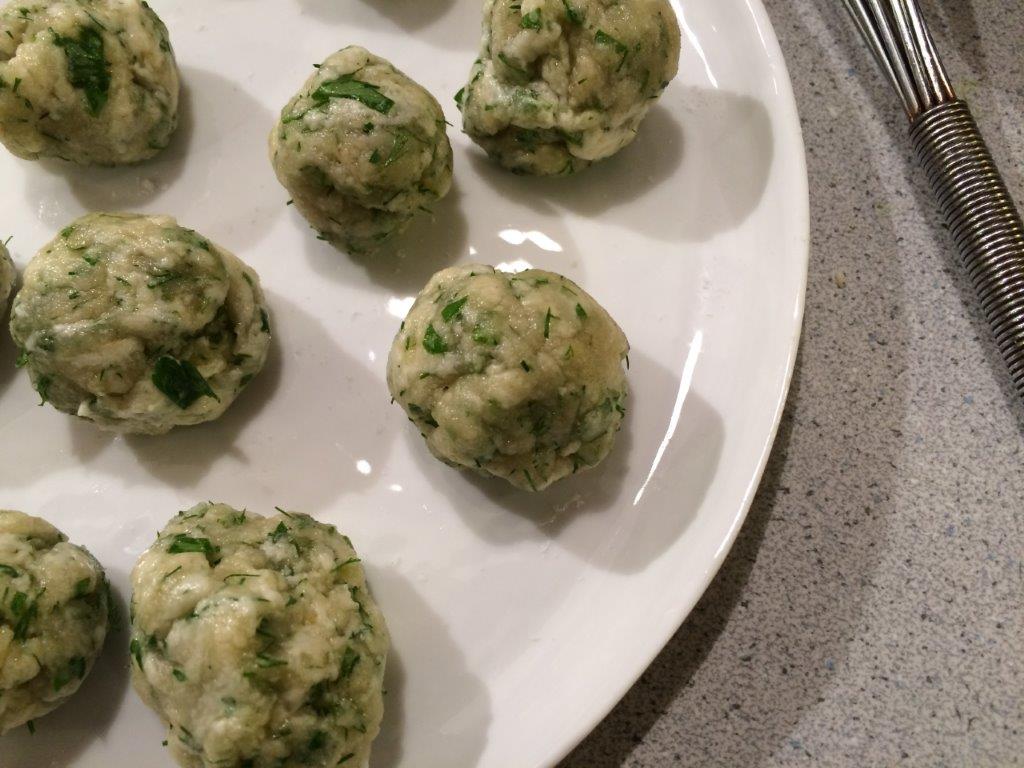
Turning this into a meal were the herby dumplings that cooked in the soup. I never made dumplings before. They are similar to matzo balls, which I make often, though a tad more delicate. I don’t know if that’s because I substituted vegetable oil for the shortening or for another reason. Regardless, they tasted delicious, and I’ll continue to experiment with dumplings to get it right.
I hope all of my Cottage Cooking Club friends had a wonderful holiday season and Christmas. To find out what they thought of their selections this month, follow their links here.
Happy New Year to all! I hope 2016 will be filled with delicious food shared with those you love.
Inspirations in Ink: The Soup Club Cookbook
 I love the serendipitous pleasure of coming across a cookbook that I’ve never heard of, one that grabs me and pulls me in. Such is the case with The Soup Club Cookbook by Courtney Allison, Tina Carr, Caroline Laskow, and Julie Peacock. From the cover depicting Weck canning jars filled with soup, to the explanation of what’s a Soup Club and how to start one, to the recipes inside, there so much to love about this book.
The authors, four friends and neighbors in New York City, formed a Soup Club, an ingenious idea where they each take turns making and delivering soup to the others. This idea allows them to share their love of food and cooking. For the cook of the week, it gives her the pleasure of sharing food from her own kitchen, and for the others, they can count on enjoying a home-cooked meal with minimal effort.
The authors lay out the basics for novices, like how to stock your pantry and how to make assorted homemade broths to serve as the foundation for the other recipes. Even an experienced cook will learn things. The tips on cooking large quantities of soup are helpful reminders as well.
In addition to recipes for simple vegetable, fish, beef, and chicken broths, you’ll find a variety of innovative soup toppers to try. At the top of my list are the Grilled Cheese Croutons and flavored Crème Fraîche.
Coming from four different home cooks with different backgrounds and tastes, the recipes cover a wide range of flavor profiles. The soups are grouped into sections based on the style of soup.
- The first group of recipes is for “Soups of Assembly” which start with broth and transform to a meal with the addition of other ingredients to create a “composed” soup, such as “faux” ramen and pho.
- Moving along to bean soups, you’ll find new (to me) variations on the standards of split pea (green or yellow), lentil, and black bean soups. I’m looking forward to trying the Spanish Chickpea and Spinach Soup.
- If you prefer smooth, pureed soups, the “Purees” section offer recipes using whatever vegetables happen to be in season. I’m glad it’s almost spring because the Roasted Asparagus Soup looks especially good.
- Hearty soups are chunkier. Recipes cover the agricultural cycle, from a creamless winter corn chowder to a summery zucchini soup with salsa flavors. The Senegalese Peanut Soup is the recipe that most intrigues me from this section.
- Summer seems a little closer when browsing the recipes for “Chilled” soups. For now, I’ll have to just imagine enjoying a refreshing bowl of Gazpacho (tomato, green, or watermelon).
- The book includes a handful of “Fish” soups, most notably a Thai Fish Curry.
- While most of the book leans towards vegetarian recipes, it is not a vegetarian cookbook. A section of “Meat” soups will satisfy the carnivores in your household with a bowl of comfort. The Filipino Healing Soup, with a full pound of ginger, is marked with a bookmark.
Each soup recipe includes suggested tips on how to package for delivery and finishing instructions for the recipient. Most of the recipes include accompanying garnishes to be added at serving time, and a few require some additions for ingredients that are best added at the last minute.
The spirit of the book wants you to share your soup, but the recipes can be reduced for single household quantities. I successfully quartered the Sun-Dried Tomato Soup, using oven-dried tomatoes and chopped basil that I’d stashed in the freezer over the summer.
As a bonus, the back half of the book gives recipes for soup accompaniments including salads and salad dressings, breads, snacks, side dishes, and even a few main dishes. As with the soup recipes, the collection of non-soup recipes make shareable quantities, so also lend themselves to casual party or potluck fare. All of the recipes are straightforward, yet interesting. In many cases, variations are suggested so you can make the recipe your own.
The different authors’ voices intertwine in the recipe headers and margin notes as the four friends talk about their recipes, their cooking strategies, and the Soup Club. Their commentary makes me want to be their friend, hanging out with them, eating, cooking, and just talking about food. In addition to the engaging text and appetizing photos, the hand-drawn illustrations made me smile.
I find the concept of the Soup Club to be appealing because I love to share the food I cook. At the moment, I can’t think of enough friends that would commit to participating. That doesn’t mean it couldn’t happen in the future. (Local friends, let me know if this is something you’d enjoy doing with me.)
If you already like soup or want to be motivated to make more of it, this book is for you. if you belong to a CSA with its steady supply of fresh seasonal vegetables, this book will help you answer the question of what to do with “all of that…” — you fill in the blank.
I can honestly say that, with exception of one recipe that contains shredded coconut (which I could omit), every recipe in the book appeals to me and is something I would possibly make for myself. I’ll let the seasons be my guide as I continue to sample the recipes in this book, using the freshest ingredients as their harvest time cycles by.
A Plateful of Happiness Rating: 4.5 plates (out of 5)
Disclosure: I received this book from Blogging for Books for this review. The opinions expressed are my own.
 A Plateful of Happiness