Blog Archives
Peak Tomatoes

I definitely haven’t been cooking as much as I usually do. Well, that’s not entirely true. Maybe it’s more accurate to say that I haven’t been making many recipes this summer. This could partly stem from the unending heat and humidity. I can’t remember a summer where the weather has been so relentless.
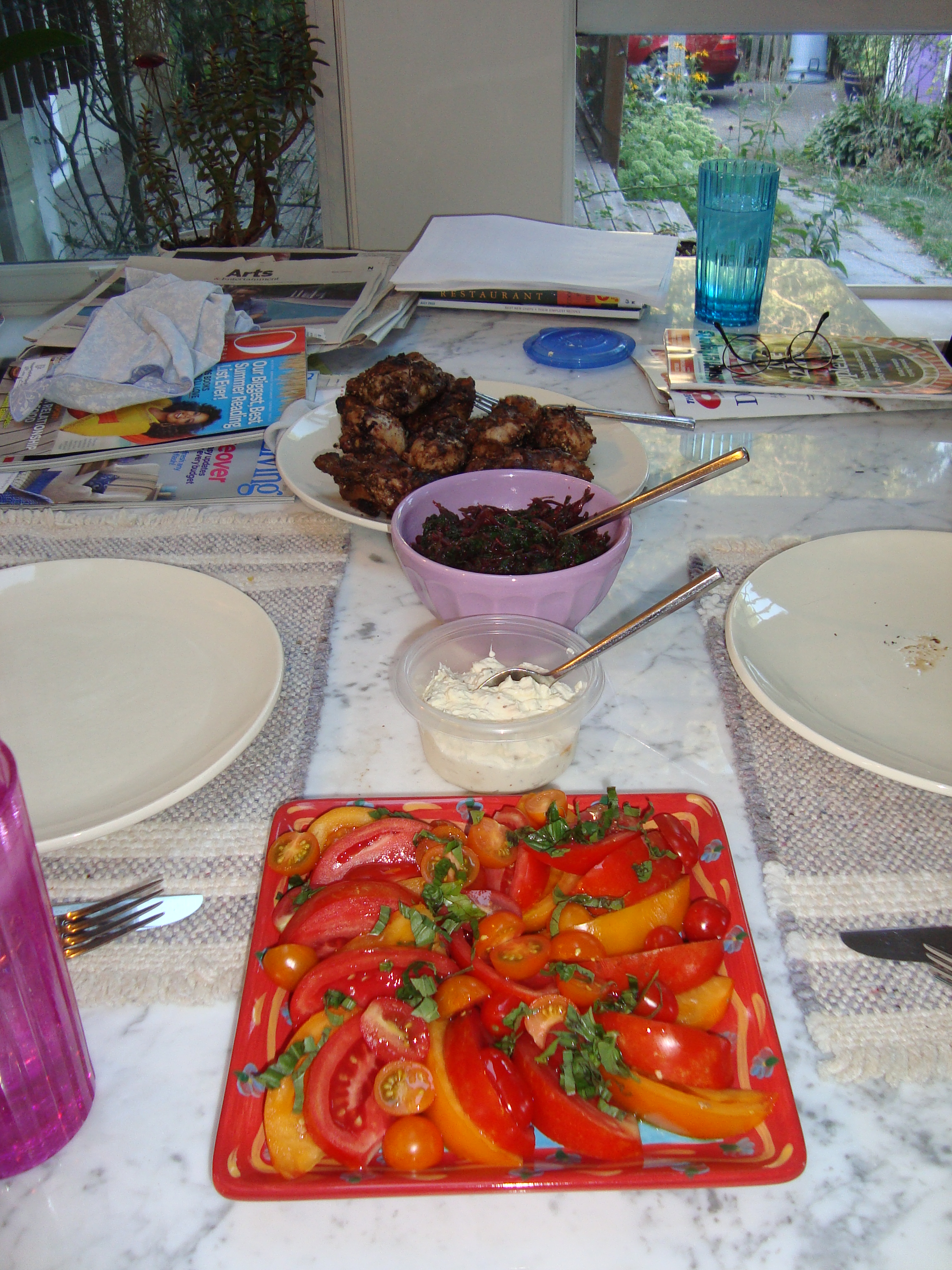
Mostly, we’ve been eating the summer bounty straight, sometimes with grilled meat and sometimes not. Corn on the cob is a staple, but we simply microwave it and eat it plain. There have been string beans, but again, just steamed in the microwave. We’ve been eating plates full of sliced fresh vegetables, like cucumbers and tomatoes, sprinkled with a spiced salt mixture I make. The most complicated thing I’ve put together in the past week or two is Tomato and Mozzarella Salad with tomato wedges, slivered fresh basil, fresh mozzarella or burrata, salt, pepper, and a drizzle of olive oil. It’s more of a concept than a recipe.
There’s no doubt that I love to eat this time of year, especially now that tomatoes are at their peak. I eat at least one a day. Unfortunately, we’re not growing any in our own garden due to some garden renovations that Howard had planned. So, I buy them at the local farm stand.
This is one of my favorite summer dinners. Once the tomatoes peak, we eat it often. It’s fast to put together and combines some of my favorite flavors. The only drawback to this recipe is that, because of the fresh basil, it isn’t a good keeper. I only make what we’re going to eat at one meal. If you have a bigger family than my family of two, I suggest you double this (or adjust by the appropriate multiple).
Pasta with Tomatoes and Goat Cheese
Serves 2 – 3
Adapted from Gourmet magazine (September 2000)
½ lb pasta (I prefer cavatappi, but you can use anything tubular, like gemelli, rotini, or penne)
½ lb fresh tomatoes or cherry tomatoes
1 – 2 oz goat cheese, crumbled
¼ cup Kalamata olives, coarsely chopped
¼ cup slivered fresh basil leaves
Salt & pepper to taste
Boil a large pot of water, and add the pasta.
While the pasta is cooking, cut up the tomatoes. If you are using whole tomatoes, dice into ¼-inch cubes. If you are using cherry tomatoes, just cut them in half. Toss the tomatoes with salt to taste (I use about ½ tsp), and let them sit while the pasta cooks. The salt will bring out the juice from the tomatoes.
Cook the pasta just until tender, 8 to 10 minutes. Drain. Return the pasta to the pot.
Toss the hot pasta with the goat cheese until the cheese is melted and smooth and the pasta is coated. Add the tomatoes, along with any juices, the olives, and basil, and toss gently to combine.
Add additional salt and pepper to taste.
The Routine of Summer
Now that we’ve passed the midsummer point, we’re definitely into our summer routine. Typically, we work hard all week, then Friday evening, we travel to Maine, where we spend two days doing not much of anything. Despite sometimes being tired for the drive, it’s worth it to be able to wake up Saturday morning and be where we want to be.
We usually have no agenda. Typical highlights are: sleeping late (for me), eating relaxed meals with fresh local ingredients, reading on the dock, swimming when it gets hot, canoeing or kayaking around the lake for a change, doing some garden work if we’re feeling inclined.
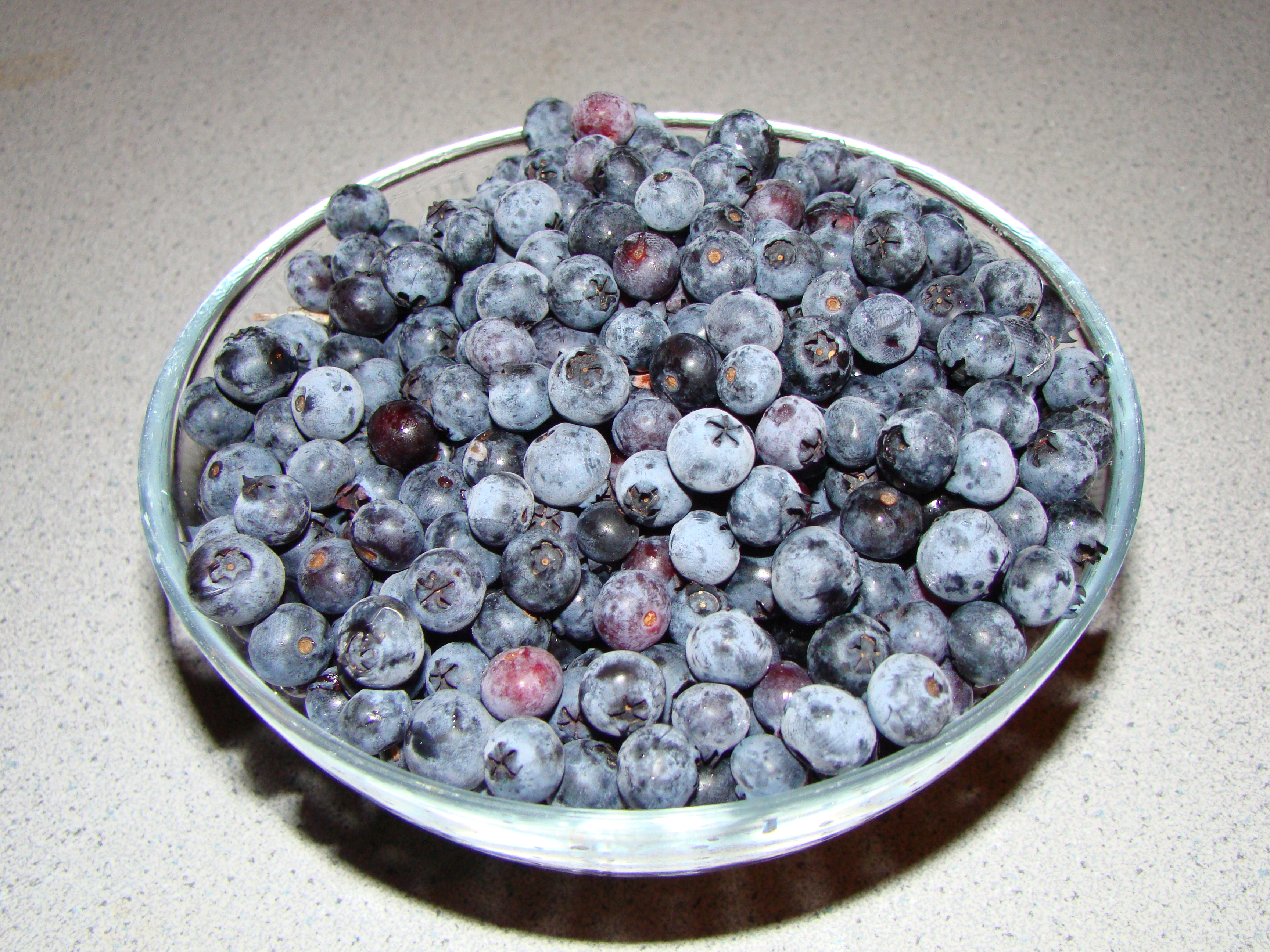
The past few weekends, the blueberries have been ready for picking. We have a huge bush next to the dock and other bushes scattered in the woods. We’ve already picked a couple of quarts. These are not the lowbush blueberries that have tiny blueberries that people think of as “wild Maine blueberries”. These are highbush, but also wild. The berries aren’t as big as Jersey blueberries, but they are sweet and tasty. Mostly I’ve been eating them straight or mixed into thick Greek yogurt. I think a batch of blueberry scones is somewhere in my future.
The local farmstand has started to sell freshly picked corn. I like, but don’t love, corn. On the other hand, Howard LOVES corn. He’s eating at least two ears a day now, and that should keep up for another month or so.
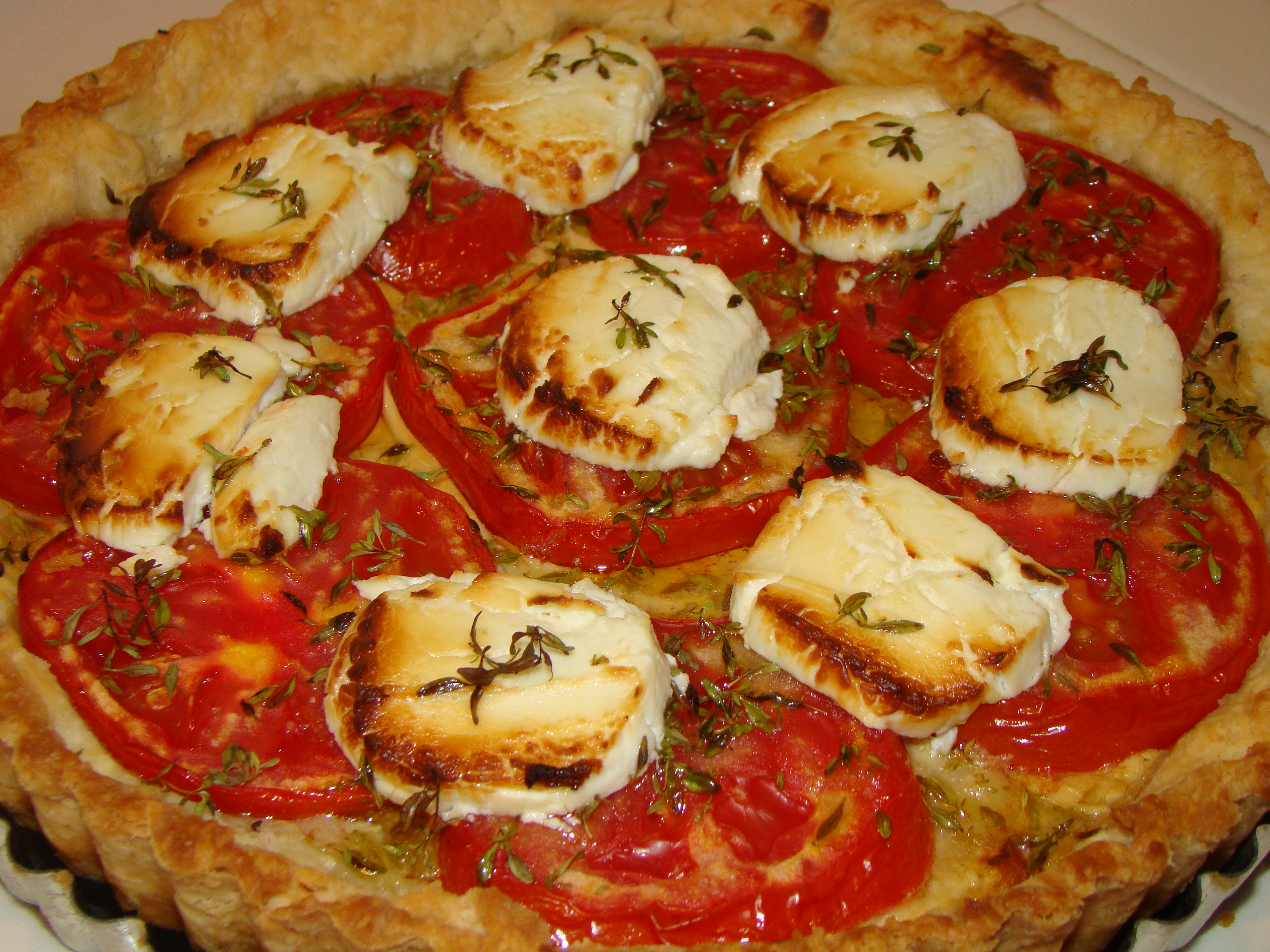
The local farmstand also has tasty, ripe tomatoes. For lunch on Saturday, I made a tomato and goat cheese tart. It was yummy and very elegant looking. The tart dough was rather soft, so next time, instead of trying to roll it, I think I’ll just press it into the pan with my fingers. Even though the dough was soft, it baked up to be quite crisp. We ate half, the but leftovers held up for another day quite well.
French Tomato Tart
Adapted from David Lebovitz
One unbaked tart shell (see recipe below)
Tart Filling
2-3 Tbsp Dijon mustard
2 large ripe tomatoes
1 Tbsp olive oil
Salt and pepper to taste
2 generous tablespoons fresh thyme
4 ounces (250 g) fresh goat cheese, sliced into rounds (I used Vermont Creamery)
Tart Dough
1½ cups flour
4½ oz (9 Tbsp) unsalted butter, chilled, cut into cubes
½ tsp salt
1 large egg
2 Tbsp ice water
Preheat the oven to 425F.
To make the dough, whisk together the flour and salt in a bowl. Add the butter and use your hands, or a pastry blender, to break in the butter until the mixture has a crumbly, cornmeal-like texture.
Whisk the egg with 2 tablespoons of water. Make a well in the center of the dry ingredients and add the beaten egg mixture, stirring the mixture until the dough holds together. If it’s not coming together easily, add another tablespoon of ice water.
Gather the dough into a ball and, with well-floured hands, press the dough into a 9-inch tart pan with a removable bottom, covering the bottom and sides of the pan.
Spread the mustard evenly, covering the bottom of the tart dough. Let it sit a few minutes to dry out.
Slice the tomatoes into ½-inch slices and arrange them over the mustard in a single, even layer. Drizzle the olive oil over the top. Sprinkle with about half the chopped thyme. Arrange the slices of goat cheese on top. Add the remaining fresh herbs.
Bake the tart for 15 minutes, then check to make sure it isn’t burning. Turn the heat down to 350F and bake another 5-10 minutes until the dough is cooked, the tomatoes are tender, and the cheese on top is nicely browned.
Serve hot or at room temperature. (The crust held up to microwaving, when eating the leftovers.)
 A Plateful of Happiness