Blog Archives
Escape to Morocco
When I started my blog a little over 4 years ago, one of my goals was to be motivated and inspired to cook from my overflowing freezer and pantry. I’ve had mixed results with that objective. Howard would say it’s more of a negative flow, in other words, the coffers seem to fill more and more instead of emptying.
I was reminded of my resolution though when I recently had trouble finding something that I just knew was in the freezer somewhere. I can’t remember what it was, but I know that, with frozen fingertips, I did eventually find it in the back of the bottom shelf of the upright freezer. This experience renewed my intention of being creative with ingredients I have on hand.
In my search for the mystery item, I came across a package of goat stew meat from back when we were in a meat CSA, before the meat delivery outran the pace of our consumption. With the weather decidedly colder, a pot of stew seemed in order.
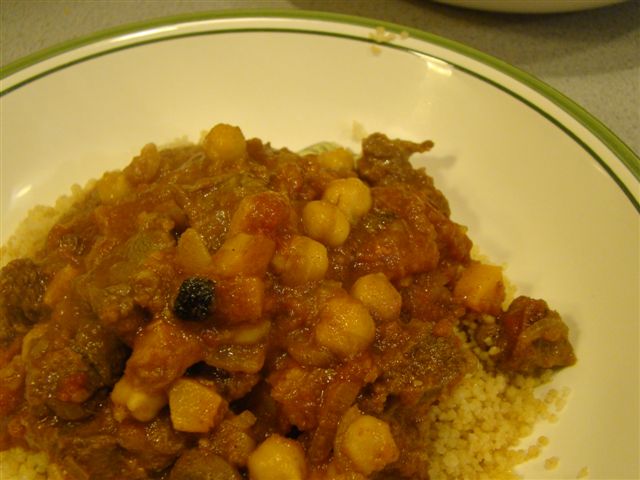
After a survey of the food on-hand, and a little internet browsing, I was inspired to make a tagine, no further grocery shopping required. I had canned tomatoes and chickpeas on the shelf as well as onion, garlic, and butternut squash from our Winter CSA. The Moroccan spices added culinary warmth that was lacking outside. Served over a bed of quick-cooking couscous, the pseudo-exotic stew made a satisfying meal.
If goat is too exotic for you, or you don’t have a ready source, this would be delicious with lamb instead. If you’ve never tried goat, do! Globally, it’s the most popular meat. It’s not as strong and gamy as lamb, yet it has a different taste than beef or pork. Try it, you’ll like it!
Goat Tagine with Chickpeas and Roasted Winter Squash
Serves 4
1 lb goat stew meat, trimmed of fat and membranes, cut into ½-inch pieces
2 Tbsp olive oil (divided)
Salt and pepper
1 onion, peeled, halved, and thinly sliced
3 cloves garlic, minced
1 tsp ground cinnamon
1 tsp ground coriander
1 tsp ground cumin
1 can (28 oz) whole peeled tomatoes, drained (juice reserved) and coarsely chopped
1 lb butternut squash, peeled, seeded, and cut into ½-inch pieces
1 can (15 oz) chickpeas, drained and rinsed
In a bowl, season the meat with salt and pepper.
In a medium-sized Dutch oven, heat 1 Tbsp olive oil over medium heat. Brown the meat on all sides, about 5 minutes. Add the onion and garlic. Cook until the onion starts to soften, about 5 minutes. Stir in the cinnamon, coriander, and cumin. Allow flavors to bloom for a few minutes.
Add chopped tomatoes and the juice. Bring to a boil, then lower the heat. Simmer for 1 hour.
Meanwhile, heat the oven to 400F. In a bowl, toss together the butternut squash pieces and the remaining 1 Tbsp olive oil. Season with salt and pepper. Spread the squash in a single layer on a baking sheet. Bake 20-25 minutes, stirring halfway through, until tender and somewhat browned.
Add the roasted squash and chickpeas to the stew. Continue to simmer for about 10 more minute to allow the flavors to meld.
Serve over couscous.
Guest Blog: A Taste of Morocco
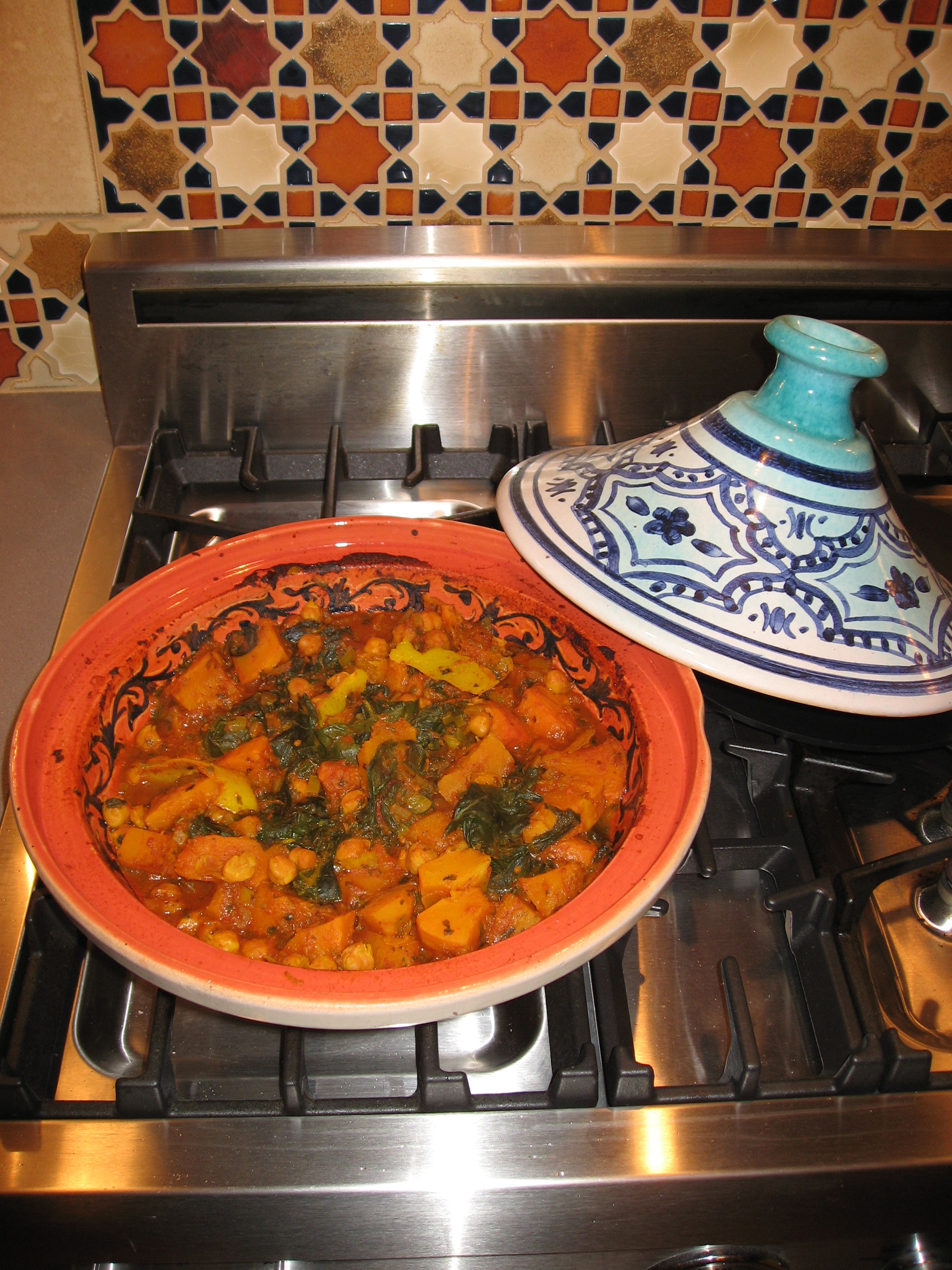
I’m writing a guest post for Betsy, whose blog I thoroughly enjoy and which inspires me. This is also a good opportunity to show off an extravagant kitchen purchase. On vacation in San Francisco last summer, my family and I visited the town of Sonoma deep in wine country.
I walked into a charming cookware store called Bram, their website is: http://www.bramcookware.com Lining the shelves were every type of clay cookware imaginable, from France, Italy, and Spain in particular. But the most beautiful pots were the tagines, a Moroccan specialty. The word tagine describes both the clay pot with the peaked lid and the dish that is made in it. I can’t describe the unbelievable colors and designs of these pots. I chatted with one of the owners, Ashrf Almasri, who sources the tagines from a trusted Egyptian pot maker, because he can’t yet guarantee the quality of glazes from Morocco and other countries. He spoke eloquently about how nearly every culture evolved clay containers in which to cook food slowly and directly in a wood fire, and how such cooking connects us to our hunter-gatherer past. He also said that over time clay pots impart a subtle flavoring to food.
Needless to say, I had to have one of these beautiful pots. I had it shipped home, and it took me awhile to get around to using it. This is partly because you have to “cure it” in the oven before use, and also because the tall lid means that I have to take out a rack in my oven. However, I did make a lamb shank and white bean casserole, which was pretty good, but not very North African. I wanted spice. I wanted to rock the Casbah.
Finally, I spotted this recipe for a pumpkin and Swiss chard tagine in the Globe magazine that looked promising. It is definitely spicy hot, and it fits the bill for an exotic dish in this gorgeous clay pot.
April Austin
Pumpkin (or Squash) and Swiss Chard Tagine
Adapted from this recipe in Nov. 7, 2010 Boston Globe Magazine,
From Chef Alia Radjeb Meddeb, owner of Baraka Café in Cambridge
1 5-pound baking pumpkin (I used 2-1/2 pounds already peeled butternut squash)
2 bunches Swiss chard, thick stems cut out, leaves torn or cut into 3-inch pieces
Peel of ½ lemon, cut into strips
1/3 cup olive oil
1 large onion, finely chopped
½ tablespoon turmeric
1 cup chopped cilantro
1 15-oz can crushed tomatoes
1 teaspoon ground cinnamon
¼ teaspoon cayenne pepper, or more to taste
Salt and black pepper
3 cups cooked dried chickpeas (or 2 15-ounce cans)
½ cup chopped parsley
Set oven to 350 degrees F. Halve the pumpkin and scoop out the seeds and fibers. Place the pumpkin, cut sides down, on a foil-covered baking sheet. Bake until the pumpkin is just tender when pricked with a fork, 30 to 40 minutes. When cool enough to handle, skin the pumpkin and cut into 2-inch chunks.
In a pot of boiling water, cook the chard for 1 minute. Drain in a colander and set aside.
In a small saucepan, bring 1 inch of water to a boil. Add the lemon peel and simmer 1 minute. Drain and repeat. (Blanching removes the bitterness.) Drain and set aside.
Increase the oven temperature to 400 degrees. In a large Dutch oven or flameproof casserole, heat the oil over medium heat. Add the onion and cook until it starts to turn golden, about 10 to 12 minutes. Stir in the turmeric and ½ cup of the cilantro. Add the tomatoes, cinnamon, 2 teaspoons salt, and ½ teaspoon black pepper and simmer gently for 10 minutes. Stir in the pumpkin, chard, lemon peel, chickpeas, and 2-1/2 cups water or stock (This sounds watery. I used only 1 cup of chicken stock for my 2 lbs of squash.) Transfer the stew to a tagine or a clay pot, if using; otherwise cover the cooking pot and place in the oven. Bake until bubbling hot, about 45 minutes, stirring halfway through the cooking time.
Stir in the remaining ½ cup cilantro and the parsley. The stew shouldn’t be soupy, but if it needs more liquid, add a little water. Taste for seasoning and adjust as needed. Serve hot with couscous or rice. Serves 8 generously.
 A Plateful of Happiness