Blog Archives
seafood pot-au-feu {ffwd}
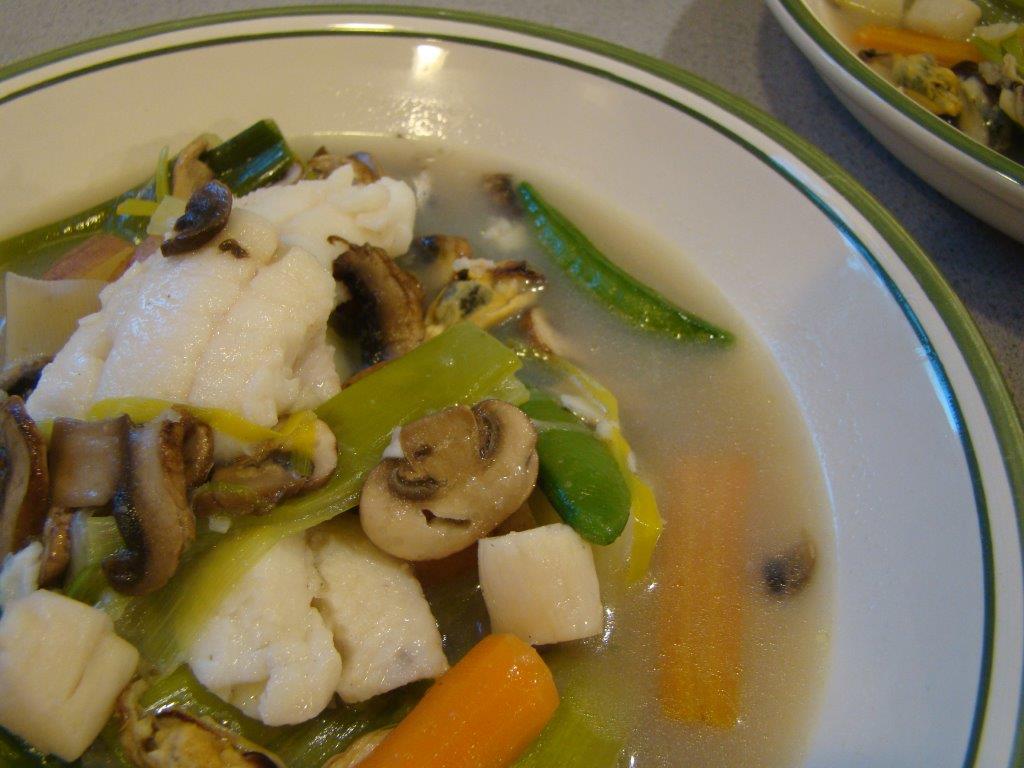
(Sniff, sniff! This is the second-to-last recipe that the French Fridays with Dorie group will cook together. I’ll save my reflections for another week, but it seems impossible to be at this point.)
This week’s recipe was the perfect meal for springtime: Seafood Pot-au-Feu. This light, yet filling, seafood and vegetable stew really hit the spot this week.
I was fortunate that someone offered me their weekly fish share from Cape Ann Fresh Catch for this week. A fish share is like a CSA you might have at a farm, but it’s from a collective of fishermen. Quite a novel idea! You don’t know which fish you’ll be getting ahead of time, but I knew I would use whatever I got in my pot-au-feu.
The selection this week was dab. I wasn’t familiar with this fish, but it’s a flat white fish similar to flounder or sole. It was filleted and super fresh. I received 2 pounds, which was A LOT, so I used some in the stew and froze the rest for some meuniere or amandine (or both) in the next week or so.

Two pounds of Dab
The stew starts out by giving the longest cooking vegetables, potatoes, a head start in simmering broth with some aromatics. Then sliced carrots, leeks and scallions are added the pot. I really loved how you can prep the vegetables as you go along. No need for mise-en-place. Finally, sliced mushrooms join the mix. My potatoes needed some extra time, so I just let it cook until the potatoes were nearly tender.

Once the vegetables are cooked, they are scooped from the broth and the mussels are steamed. Then, the mussels are removed and the vegetables go back into the pot. Seems a little fussy, but I think it was worth it because there was no interference when removing the mussels from their shells. I suppose you could leave the mussels in the shell for the diner to deal with. We’ve done that in other recipes. I’m not always in the mood to eat with my fingers, and I found that I liked being able to just enjoy spoonfuls with no fiddling.
Finally, the fish is poached for a few minutes before adding back the mussels, some scallops, and some sugar snap peas to warm everything up. (I partially cooked the snap peas because I had to buy them frozen — not in season yet).

I took a few liberties with the recipe to adjust to what was at hand, but it was no less delicious. As I mentioned, I used dab for the salmon. I substituted homemade fish stock from the freezer for the chicken broth (seemed like a natural fit). I also used double the mussels because they were only sold in two-pound bags. I opted for half a pound of bay scallops instead of sea scallops because they were half the price. The adaptations reinforce that this delicious meal can easily be made with whatever looks best at the fish counter.
We both really enjoyed this. The weather warmed up with a vengeance, jumping immediately to summer temperatures with not much intervening spring (though I suspect that spring will come back). Honestly, I don’t always enjoy hot soup when it’s hot outside, but this worked. It was more like a fish and seafood dinner, eaten with a spoon.
If you want to try this at home, you can find the recipe in Dorie Greenspan’s book Around My French Table. To see other interpretations of this recipe by my Dorista friends, check their links here.
Cottage Cooking Club: April
It’s another month in the Cottage Cooking Club, a project led by Andrea, The Kitchen Lioness, that is a combined effort of several bloggers to cook all the recipes in Hugh Fearnley-Whittingstall’s cookbook, River Cottage Veg. This vegetarian cookbook contains a variety of recipes ranging from the simple to the complicated, all meant to encourage your palate and your kitchen to embrace more vegetables in your daily life. Andrea’s sensibilities follow the season, so when she chooses the recipes each month, she tries match up to what’s growing in the typical Northern clime.
April is a hard month for local produce in my neck of the woods. Happily, winter has departed, but it’s still early in the season. In my home garden, early herbs (chives and tarragon) are thriving. The radish, arugula and pea seeds we planted have germinated, but it will be weeks before anything is ready for harvest. The local farms are in the same boat. I volunteer weekly at the local community farm and the past month I’ve been in the greenhouse, transplanting seedlings from tiny to larger cell packs. The farmer just planted the first seeds and seedlings in the ground the past weekend.
With no hope of local vegetables, I limited my selections for this month to recipes that use vegetables that I typically buy at the supermarket all year round: celery and mushrooms.

First up was a Celery Gratin. This was a much different presentation of celery than I’ve seen. Usually, celery is just a bit player in the sautéed aromatics for a dish or chopped into a stock. Usually the only time celery plays a starring role is cut up as a crudité for dipping or snacking. For the gratin, the celery is roasted with herbs and butter until tender, then topped with breadcrumbs and cheese. It was a beautiful looking dish, but to be honest, this is my least favorite recipe I’ve tried from the book so far. The celery, while tender, still required a knife to cut through the strings. Also, it was bland. It didn’t even taste all that celery-y. We finished it, but were not fans.

On the other hand, the Creamy Mushroom Soup is one of the best mushroom soup recipes I’ve ever made. Leeks and a variety of mushrooms (shiitake, cremini, and Portobello) are sautéed and then simmered in homemade Vegetable Stock with a sprig of thyme. This fragrant soup is then pureed in the blender. To round out the flavors, some heavy cream, sherry, and nutmeg are added, giving the soup deeper flavor without making it too heavy. I was excited to garnish the soup with snipped chives from my backyard herb garden (yay, spring is here). The only change I might make next time is to add additional dried thyme when sauteeing the vegetables for a more pronounced herbal tone (and thyme is my favorite herb). The mushroom soup is definitely a winner!

Chives in My Herb Garden!
If you’d like to check out the recipe reviews for April from the other Cottage Cooking Club participants, check out their links here.
 A Plateful of Happiness