Blog Archives
Peak Tomatoes

I definitely haven’t been cooking as much as I usually do. Well, that’s not entirely true. Maybe it’s more accurate to say that I haven’t been making many recipes this summer. This could partly stem from the unending heat and humidity. I can’t remember a summer where the weather has been so relentless.
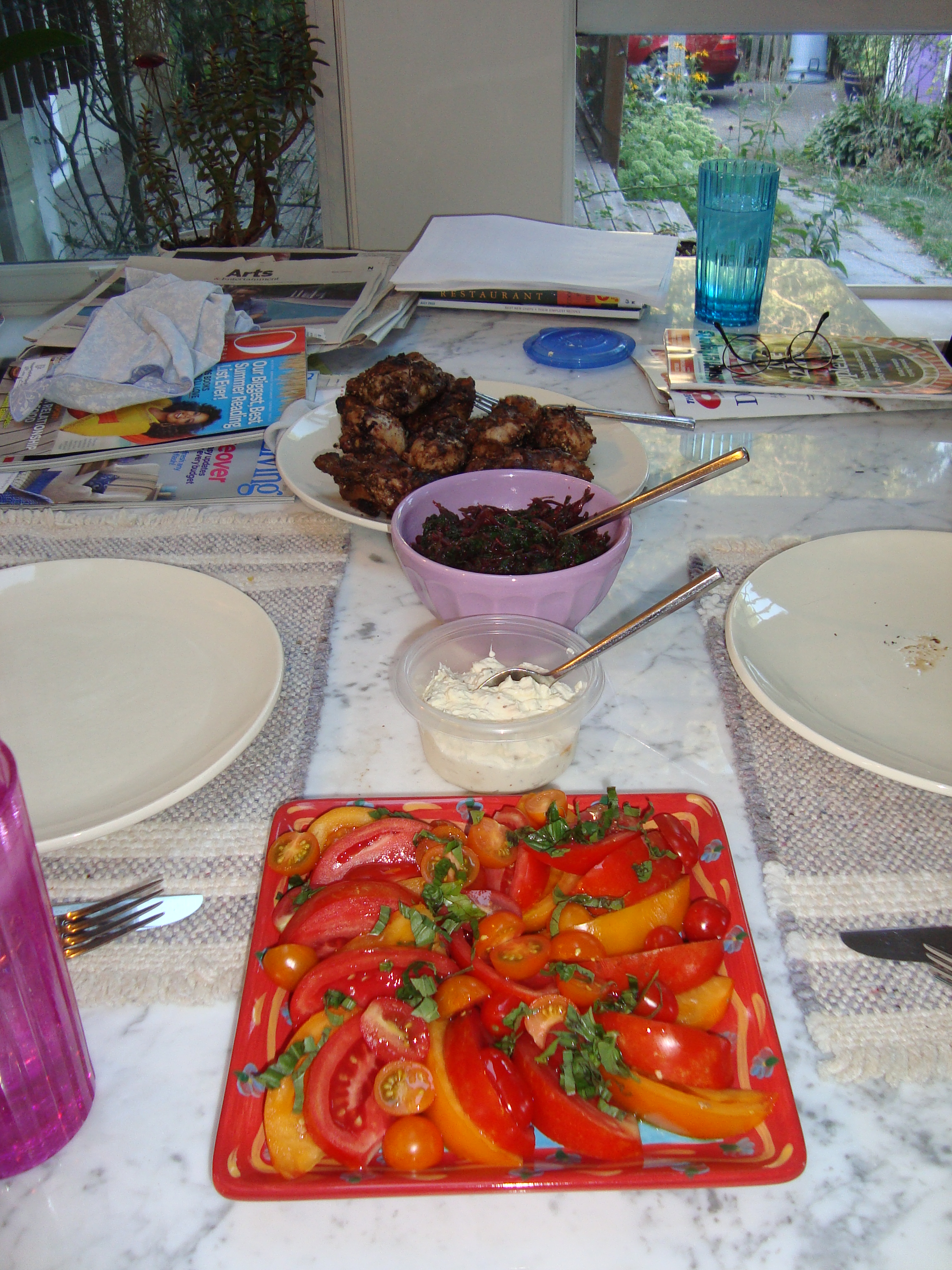
Mostly, we’ve been eating the summer bounty straight, sometimes with grilled meat and sometimes not. Corn on the cob is a staple, but we simply microwave it and eat it plain. There have been string beans, but again, just steamed in the microwave. We’ve been eating plates full of sliced fresh vegetables, like cucumbers and tomatoes, sprinkled with a spiced salt mixture I make. The most complicated thing I’ve put together in the past week or two is Tomato and Mozzarella Salad with tomato wedges, slivered fresh basil, fresh mozzarella or burrata, salt, pepper, and a drizzle of olive oil. It’s more of a concept than a recipe.
There’s no doubt that I love to eat this time of year, especially now that tomatoes are at their peak. I eat at least one a day. Unfortunately, we’re not growing any in our own garden due to some garden renovations that Howard had planned. So, I buy them at the local farm stand.
This is one of my favorite summer dinners. Once the tomatoes peak, we eat it often. It’s fast to put together and combines some of my favorite flavors. The only drawback to this recipe is that, because of the fresh basil, it isn’t a good keeper. I only make what we’re going to eat at one meal. If you have a bigger family than my family of two, I suggest you double this (or adjust by the appropriate multiple).
Pasta with Tomatoes and Goat Cheese
Serves 2 – 3
Adapted from Gourmet magazine (September 2000)
½ lb pasta (I prefer cavatappi, but you can use anything tubular, like gemelli, rotini, or penne)
½ lb fresh tomatoes or cherry tomatoes
1 – 2 oz goat cheese, crumbled
¼ cup Kalamata olives, coarsely chopped
¼ cup slivered fresh basil leaves
Salt & pepper to taste
Boil a large pot of water, and add the pasta.
While the pasta is cooking, cut up the tomatoes. If you are using whole tomatoes, dice into ¼-inch cubes. If you are using cherry tomatoes, just cut them in half. Toss the tomatoes with salt to taste (I use about ½ tsp), and let them sit while the pasta cooks. The salt will bring out the juice from the tomatoes.
Cook the pasta just until tender, 8 to 10 minutes. Drain. Return the pasta to the pot.
Toss the hot pasta with the goat cheese until the cheese is melted and smooth and the pasta is coated. Add the tomatoes, along with any juices, the olives, and basil, and toss gently to combine.
Add additional salt and pepper to taste.
The Baby Lasagne
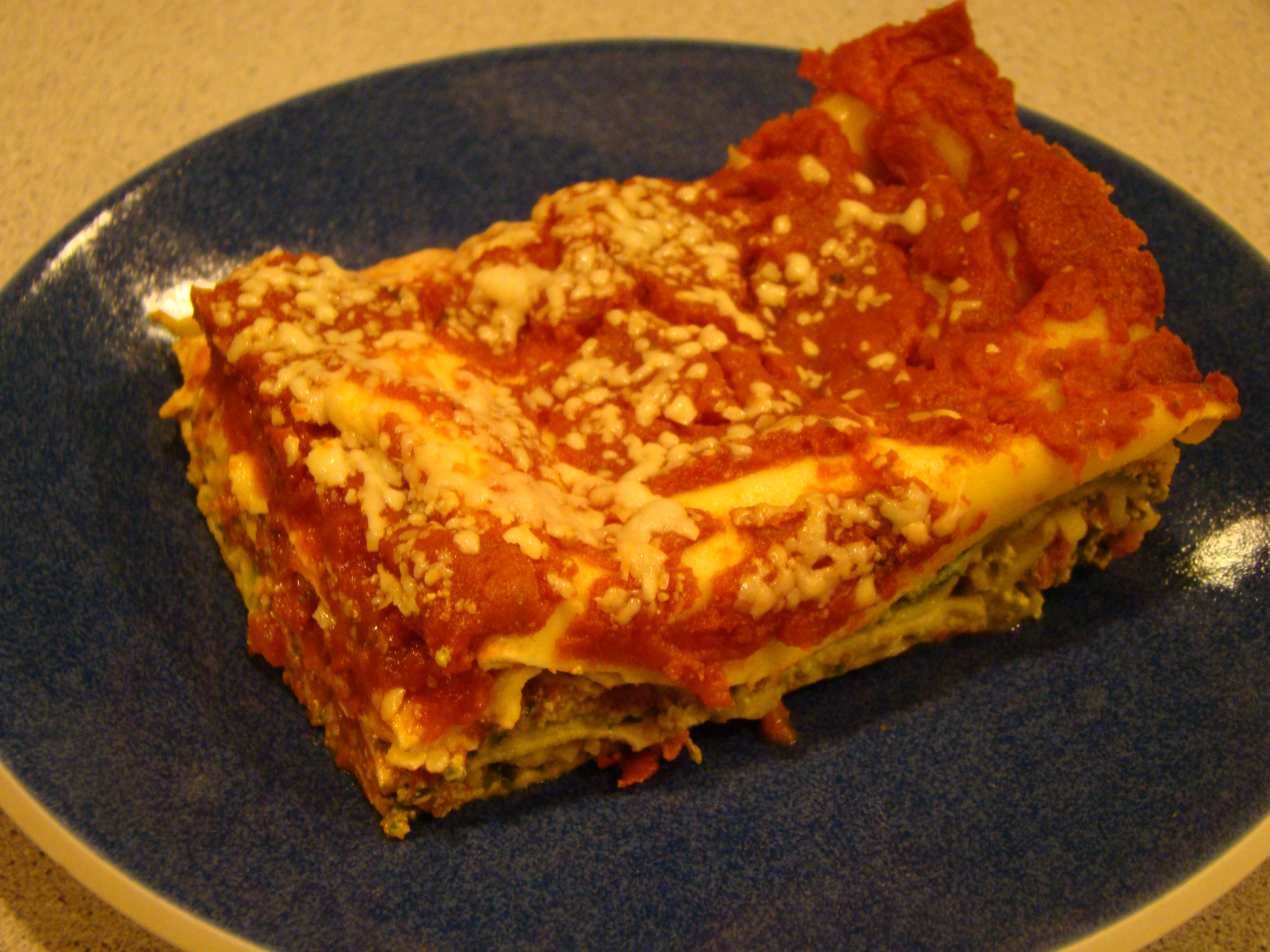
If you are my friend and you’ve had a baby any time over the past 20 years or so, you’ve probably been the recipient of what Howard has dubbed “The Baby Lasagne”. It’s a spinach lasagne that I’ve actually been making for more than 20 years. I started making it when I was in college.
Now, it’s a team effort. Usually, Howard and I make a mini-assembly line, and we make two: one for us and one for friends.
The Baby Lasagne always seems to be a hit. Of course, one reason it’s always popular is the convenience of having a prepared dinner available when you are indisposed. It also tastes really good. To me, lasagne is comfort food. I like to make it, I like to eat it, and I like to give it away to friends that need a meal waiting in the fridge or the freezer. I deliver it cooked, so it can be eaten right away or frozen for later.
Our friends Lauren and John just adopted a baby girl from Ethiopia. Naturally, we made them a baby lasagne. They say they remember the one we brought over 15 years ago when their son was born. (Note that the lasagne is also an excuse to be able to meet the baby soon after her arrival!) We wish them much joy with the newest addition to their family.
A few things about this lasagne. These might seem sacrilegious, but it’s the truth:
For the sauce, use whatever you like. It can be homemade or not. I hate to admit it, but I am a big fan of Trader Joe’s Tuscano Marinara Sauce. It comes in a 28 ounce can, not even a jar. It is sort of chunky and has a fresh tomato taste. I can’t figure out why I even tried it to begin with, but I’m hooked. I even like to eat it from a spoon right out of the can. That’s what I usually use in this dish.
As for the noodles, I used to cook the lasagne noodles. Then, my friend Sue told me that her Italian (living in Italy, not Italian-American) mother-in-law used uncooked noodles, not even the no-boil kind, but the kind you usually cook. I suspended disbelief and tried it. It worked! Making lasagne has never been the same. I especially like how you can press down on the dried noodles to make the layers even.
Spinach Lasagne
Adapted from Moosewood Cookbook by Mollie Katzen
Serves 6 – 8
4½ – 5 cups tomato sauce (your favorite; homemade or otherwise)
1 box lasagne noodles, uncooked
Spinach Filling:
- 1 lb ricotta cheese
- 8 – 10 oz fresh spinach, cleaned, stemmed, and chopped fine in the food processor
- 2 beaten eggs
- 2 Tbsp wheat germ
- Pinch of nutmeg
- Salt and pepper to taste
8 oz shredded mozzarella cheese
½ cup grated Parmesan or Romano cheese
Preheat the oven to 375F.
In a 13×9-inch baking dish, layer the ingredients as follows, spreading each ingredient to cover the entire layer:
- Cover the bottom of the pan with a thin layer of tomato sauce
- Make a layer of dried lasagne noodles
- Half of the spinach filling
- One-third of the remaining tomato sauce
- Half of the shredded lasagne
- Another layer of dried lasagna noodles
- Remaining spinach filling
- Another third of the tomato sauce
- The rest of the shredded mozzarella
- Another layer of dried lasagne noodles
- The rest of the tomato sauce
- The Parmesan/Romano cheese
Cover with foil, and bake for 35 minutes. Remove the foil and bake for another 10 minutes. Let it rest at least 10 minutes before serving.
 A Plateful of Happiness