Blog Archives
Beef Stew Struggles {CtBF}

Full Disclosure: Beef Stew challenges me. On the surface, it’s perfect comfort food with much in its favor, but I usually only like it, never love it. One thing I’ve figured out is that I don’t like stewed vegetables, especially potatoes, so I tend to favor recipes with just meat and gravy. This week’s selection for Cook the Book Fridays from David Lebovitz’s My Paris Kitchen, Belgian beef stew with beer and spice bread (aka Carbonade Flamande), met these criteria, so I was excited to try something new.
To start, chunks of beef chuck are browned. Next, diced onions and bacon lardons are sautéed. The pot is deglazed with some water before adding a bottle of beer. I tried to find a European-style amber, but the only amber at the store was Dos Equis so that’s what I used. Finally, all the ingredients along with thyme, bay leaves, and cloves spent some time simmering.
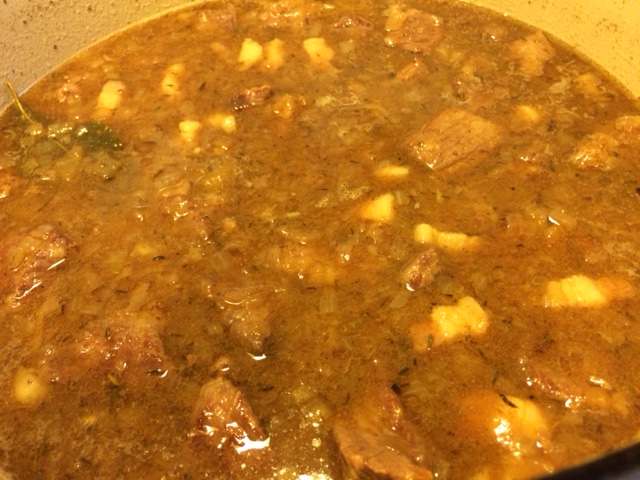
Now it’s time for the secret ingredient: pain d’épices. What’s pain d’épices, you ask? It’s a honeyed spice loaf, not too sweet and fragrant with a variety of warm spices: anise, cinnamon, allspice, ginger, nutmeg and cloves. The scent reminded me of my favorite holiday cookies, Basler Läckerli.
It seems unconventional, but this stew is thickened with slices of pain d’épices lightly spread with Dijon mustard. The slices are laid on top while it stews for a few more hours. Periodic stirring encourages the bread to dissolve into the pot, transforming the thin beery broth into a thick flavorful gravy.
I served the stew over a bed of mashed potatoes. The stew had the simple style I prefer with an unusual and enticing aroma and taste. While I enjoyed this more than many other versions of beef stew, I still just liked-not-loved it.
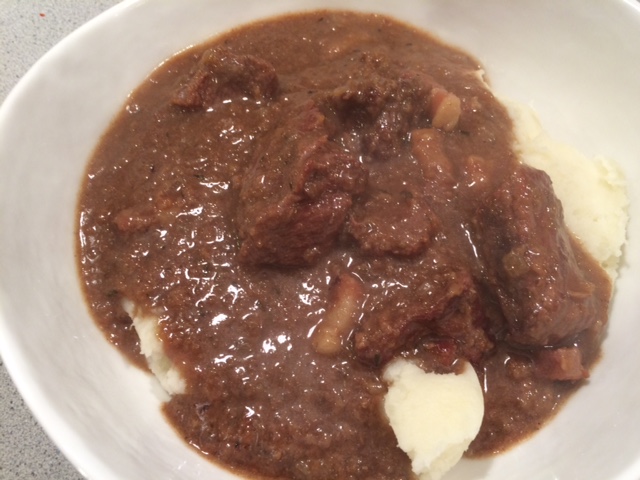
Tricky to photograph — it was more appealing in person
I enjoyed the leftover spice bread more. I brought it to my sister’s. It was a bit dry, but improved when we toasted it for breakfast.
Meanwhile, I’ve become obsessed with last time’s dukkah. I made the dukkah-roasted cauliflower 3 times in the past two weeks. I also gave broccoli the same treatment. Equally delicious. And I used dukkah to coat fish fillets when I made Dorie Greenspan’s almond flounder meunière (or should I call it dukkah flounder meunière?) I’m going to have to make another batch.
We just returned from a long weekend in Florida for a family celebration. Here’s my favorite nature shot from the trip. We saw this 15-to-20 foot alligator floating in the water beside the fishing pavilion when we took a walk at Arthur R. Marshall Loxahatchee National Wildlife Refuge.

And closer to home, despite a snowstorm predicted for the weekend, spring is in the air. This morning I caught half a dozen turtles sunning themselves on a log during my late-morning walk with Bella. They made me smile.

And this evening, we spied a beautiful full rainbow in the backyard!

If you want to know how my friends enjoyed their stew, check out their links here. Due to copyright considerations, I don’t publish the recipes here. You can find the stew on page 198 and the pain d’épices on page 293 of David Lebovitz’s My Paris Kitchen. Or feel free to drop me a line and I’ll share with you.
Cauliflower Love {CtBF}

I loved most vegetables, but there were always a few exceptions, like broccoli, cauliflower, and a few root vegetables like rutabagas and turnips. Then I discovered roasting vegetables. When the outside caramelizes and starts to scorch, the sugars come out and the texture gets creamy. All those vegetables I was unconvinced about suddenly became favorites.
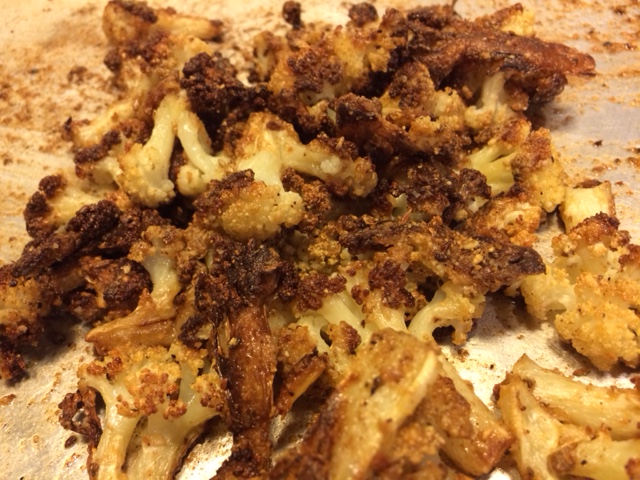
This week, I had a cauliflower trifecta. It started with the latest recipe for Cook the Book Fridays: Dukkah-Roasted Cauliflower. This recipe from David Lebovitz’s My Paris Kitchen one ups simple roasted cauliflower. First, you start the cauliflower florets roasting. After about half an hour, even though I would usually consider the cauliflower done, it’s tossed with dukkah and roasted some more. When it’s done, it’s crusty on the outside and melting on the inside. Delicious!
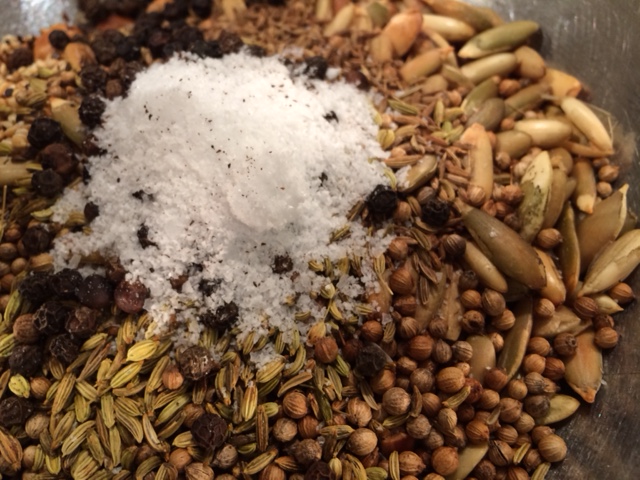
As for the dukkah, a while back, I bought a jar at Trader Joe’s. We dipped bread into olive oil and the Egyptian spice and nut mixture. It was good, but not exceptional. For the cauliflower recipe, I made my own dukkah (per David Lebovitz’s instructions), and as you might expect it was a completely different story. A mixture of toasted hazelnuts, toasted seeds (pumpkin, sesame, coriander, cumin, fennel, peppercorns) and kosher salt are ground up though not too fine. The fragrance was amazing. I can’t wait to have a chance to try dipping bread in the leftover dukkah!
The cauliflower makes a great side dish. My cauliflower must have been small because there is no way it made 4 servings, only 2. Next time I’ll make two whole cauliflowers to ensure leftovers. This is a definitely new favorite.
The second hit was a whole roasted cauliflower with an almond-herb sauce from the New York Times by way of Joanne Weir’s new cookbook Kitchen Gypsy. The entire cauliflower is roasted in a hot cast iron pan for 1-2 hours until burnished on the outside and melting on the side. I shared it with a friend for dinner, so we just cut it in half, covered it in sauce, and served it with jasmine rice and salad. I’m seriously excited about cauliflower.
This week I’m in Philadelphia visiting my sister. The catalyst was the chance to attend the 76ers basketball game on Harvey Pollack Tribute Night with my sisters, aunt, and cousins. My great-uncle Harvey, who passed away last summer, was a unique character and a basketball legend. He wasn’t a player, rather a statistician, known affectionately in the NBA as “Super Stat”. He expanded what’s collected and “invented” many of the stats in use today (like triple-doubles). Even though the team lost the game, we all had a great time and were proud to be there to help celebrate our uncle’s achievements.


While I’m in town, my sisters and niece and I went to dinner at Zahav, a modern Israeli restaurant in downtown Philadelphia. We enjoyed a tasting menu where each dish was better than the next. One of the standout mezze we had was the fried cauliflower with an herb-and-garlic labneh for dipping. I’m inspired to try this at home with roasted cauliflower, maybe even coated with dukkah.
If you want to know how my friends enjoyed their cauliflower, check out their links here. Due to copyright considerations, I don’t publish the recipes here. You can find the cauliflower on page 224 of David Lebovitz’s My Paris Kitchen (Dukkah recipe on page 81). Or feel free to drop me a line and I’ll share it with you.
 A Plateful of Happiness