Blog Archives
Life is Good

My motto for the summer is “Life is Good”. For one, this simple motto is a basic truth that applies. For another, my weekend wardrobe features a variety of “Life is Good” T-shirts. I just love their cute designs and the sentiments.
With the unofficial start of summer, our frequent weekend destination is our lake cottage in Maine. Weekends have a busy, yet leisurely, agenda:
- Waking up slowly with a book
- Multiple walks with Bella (the dog)
- A gardening project or two
- Swimming, canoeing or kayaking, or all three
- Lots of cooking
- An outing for ice cream or a visit to a local farm stand or the lobster truck
We made it an extra-long weekend, going up for four days, three with perfect weather. On the cool and cloudy day, we made a trip into Portland, only half an hour away. I was craving the best French fries in the world at Duckfat. Plus, Portland is a great city to wander around.
Duckfat has gotten incredibly popular since our last visit. The wait was 45 minutes to eat inside. For the brave, there was no wait to eat outside. We weren’t dressed appropriately, but we also weren’t patient, and I couldn’t be deterred from my fries. We ate outside. The waitress was savvy and offered us hot drinks while we waited for our food. I had a duck confit panini, and Howard ordered a corned beef tongue Reuben. We shared a cone of frites (fried in duckfat, of course). I can’t say enough about how good those fries are. It was worth braving the elements to avoid the wait.
Other highlights of our Portland excursion were:
- A visit to Rabelais, a unique cookbook store, both new and used. I was excited to find the book Good Meat by Deborah Krasner for sale. I had heard an interview with the author and knew this book was for us. This book is a wealth of information about sustainable meat, how to find it, how to buy it, and how to cook it. It’s now part of our library.
- They weren’t sold out of Morning Buns at Standard Bakery, so we picked some up for the next day’s breakfast
As I said, the weekend’s objective is typically lots of relaxation with some projects and cooking mixed in. For a project, I tackled one of the front garden beds. I have a tendency to let flowers go a little wild, even when they don’t belong. I made good progress, in spite of the oppressive humidity and the mosquitoes and black flies. See:

Before
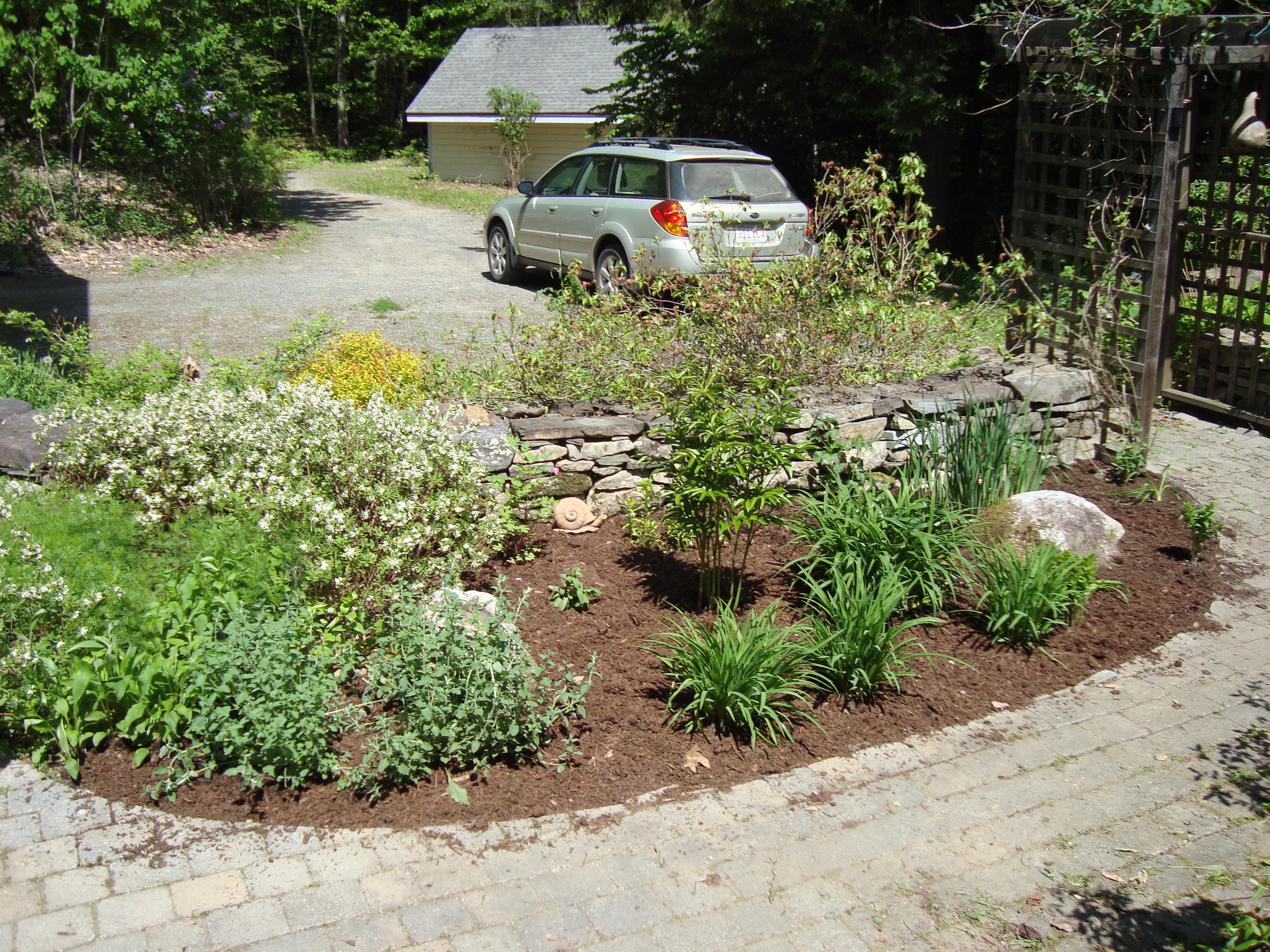
After
We also ate very well. I made two stand-out salads. I also found fiddleheads at the farmstand. The season is all but over, so this was a lucky break.
The first salad is a favorite spring-time potato salad, best served warm. It is a sort of mixture of potato salad with leeks vinaigrette. When asparagus is in season, it’s a must. I love the combination of the sharp tang of the mustard, the silky leeks, the grassy asparagus, and the earthy potatoes. The color is also a great green.
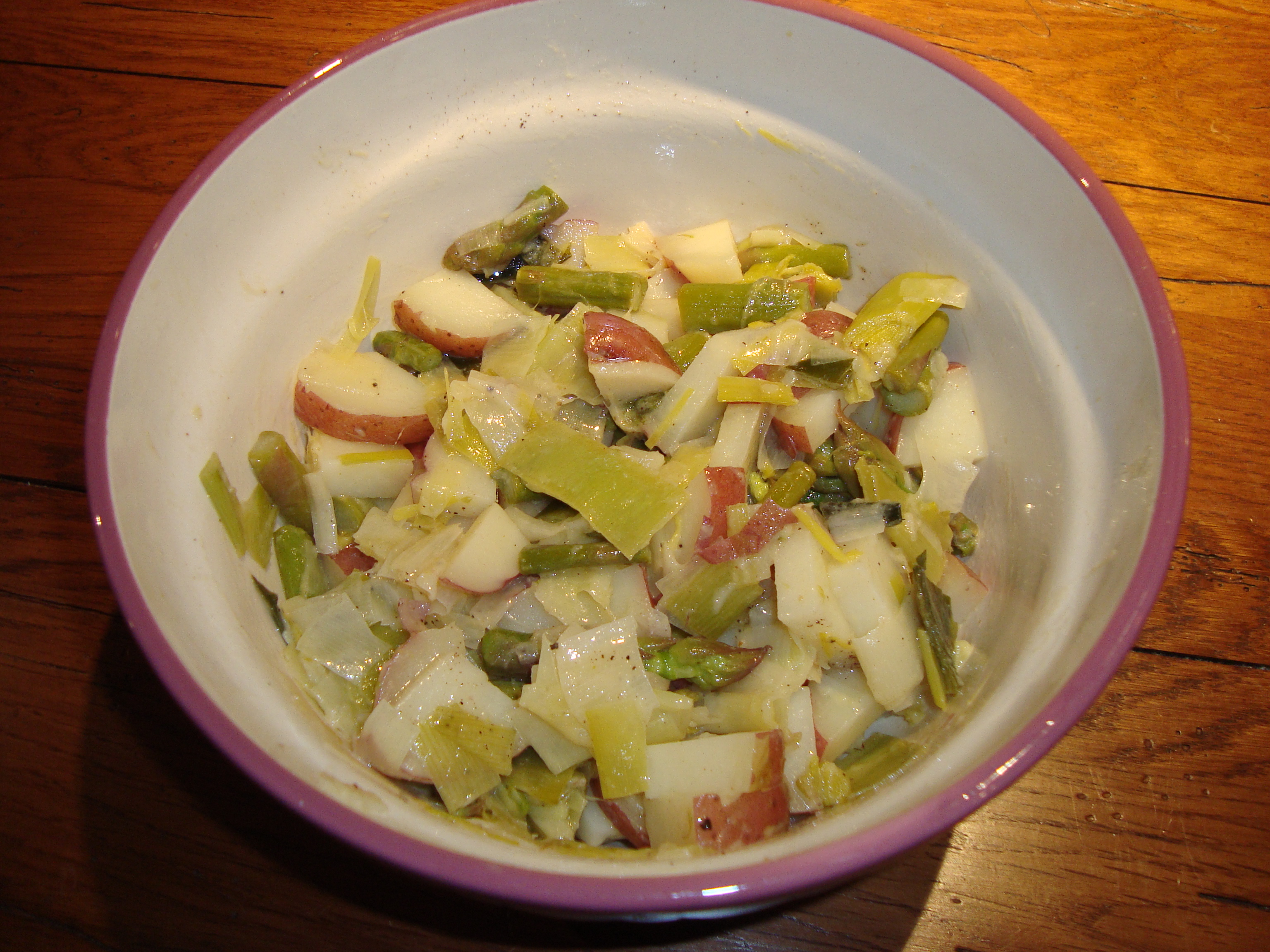
Potato Salad with Leeks and Asparagus
Adapted from this recipe from Food & Wine magazine
Serves 6
2 Tbsp Dijon mustard
1 Tbsp white wine vinegar
¼ cup olive oil
Salt & freshly ground pepper to taste
1 lb red potatoes
½ lb asparagus,, trimmed and cut into 2-inch lengths
2 leeks, cut in half lengthwise, then into 1-inch lengths (rinsed well)
In a jar, combine the mustard, vinegar, and oil. Shake well to combine. Season with salt and pepper to taste.
Scrub the potatoes, and pierce each one a few times with a fork. Place a steamer basket in a medium pot. Fill the pot with water, to just below the bottom of the basket. Place the potatoes in the basket. Bring the water to a boil, then reduce heat to a simmer, cover the pot, and steam the potatoes for 30 minutes or until tender when pierced with a skewer.
At the same time, bring another pot of water to a boil. Cook the asparagus and leeks for 5 minutes. Drain and dry well on a clean dish towel. In a large bowl, toss vegetables with vinaigrette.
After potatoes are cooked, as soon as they are cool enough to handle, cut in half or quarters, then ½-inch slices. Pieces should be about 1 x 1 x ½ inches. Add to the vinaigrette and gently combine to coat with dressing. Adjust seasoning as needed.
Best served warm.
Howard had grilled some sweet Italian sausages, so I used one link in a Spanish-inspired rice salad. Short or medium-grain rice, like arborio, would have been even better, but my Maine pantry isn’t as well stocked. This could be a side dish, though we ate it as the main event for lunch one day.
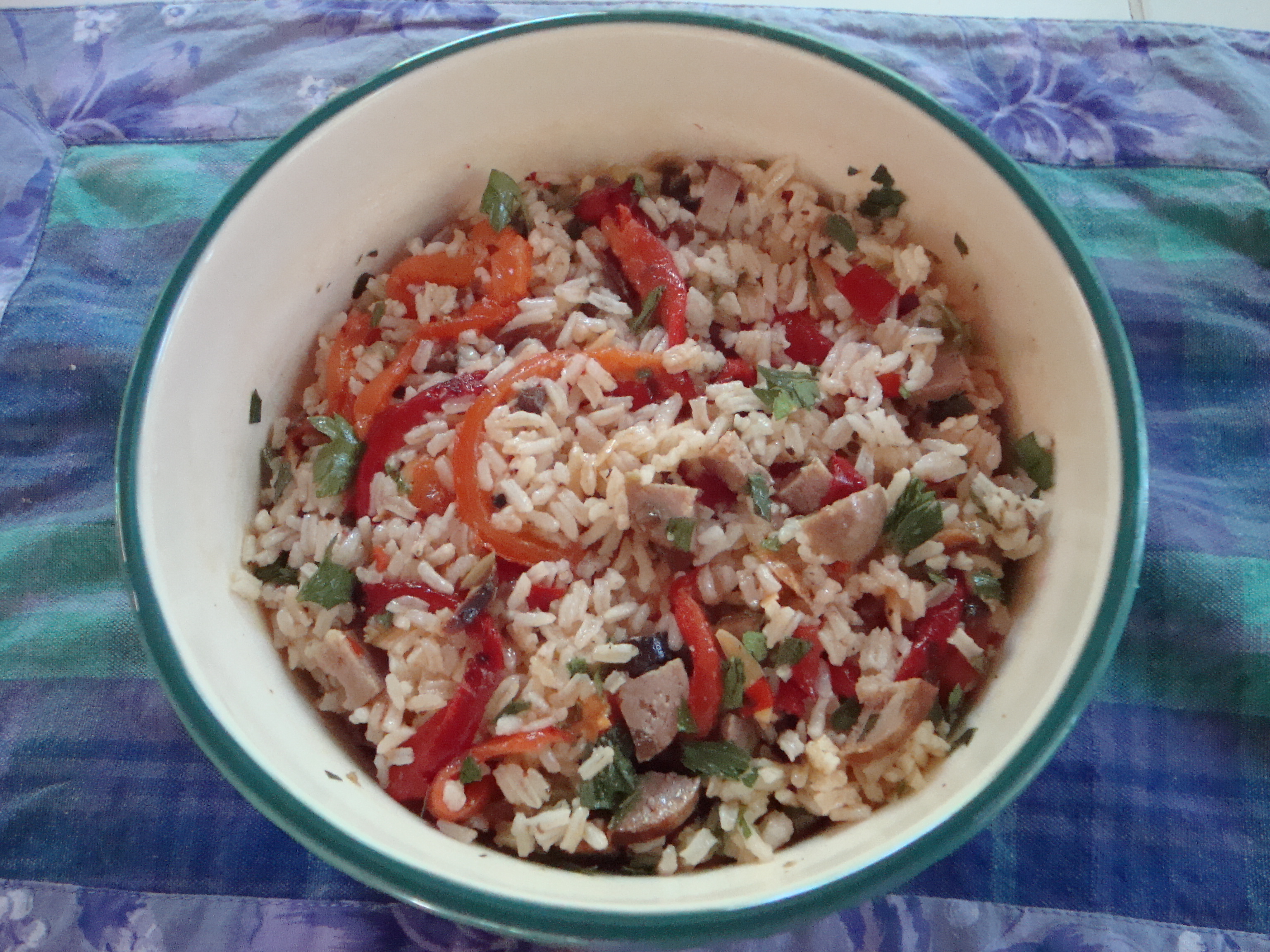
Rice Salad with Spanish Flavors
Serves 4-6
1 cup long grain rice
2 Tbsp red wine vinegar
¼ olive oil
Salt & pepper to taste
1 link sweet Italian sausage, cut lengthwise into quarters, then ½-inch slices
½ cup roasted pepper strips
¼ cup chopped olives
¼ cup slivered almonds, toasted
¼ cup chopped fresh parsley
Cook the rice according to package instructions.
Add the oil and vinegar to a jar. Shake well until combined. Season with salt and pepper to taste.
When the rice is cooked, transfer to a large bowl. Gently toss warm rice with the vinaigrette and the remaining ingredients until well combined.
And, finally, the fiddleheads. These are a special treat, so they called for a simple preparation that wouldn’t overshadow the vegetal flavor of these ostrich fern sprouts. I just parboiled the fiddleheads, drained them and dried them, then did a quick sauté in with minced garlic. I find the flavor of fiddleheads to be mildly reminiscent of asparagus, but not exactly. If you’ve never had them before, I recommend that you look out for them next spring and try them!
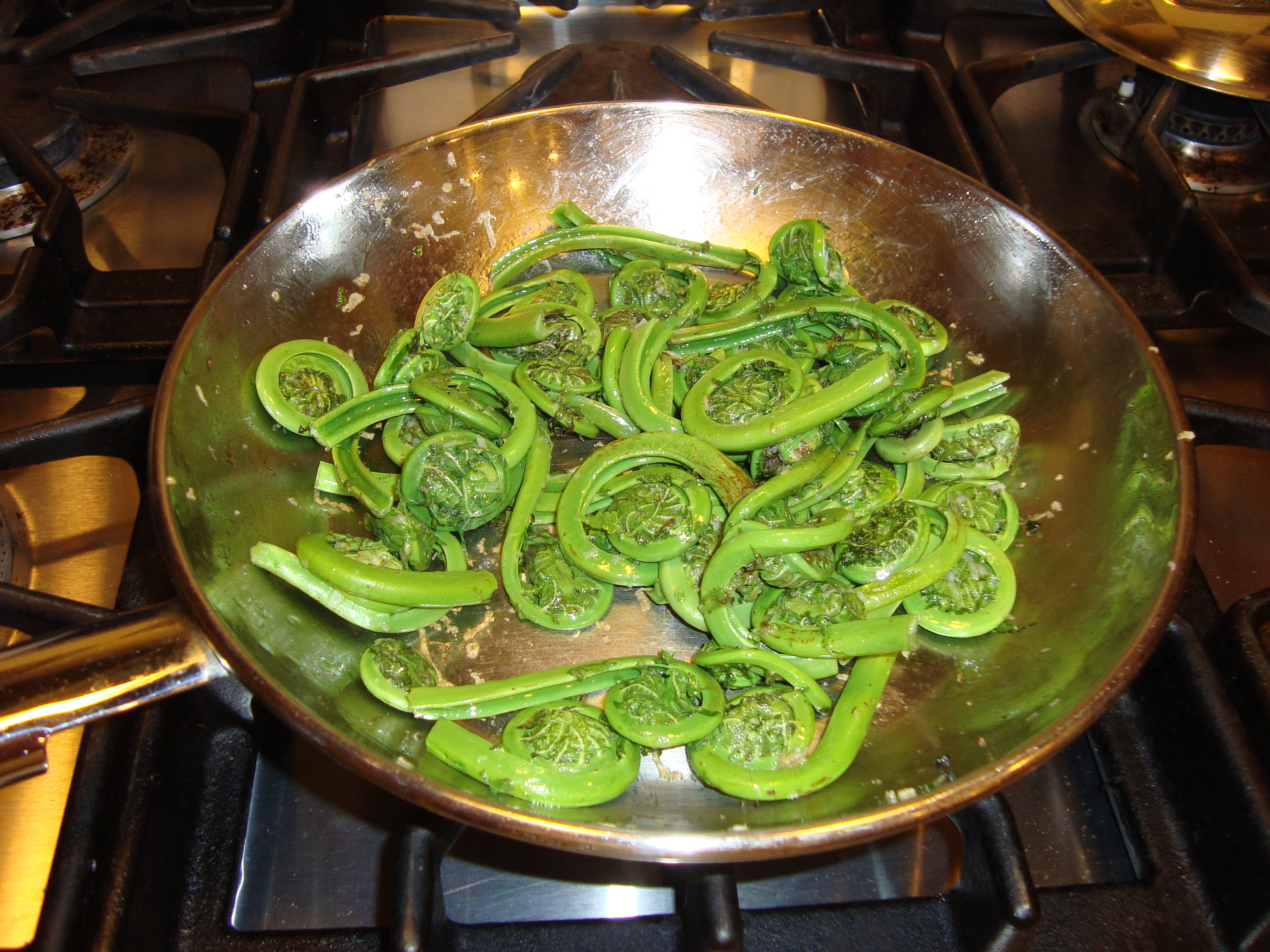
Sauteed Fiddleheads
Serves 2
½ lb fiddleheads
1 Tbsp olive oil
1 clove garlic, minced
Bring a medium pot of water to a boil. In the meantime, trim off the base ends of the fiddleheads and rub off any brown membranes. When the water is boiling, add the fiddleheads and cook for 4 minutes. Drain and dry well on a clean dish towel. In a medium skillet, heat the oil over medium heat. Add garlic and cook until fragrant, about 2-3 minutes. Add the fiddleheads, and cook until warmed through and just starting to brown, about 5 minutes.
Winter Wonderland Arrives!
Winter has set in. The solstice was this week, so I shouldn’t be surprised. We had our first snowfall on Monday night and another last night (Wednesday); a few inches dusted my world. I always say, if it’s going to be cold, it might as well be pretty, and it is.
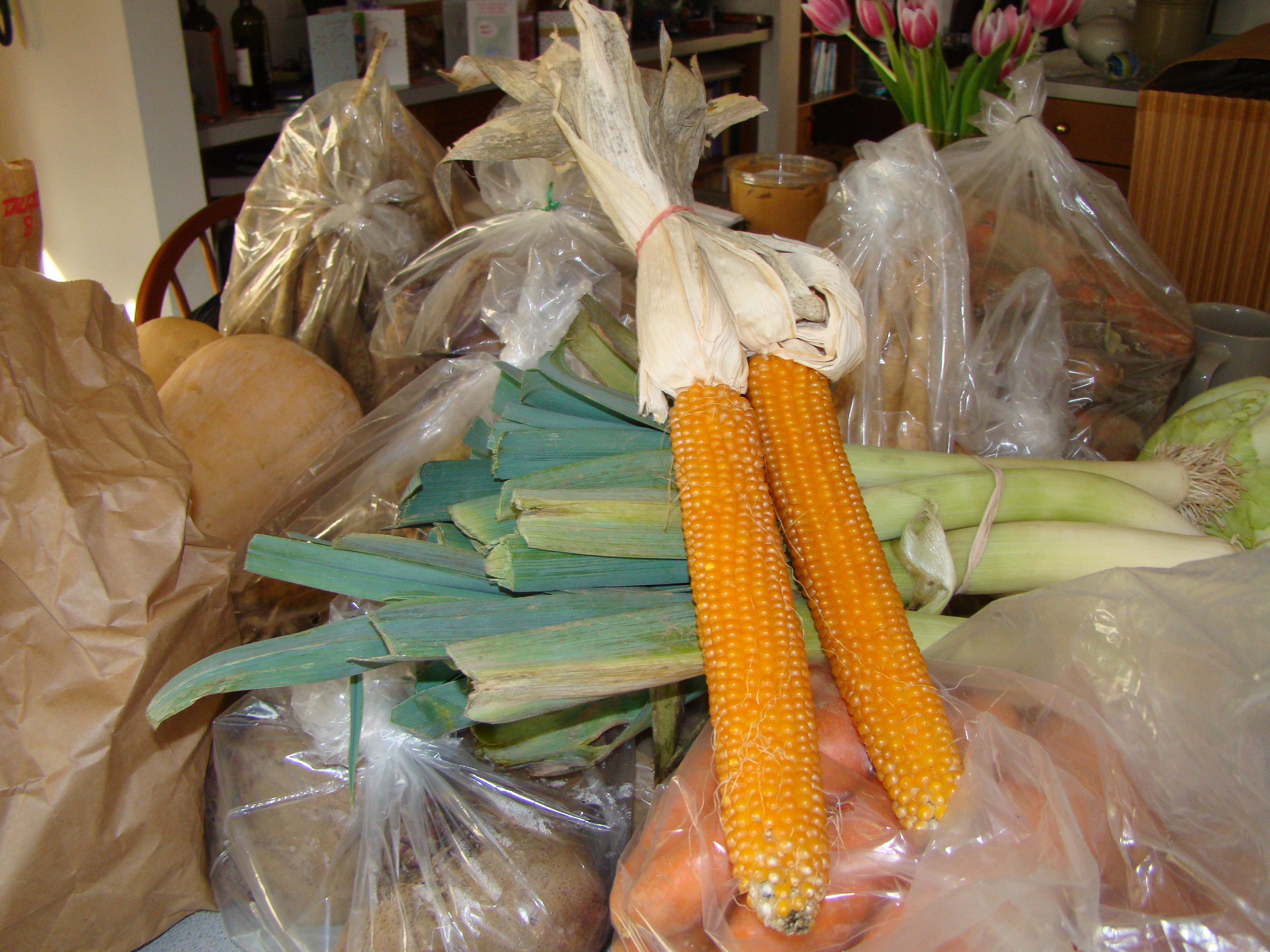
On Saturday, we picked up our second and final share of the Shared Harvest CSA. The pantry and extra refrigerator are now packed with bountiful vegetables, mostly ones that will store for a while. Our share included potatoes, sweet potatoes, onions, beets, carrots, celery root, butternut squash, cabbage, parsnips, leeks, winter radishes, lettuce and kale. The share also included some popcorn (on the cob) and two pounds of locally grown beans: kidney beans and one other. I picked some crazy-looking brown and black marbled beans called Peregion. We had ordered an additional 10 pounds of carrots, 5 pounds of parsnips, and 10 pounds of beets. I suspect there is a least one pot of borscht in our future.

Cold weather calls for hearty meals. We had some people coming over for dinner, and I was in the mood for roasted vegetables, so I made a winter vegetable and chicken paella. The original recipe called for butternut squash and Swiss chard. I added extra squash plus a couple of turnips and parsnips. I also substituted the kale from the CSA share for the chard.
I am fortunate to have an actual paella pan that I brought back from a visit to Spain when my mother was living there (a couple decades ago). You can use a very large ovenproof skillet or sauté pan, but the paella pan makes for a gorgeous presentation. (Unfortunately, I didn’t take a picture of the paella in the pan, just some of the leftovers.)
Paella is a very flexible dish. I once borrowed an entire cookbook of paella recipes from the library and spent several nights browsing through. Each part of Spain has their own version which features local ingredients. The common element is the short-grain rice.
Here’s the version I made this weekend from my CSA share vegetables:
Winter Vegetable-Chicken Paella
Serves 6 – 8
Adapted from this recipe from Food and Wine magazine, December 2002
1 large leek, white and tender green parts only, halved lengthwise
2 Tbsp olive oil
1 small butternut squash, about 2 pounds, peeled and cut into ½-inch dice
2 turnips, peeled and cut into ½-inch dice
2 parsnips, peeled and cut into ½-inch dice
Kosher salt and freshly ground pepper
3 lbs chicken thighs, with skin
1 large onion, chopped
¼ teaspoon saffron threads, crumbled
1 tsp smoked paprika
2 cups Arborio rice
3½ cups hot chicken stock
1 can (28 oz) whole tomatoes, drained and chopped
1 bunch of kale, stems discarded, leaves coarsely chopped
Preheat the oven to 425°. In a large bowl, toss the diced squash, turnip, and parsnips with 1 Tbsp olive oil. Season the vegetables with salt and pepper. Spread onto one or two baking sheets in one layer. Brush the leek with 1 teaspoon of the olive oil and arrange on a portion of one of the baking sheets, cut side down. Cut the leek into 1-inch lengths. Roast the vegetables for 20 minutes, or until golden and just tender.
Meanwhile, heat 1 tablespoon of the oil in a 14- to 16-inch paella pan or skillet. Season the chicken with salt and pepper; cook over moderate heat until golden, 10 minutes. Transfer to a plate. If there is a lot of fat in the pan, carefully pour off all but 2 tablespoons. Add the onion to the pan; cook over low heat until softened. Add the saffron and smoked paprika; cook over moderately high heat, stirring, for 2 minutes. Add the rice and 1 1/2 teaspoons of salt; cook, stirring, for 2 minutes. Stir in the stock, tomatoes, kale, and roasted leek, squash, turnips and parsnips.
Nestle the chicken into the rice, skin side up. Simmer the paella over low heat for 5 minutes. Transfer to a 350° oven and bake for 30 minutes, or until the stock is absorbed, the rice is tender and the chicken is cooked through. Remove from the oven and cover with a towel; let stand for 10 minutes. Serve at once.
 A Plateful of Happiness