Blog Archives
French Fridays with Dorie: Honey-Glazed Duck Breasts

Because it’s nothing I ever considered as home cooking, duck is one of my favorite things to order in a restaurant: duck breast, duck leg, duck confit – any or all of the above. When I saw this week’s recipe for French Fridays with Dorie was 20-minute honey-glazed duck breasts, I was definitely intrigued.
 Fortuitously, my closest grocery store actually carries duck breasts. They’re from Peking ducks from Québec, naturally raised for their meat, not force fed for foie gras. We’ve used duck legs from the same producer (Brome Lake Ducks) for duck confit, but never tried the breasts.
What a revelation! Not only can I now have restaurant food at home, but it was fast enough to make for a weeknight meal. Even so, it was impressive enough for a fancy company dinner too.

First, you cross-hatch the fatty skin on the duck. Then you heat up the casserole. (I love an excuse to use my Le Creuset pot.) Once it’s hot, the duck goes in, skin side down, for about 8 minutes to crisp up the skin. The high sides of the pot helped contain the splattering fat, though I had to use the splatter guard too. Ducks sure do have a lot of fat. Then, I flipped over the duck to brown up the other side for a few minutes. It was looking good. I loosely wrapped the duck in foil, and let the breasts rest in a warm oven while I made the tangy sweet-and-sour honey-balsamic-lemon sauce. (I’ve reserved all that duck fat to use to roast potatoes another time. I can’t wait for that.)
For serving, I sliced the duck (on the diagonal to make it more tender, according to Dorie) and drizzled the slices with sauce. To me, lentils are the perfect side dish for duck, so while my duck cooked, I simmered a pot of lentils. I tossed the warm lentils with a mustard vinaigrette. Sauteed beet greens rounded out the plate.
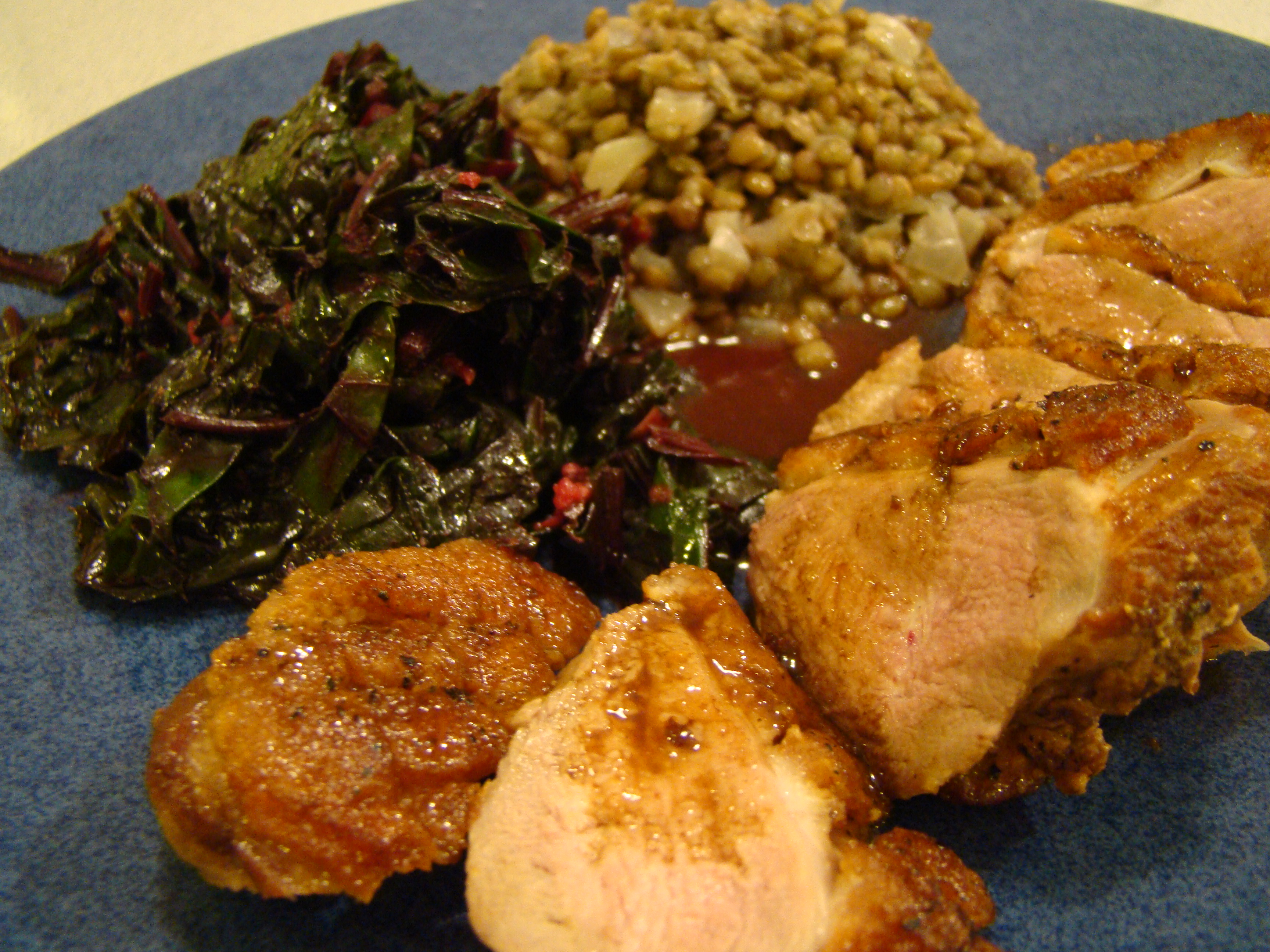
I thought the duck breasts were comparable to many duck dishes I’ve ordered out. How exciting to be a home chef! I don’t remember which recipe I last proclaimed my favorite FFwD recipe so far, but this one is definitely in the top three!
Check out what the other Doristas thought about the honey-glazed duck here. I’m hoping they are as enthusiastic as I am. And I’m curious about what kinds of sides they chose to serve with the duck.
If you want the recipe, check it out in Dorie Greenspan’s Around My French Table.
French Fridays with Dorie: Pumpkin Stuffed with Everything Good

Is it already Friday again? Is Friday really almost over? This week’s challenge for French Fridays with Dorie was Pumpkin Stuffed with Everything Good.
I loved the way this recipe sounded, but I was a little wary because I had tried a similar recipe from Ruth Reichl a few years back which, though it sounded amazing, it turned out flat and flavorless – disappointing to say the least. Melissa Clark also mentioned a Cheesy Baked Pumpkin in In the Kitchen with a Good Appetite, which I read over the summer, so this sort of recipe was on my mind. I’ve never been one to give up on a delicious sounding idea, so when this recipe turned up on the list for this week, even though this recipe sounded similar to my previous failed effort, I wasn’t discouraged.
It was challenging for me to fit making this week’s recipe into my schedule. I wasn’t able to make it over the weekend, and with a 2 hour bake time, and wanting to eat dinner at a reasonable time, I wasn’t sure how to make it work. I ended up dicing up ingredients on Night #1, stuffing and baking the pumpkin on Night #2 and reheating said pumpkin in the microwave on Night #3. Not ideal, but it kept me in the game.
I have to say how surprised I was at how SMALL a 3 pound pumpkin is. Maybe mine was small because it was extra dense. I know that I couldn’t cut off the cap with any of several substantial kitchen knives I tried. I ended up using the little saws that come with the kits at the grocery store for carving fancy Jack-O-Lanterns. And, I broke two of them. Mine was one tough pumpkin.
I didn’t stray from Dorie’s suggestions for the filling: stale bread, diced Gruyère, crumbled bacon, thyme, scallions, and garlic. This went into the hollowed out sugar pie pumpkin and was doused with nutmeg-flecked cream. See what I mean about sounding amazing.
The filling was about twice as much as would fit in the cavity (I told you it was small). I put the remaining mixture in an oiled shallow baking dish, poured cream over it, covered it with foil, and baked it alongside the pumpkin for an hour.
My (small) pumpkin only needed to bake for 90 minutes for the flesh to become tender. The sides were actually still quite stable and upright. We had already eaten dinner while it baked, but I did sample the baked filling in the dish. It was crusty and cheesy and delicious.
Tonight, we ate the actual stuffed pumpkin for dinner. It was much better than my earlier failure, but I’m not in love with it. I’m thinking that if I try it again, I might dice up the pumpkin, or perhaps an easier-to-peel winter squash, combine it with the filling, add some cream and bake it like I did the extra filling for a hearty side dish.
I might have mentioned before how much pleasure I get out of cooking something good to eat from the discarded elements of a dish. I make applesauce from peels and cores, and, of course, there’s stock from vegetable peelings or chicken bones. For a snack, I tossed my pumpkin’s seeds with olive oil and a little za’atar and roasted them for about 15 minutes. Yum!
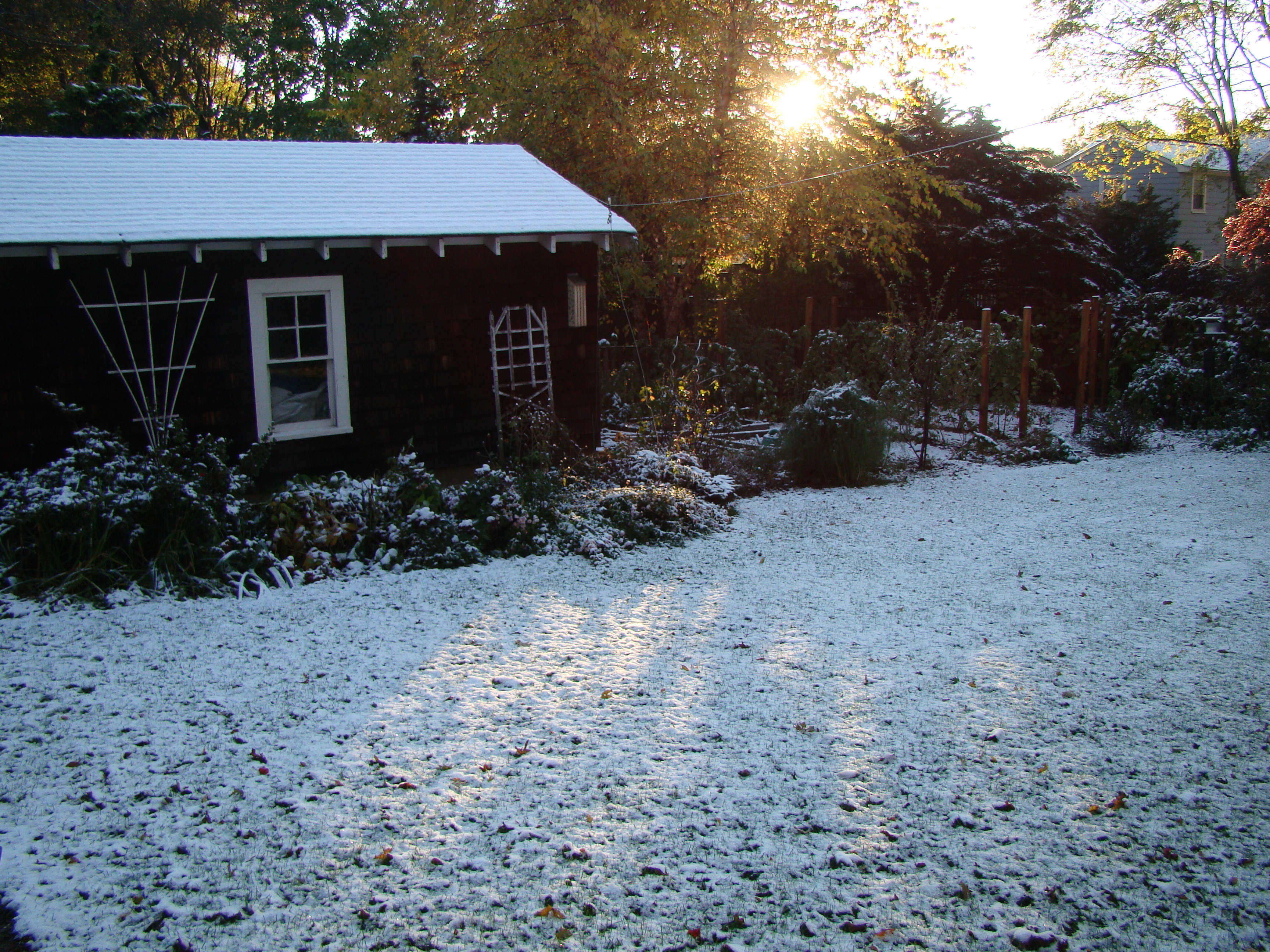
Finally, I wanted to mention the surprise October dusting of snow we got last night into this morning. It was gone by the end of today, but unusual nonetheless. Why do they call it Global Warming? We haven’t even had our first frost yet this fall. Climate Change seems to be the better term.
Find out what the other FFwD bloggers thought about the cheesy pumpkin. Last week, I accurately predicted a mixed bag due to the pissaladière’s anchovies. This week, I anticipate a lot of swooning. You can see for yourself here. We’re asked not to include the recipes in our posts, but the recipe can be found here You can also find this and hundreds of other great recipes in Dorie Greenspan’s book Around My French Table
 A Plateful of Happiness