Blog Archives
ffwd: veal chop with rosemary butter
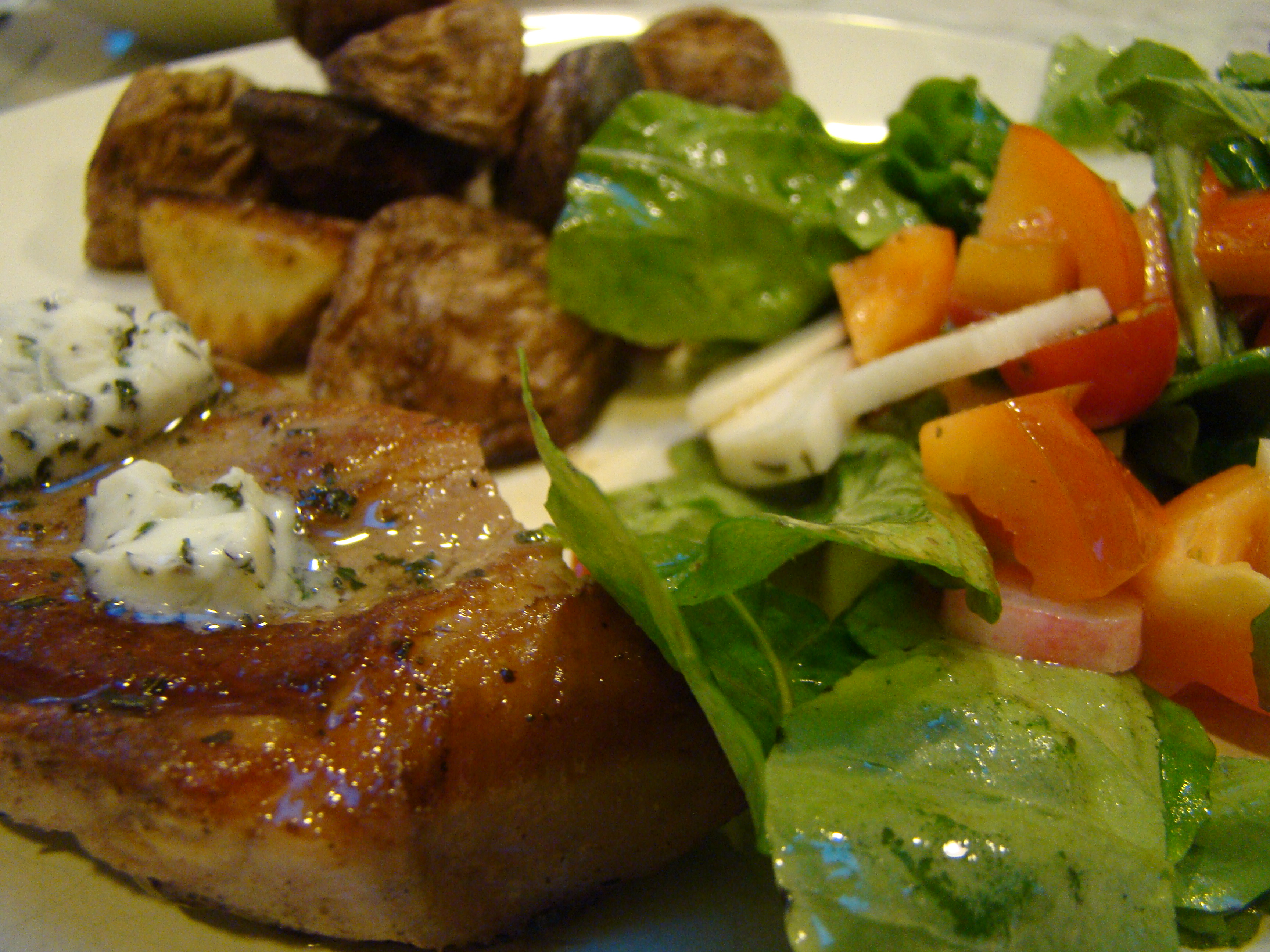
(Warning: If you don’t like to think too much about where your food comes from, skip the first few paragraphs of my post.)
It’s been more than a decade since I last ate veal. I stopped when I learned how cruelly calves are treated in anticipation of turning them into veal. I won’t judge you if you eat veal because everyone’s food choices are personal, but I decided veal wasn’t for me.
It’s only in the past few years that I have come to the realization that in order for animals to give milk, they must have babies first. Female babies have value in growing a dairy herd. Male babies, not so much. This is why lamb and veal have made it into our food system. With veal, conventional practice has been to crate the calves to prohibit exercise and normal muscle development in any effort to create a highly tender and white meat. This is what caused me to drop veal from my diet.
(As an aside, while goat is the most popular meat globally, it hasn’t made inroads in the American diet. That means that male baby goats, bucklings, have it particularly hard. Check out this cool effort to create a market for the bucklings from several goat dairy farms in the Northeast.)
(If you were skipping ahead, I think it’s safe to start reading here.)
At a winter Farmer’s Market, I was talking to a local cheese maker while sampling her wares. When I noticed a sign on the table advertising veal for sale, I shifted the conversation in that direction. At Lawton’s Family Farm, the excess calves are raised in fields alongside the other grass-fed cows raised for beef. This is also known as “rose veal” because the color is pink, a natural result of the exercise and muscle use from gamboling in the fields. This was veal I was open to trying. I bought the last chop, stashed it in the freezer, and forgot about it.
When I saw this week’s recipe for French Fridays with Dorie would be Veal Chops with Rosemary Butter, I remember the lone chop in the freezer. Rather than substituting another kind of meat, I gave it a try.
I only make compound butters sporadically, when a recipe calls for a specific blend. I don’t know why they aren’t part of my regular pantry. I made half the recipe because I knew I was cooking just one chop. Fresh rosemary and thyme (for my garden!) were mixed into softened butter before adding a pinch of salt. I used Maldon salt and the flakes gave it a great texture when I tasted it straight.
The chop is rubbed with olive oil, rosemary, thyme, salt and pepper. The chop should be seasoned for at least an hour, and up to a day, ahead. I didn’t read the recipe carefully before I set out to make dinner, so 15 minutes is all it got.

Olive oil is infused with garlic and more rosemary in the pan before searing the chop for two minutes on each side. Then, the pan is deglazed with white wine and chicken broth to make a sauce. (I didn’t have any broth readily available, so just used water and salt.) The sauce is drizzled over the chop before topping it with a few dots of the rosemary butter.
The preparation was delicious, and so was the veal. One of the things cooking from this book continually teaches me is indoor ways of cooking meat. This technique is a winner. It might seem simple, but I honestly have never pan-fried meat outside of recipes in this book.
Howard and I shared the half-pound chop with a generous serving of roasted potatoes and an arugula salad on the side. I will try to remember to make this with lamb and pork shops over the winter. I would make a perfect meal for company.
My favorite part of this particular recipe was the rosemary butter. I accidently cut up a little more than I needed to top the meat. I’ll admit to eating a few dots plain instead of throwing it out. I’m thinking of making some biscuits or picking up some dinner rolls as a vehicle for the leftover herby, salty spread. It was amazing.
If you want to read about other interpretations of chops with rosemary butter, check out the Dorista links here. The recipe can be found in Dorie Greenspan’s book Around My French Table.
Happy Friday! I can’t believe that next Friday I’ll be in Seattle and will meet about a dozen of you in person. Can’t wait!!!!!
ffwd: fresh tuna, mozzarella, and basil tartelette
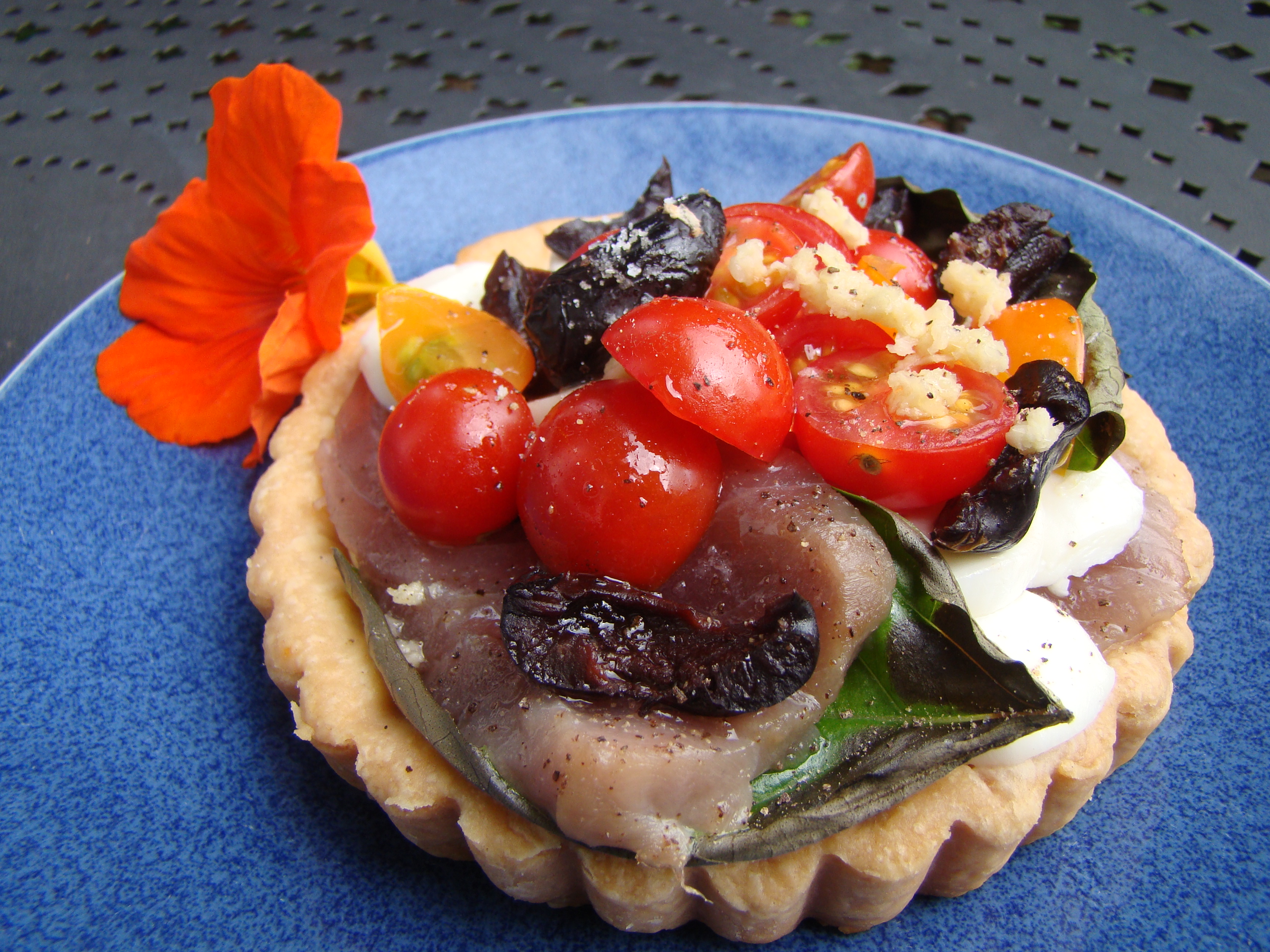
For the past three years, I’ve been cooking my way through Dorie Greenspan’s cookbook Around My French Table along with the rest of the French Fridays with Dorie crew. With hundreds of recipes in the book, one cannot love them all. Last week, I was intrigued yet uninspired by Floating Islands (meringues on a pool of custard). I was feeling the same ennui about this week’s recipe, but didn’t want to skip two weeks in a row.
The selected recipe this week is Fresh Tuna, Mozzarella, and Basil Pizza. I like all the individual ingredients in this recipe, but I was having trouble imagining them all together in one dish. You never know until you try, so I plunged right in.
The main ingredient in this one was fresh tuna. I’m a big sushi fan so I have no objection to eating raw fish, but I anticipated sourcing sushi-grade tuna to be challenging. There’s a Japanese grocery that sells sushi grade fish, but I didn’t have time to get there this week. I only needed a little bit of tuna because I was making just a single serving for lunch. My game plan was to buy some prepared sushi at Whole Foods and cannibalize slices off the top of a few rice balls. I was pleasantly surprised to find sushi-grade tuna in a freezer case in the fish department instead.

The base for this fusion pizza is supposed to be a disk of puff pastry. I had a mini-tart crust hanging around my kitchen. When I made a tart last week, there was some extra pastry so I’d made a mini crust but hadn’t had a chance to fill it yet. This seemed the perfect opportunity to use it.
With the crust and tuna ready, the rest of the preparation is a snap. Lightly sautéed scallions are spread on top of the crust. Then slices of tuna, fresh mozzarella, and basil leaves are alternated decoratively around the crust. This would be enough for a beautiful tart, but then the tuna is topped with cherry tomatoes, olives, and freshly grated ginger. The tart is slipped into a hot oven for a few minutes to slightly cook the fish.
There’s no doubt that the fish tart was very pretty too look at. Unfortunately, I found the flavors a bit conflicting (or anachronistic, to quote my friend Lauren – you know who you are). On the one hand, the tuna and ginger are reminiscent of sushi. On the other hand, the tomato, mozzarella, and basil scream Salad Caprese. Sushi and Italian is a bit too fusion for me. My other complaint is the basil. After a couple minutes in the oven, any exposed edges turned black. I think this would work better to add the basil after it comes out of the oven.
The concept works. I particularly liked the base of sautéed scallions. I wouldn’t rule out a second try that firmly stands in one flavor profile. While I didn’t try the puff pastry bases, I really liked this with the pâté brisée. I’m even inspired to make a batch of mini tart shells to play around.
If you’re curious about how other Dorista pizzas turned out, follow their links here. Happy Friday!

Tasty!
 A Plateful of Happiness