Blog Archives
Nourishing the Soul and the Belly {CtBF}

If there was ever a week where I needed comfort food, this might have been it. When the world as I’ve known it seems to be crumbling around me, cooking is a welcome distraction, and the results offer a modicum of comfort and nourishment to our table. This week’s recipe for Cook the Book Fridays, Coq au Vin, a hearty braised chicken dish, fit the bill.
I’ve probably eaten Coq au Vin in a restaurant. I don’t think I’ve ever made it myself. When I visualize it, I imagine chicken cooked in white wine. I was surprised to see that in this recipe, from David Lebovitz, the chicken is cooked in red wine. A little planning is required as the chicken along with some herbs and chopped vegetables needs to marinate overnight in a full bottle of wine.
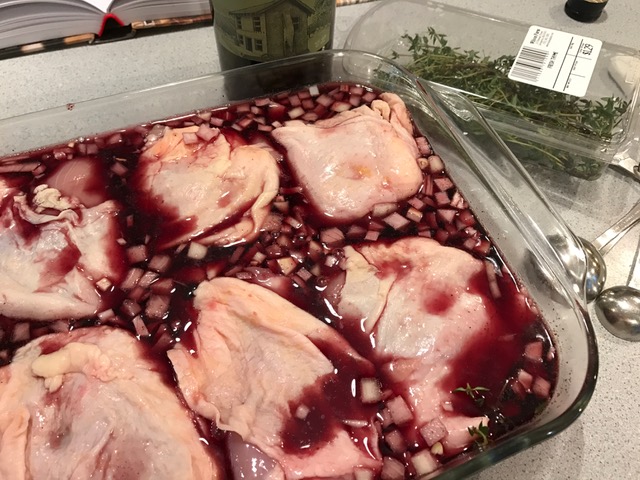
Our chicken part of choice are chicken thighs. Rather than enjoying our favorite pieces during one meal and less favorite parts for subsequent meals of leftovers, I opted to use 8 chicken thighs instead of a whole chicken cut into 8 pieces.

When it’s time to cook dinner, first the chicken is browned. Then, mushrooms and lardons of bacon are crisped. Then the herbs and chopped vegetables from the marinade get a turn. Finally, the wine is poured into the pot and the chicken simmers for an hour. In the meantime, pearl onions are simmered separately.
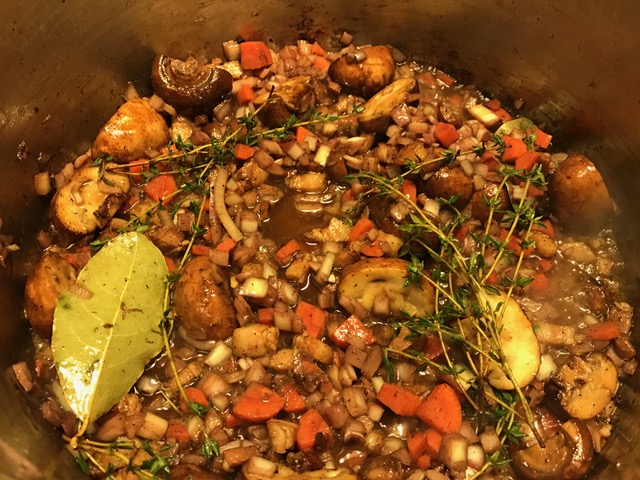
According to David Lebovitz, classic coq au vin is thickened with chicken blood, an ingredient that probably isn’t easy to find at your local grocery store. Not at mine either. The alternative offered, cocoa powder whisked into some of the cooking liquid, makes a more appealing addition.
I served the chicken in wide shallow bowls over egg noodles with a full complement of silverware. Forks and knives to eat the chicken and a soup spoon to catch every last drop of the flavorful sauce.
Coq au vin hit the spot as comfort food. I will double the mushrooms and onions if I make it again. Though I cooked this on a weeknight, I’d say that coq au vin is more of a weekend meal. It would also be better shared with company than reheated for several nights in a row.
Check out what the other bloggers from Cook the Book Fridays thought about coq au vin. You can find the recipes in David Lebovitz’s cookbook My Paris Kitchen on page 177.
As one more effort towards distraction, yesterday I helped raise the relocated hoop house at Lexington Community Farm, my happy place. After we moved and set up the hoops, I held the ridge pole up until the farmer could tie it in place while we bolted it in place. I can’t wait until next month when I can start working in the greenhouse again, as the seasonal cycle repeats. What fun!

Salt Cod Double Take
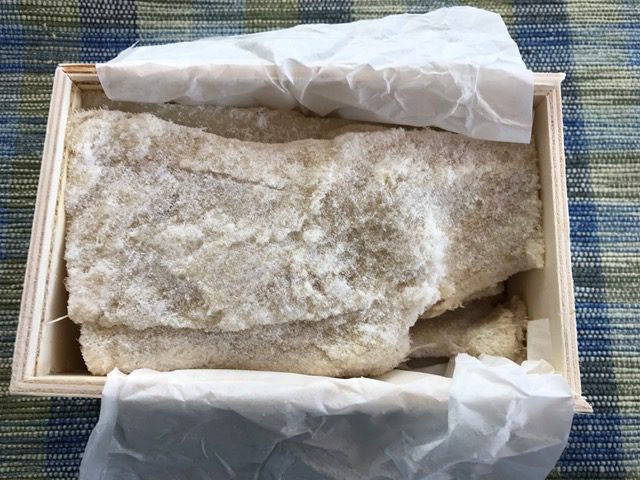
Salt cod has been around for a long time. Back in the days before refrigeration, salting was one way to preserve foods for longer storage. I first became acquainted with it when I moved to New England and noticed that a barrel of dried fish would appear in the grocery store around the holidays. Ever curious, I bought some and looked up what to do with in “The Joy of Cooking” (this was pre-Internet). Brandade, a salt cod and potato puree, was the “gateway” recipe for preparing this flavorful (from the salt) mild fish. Over the years, I’ve prepared salt cod a few times, when I saw it for sale, but it had been a while since I’ve seen it around.
When Brandade came up as December’s bonus recipe for Cook the Book Fridays, I smiled, remembering this hearty dish fondly. It took me a while to track down the dried fish, so I missed the earlier recipe, but it came up again this week with Salt Cod Fritters.
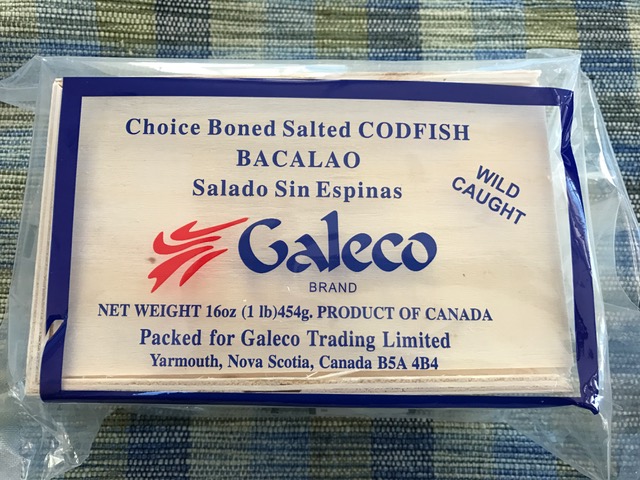
When using salt cod, you must plan ahead. A day or two of soaking with regular water changes is required to leach the salt from the fish so that it’s edible (i.e. not unbearably salty). Once the fish has been de-salted, it’s time to make brandade, which is surprisingly simple, not much more work than making mashed potatoes.
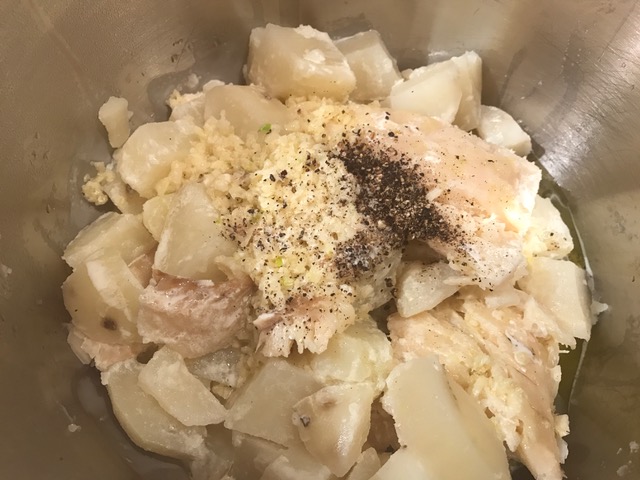
David Lebovitz’s version starts by infusing olive oil with garlic and thyme. Then, the fish is simmered with chunks of peeled potatoes until everything is tender. After draining, the fish and potatoes are pureed in a stand mixer along with cream, the garlic-infused oil, salt and pepper, which makes the richest, most delicious mashed potatoes you’ve ever had. To turn this into dinner, there’s one more step. The brandade is transferred to a baking dish, sprinkled with bread crumbs and grated Parmesan cheese, and baked until lightly browned and bubbly. The dish of brandade can be served with a salad for dinner (that’s what we did) along with some toasted bread. It could also be served as a spread for a party appetizer.

We ate half of the brandade for dinner. A day or two later, I made salt cod fritters with the other half. You might know that I’m terrified of deep-frying. I also can’t get my head around the volume of oil required to do this. It grosses me out. I was happy to hear from some of the other cooks in this group that shallow-frying worked too.
I liked that the salt cod balls, made from brandade mixed with bread crumbs, could be rolled earlier in the day. That left only the step of mixing the batter and cooking for dinnertime. The well-seasoned beer batter sits for half an hour, which leaves ample time to mix up the tartare sauce.

To cook the fritters, the salt cod balls are dunked in the batter and the excess drained off (as best as you can, not so easy), then fried in hot oil. The batter was thick and when I placed the balls in the oil, more of the batter dripped off, creating a little pancake base. This happened each time I turned the fritters, resulting in pyramid shapes instead of balls.
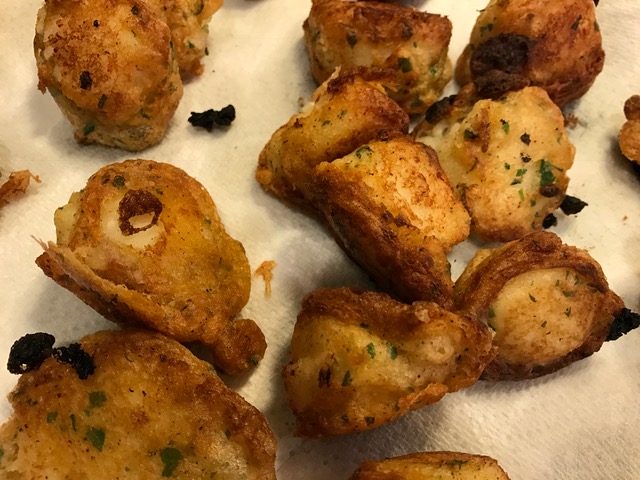
Towards the end, I tried flattening the balls into patties before dipping and frying. I found this to be less frustrating. I’ve successfully converted from pan-frying to baking my crab cakes, so I also wonder whether the batter-coated patties can be baked instead of pan-fried.
I think the fritters are intended as an appetizer, but I served them with salad for dinner.

I would definitely make brandade again and might make the fritters. Both would make fabulous additions to the Feast of Seven Fishes that we attend on Christmas Eve. Lauren, if you’re reading this, what do you think? I’ll try to remember to ask you again in December.
Check out what the other bloggers from Cook the Book Fridays thought about salt cod fritters or brandade. You can find the recipes in David Lebovitz’s delicious book My Paris Kitchen on page 73 (fritters) and page 144 (brandade).
 A Plateful of Happiness