Blog Archives
ffwd: coupetade

This week’s recipe for French Fridays with Dorie is a dried-fruit-studded French toast bread pudding called coupetade. On many fronts, there was no way that Howard was going to try this one, so I didn’t even consider trying to adapt it to his tastes. The only concession I made was to halve the recipe.
I’m indifferent to French toast, but I adore bread pudding. This was a new take on it that I’d never seen. First of all, you don’t just start with stale bread. You first make French toast out of the stale bread. Some sugar is added to the milk and egg for extra caramelization. The best French toast is made with egg bread, like brioche or challah, and that was the recommended base here as well. I didn’t make my own bread, but bought a small loaf from a favorite local bakery. The recipe calls for cooking the French toast in a sea of butter, but after my recent greasy pancake experience, I opted to lightly coat my electric griddle with some butter and cook the French toast as I would for breakfast.
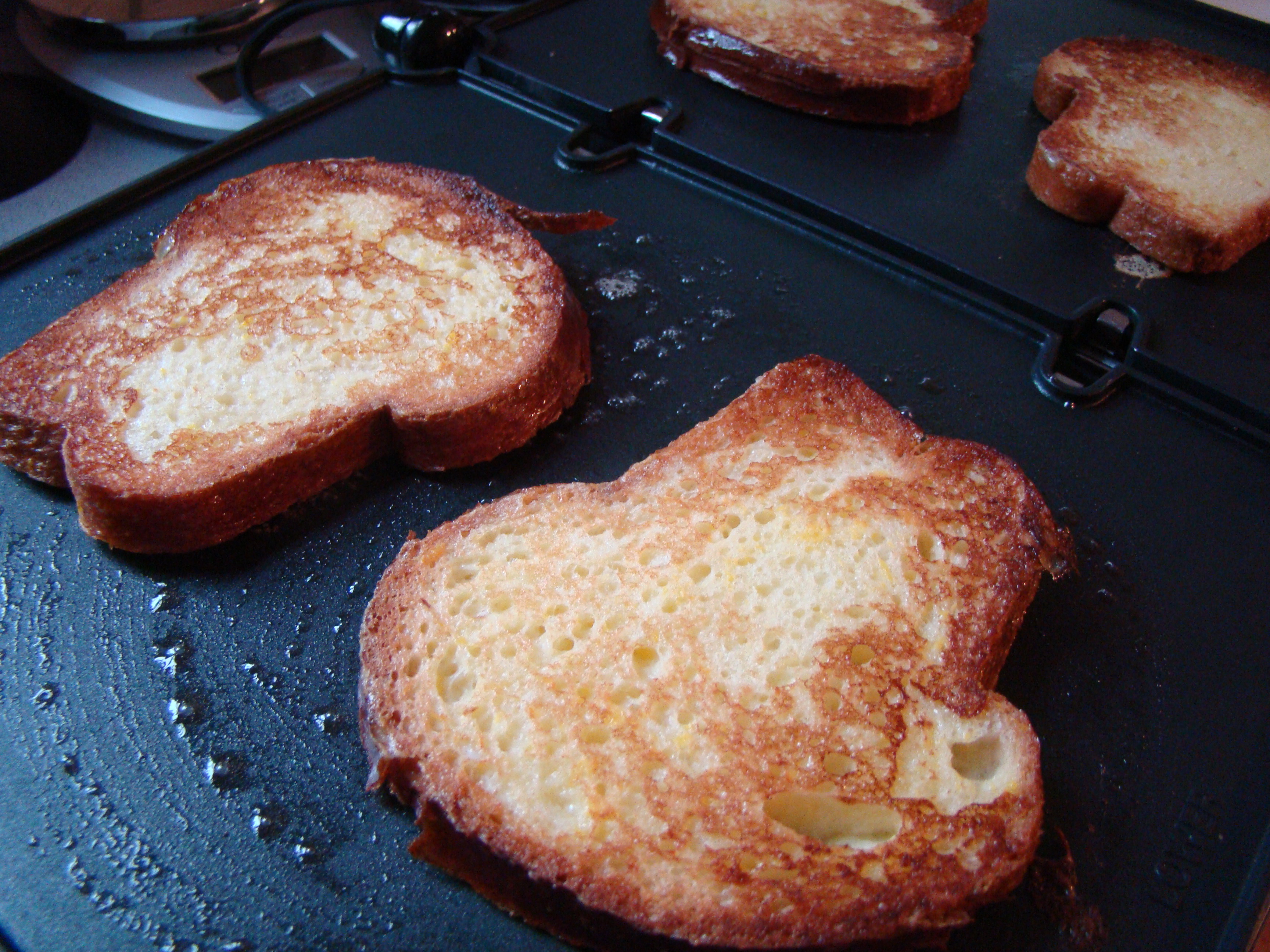
The French toast is cut into smaller pieces and placed in a baking dish and garnished generously with dried fruit. My dried fruit wasn’t as moist or plump as it should have been, so I applied a tip that I’ve picked up over the years from the Dorista crew.
A bit of liquor can only improve things.
While the French toast cooked, I soaked dried apricots and dried cherries is some warm kirsch, both to plump up the fruit and to give the coupetade an extra kick.
A simple custard mixture of eggs, sugar, milk, and vanilla is poured over the bread and fruit and baked in a water bath for an hour.
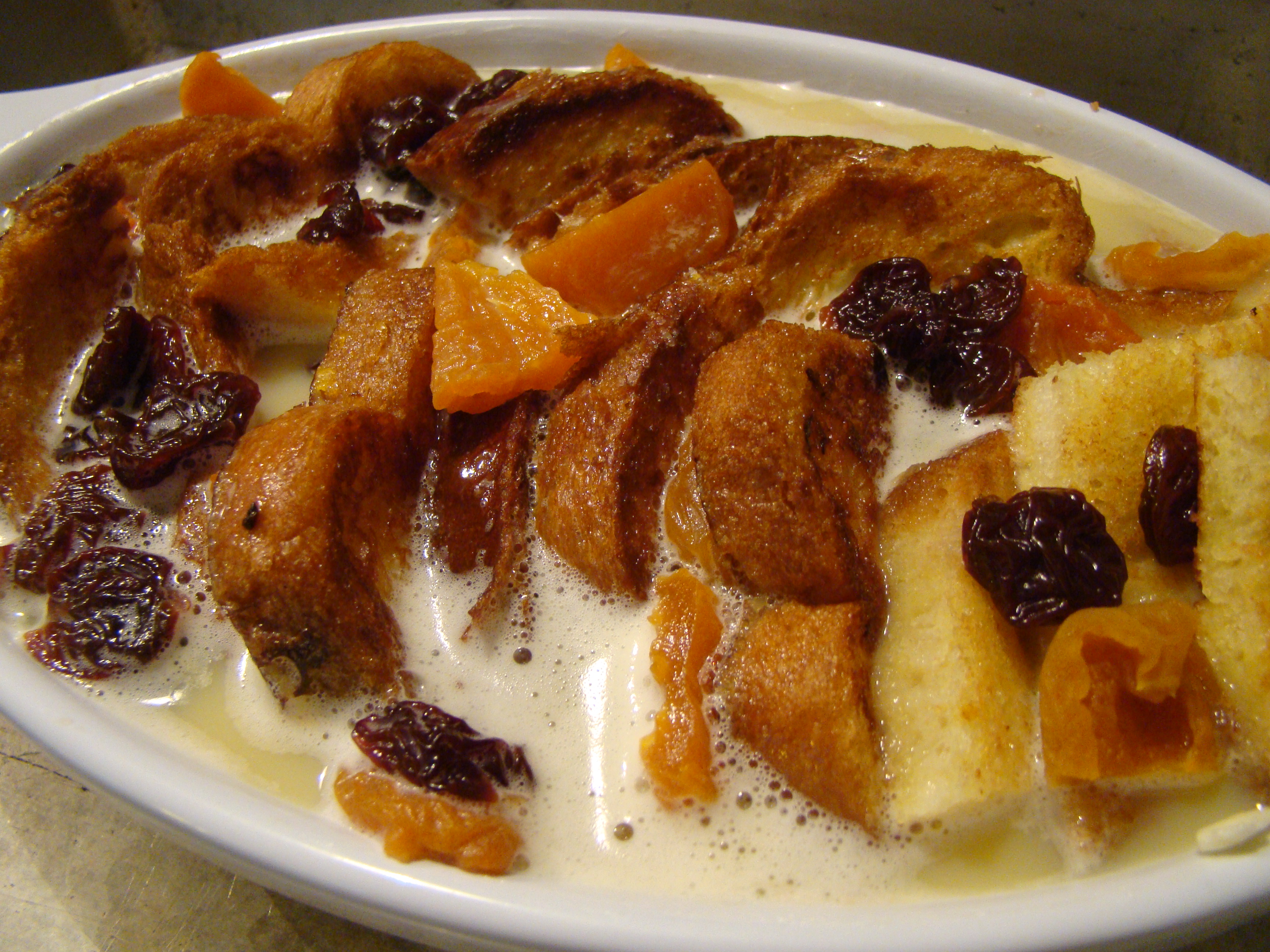
This dish can be served warm or cold. Traditionally, the French eat it cold, but I couldn’t wait and ate it warm.
I really enjoyed this. It is perfect comfort food! The creamy bread and custard contrasted nicely with the slightly tart and chewy fruit bits. You could use prunes, raisin, or dried cranberries, whatever happens to be on hand. Any non-savory bread would work too (I can’t quite imagine seeds in this one.) Even though I might be eating alone, I would definitely make this one again.
My sister Jane AND her family are huge bread pudding fans, so, Jane, make this one! You’ll love it.
We don’t post the recipes, but you can find it in Dorie Greenspan’s book Around My French Table. To read about other interpretations of coupetade, check out the other French Fridays with Dorie bloggers’ posts here.
tuesdays with dorie / baking with julia: cranberry-walnut pumpkin loaves
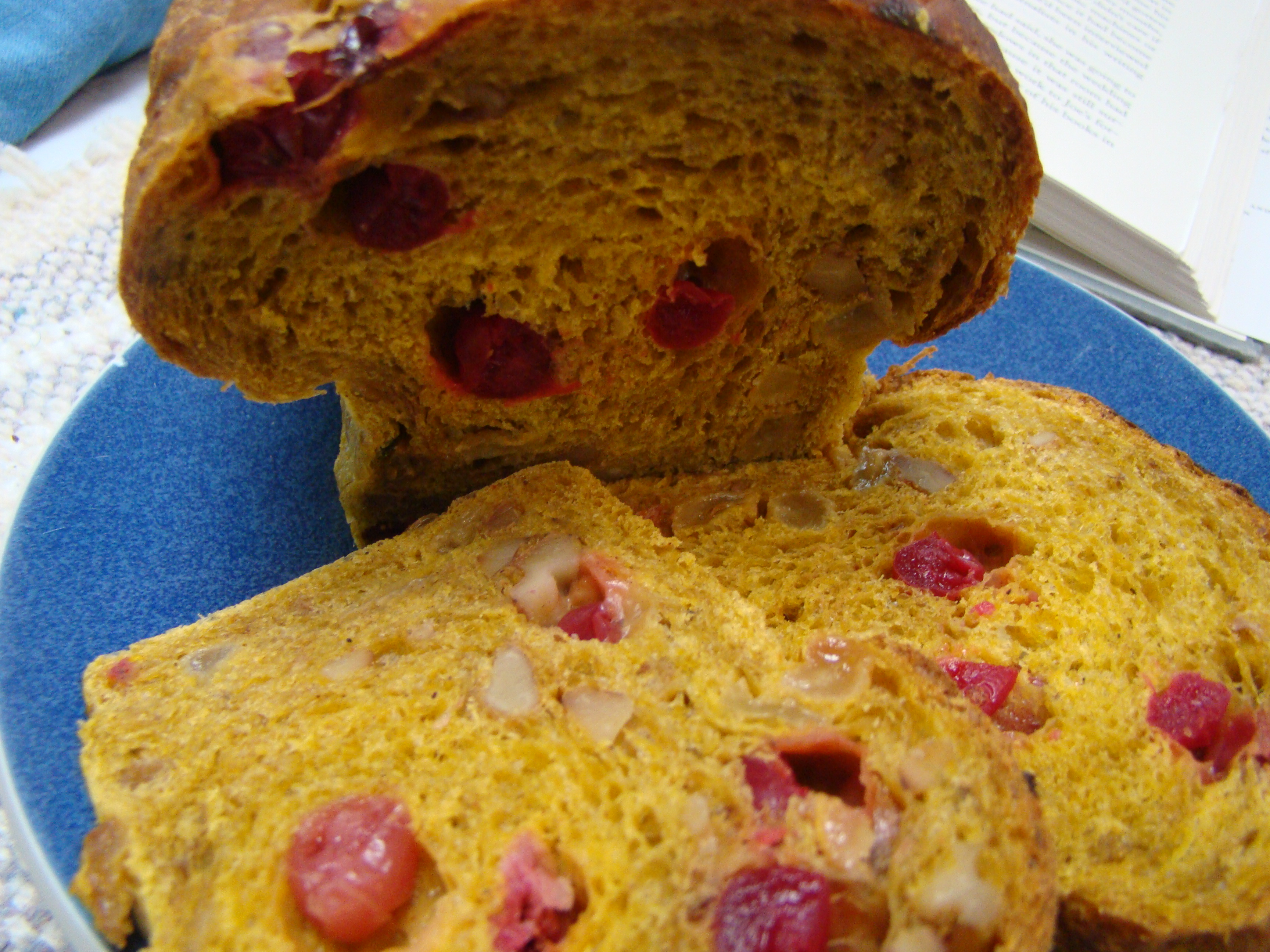
When I read the name of this autumnal recipe, I envisioned just another quick bread, so I wasn’t planning to make it. When I realized that it was a yeasted bread, I got more interested. Pumpkin in batter made me think of the Chart House’s Squaw Bread. Not that I ever figured out what was in it, but the memory drew me in.
There’s nothing like a stand mixer to make bread making nearly effortless. If you recall, my last bread attempt was the TWD whole wheat loaves a couple weeks ago. While it was successful, I also killed my stand mixer. With the help of the internet (for both diagnostics and retail), my ever-handy husband Howard determined that I had managed to strip the worm gear. He had it fixed and ready to go for this week’s recipe.
The pumpkin loaf dough is like an enhanced brioche, where the usual flour, yeast, salt and water are enriched by butter and egg (and, in this case, pumpkin as well). It was very sticky. I had some doubts that it would form a ball on the dough hook because after 10 minutes, it was still rather loose. The last five minutes worked its magic, producing the desired silky ball on the hook. Toasted walnuts, cranberries, and golden raisins were mixed in to stud the dough.
This was a happy lump of dough, and it grew heartily.
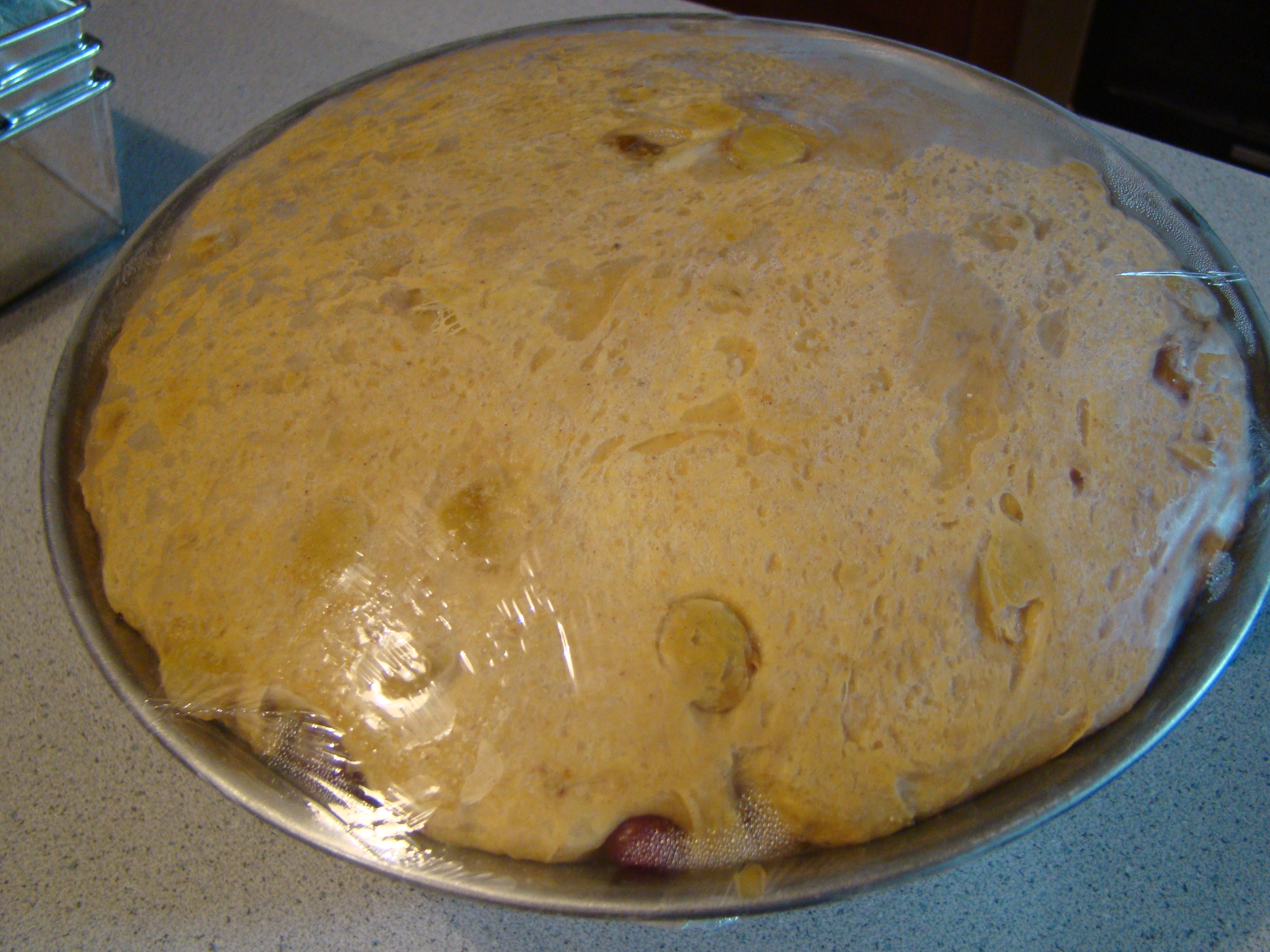
After First Rise
I was a little confused about the overnight chill. When I’ve chilled dough overnight before, it’s been for an overnight rise, but that didn’t seem to be the case in this recipe. I placed the dough in a bowl just slightly larger than the deflated dough, wrapping tight in plastic. It had a little room to grow, and when I checked for bedtime, it was pushing against the plastic already. Hoping it wouldn’t explode, I just let it be for the night. Good thing that I didn’t use a larger bowl. Though the plastic wrap successfully held the dough in place, I’m sure it would have continued to grow, if unrestrained.
Next morning, I removed the dough from the fridge to let it warm up to 64F. This was the hardest part. The recipe said it would take 3 or 4 hours. Ha! I think it depends on the temperature of your house. It is early fall here in New England, but I’m playing the game of “how long can we wait to turn on the heat”. Of course, I don’t think the heat is needed at all yet, but the thermostat said the kitchen was 65F. It took all day, nearly 8 hours to get to “room temperature”.

Finally, the dough was divided and shaped into little loaves, left to rise for the second time, and then baked.
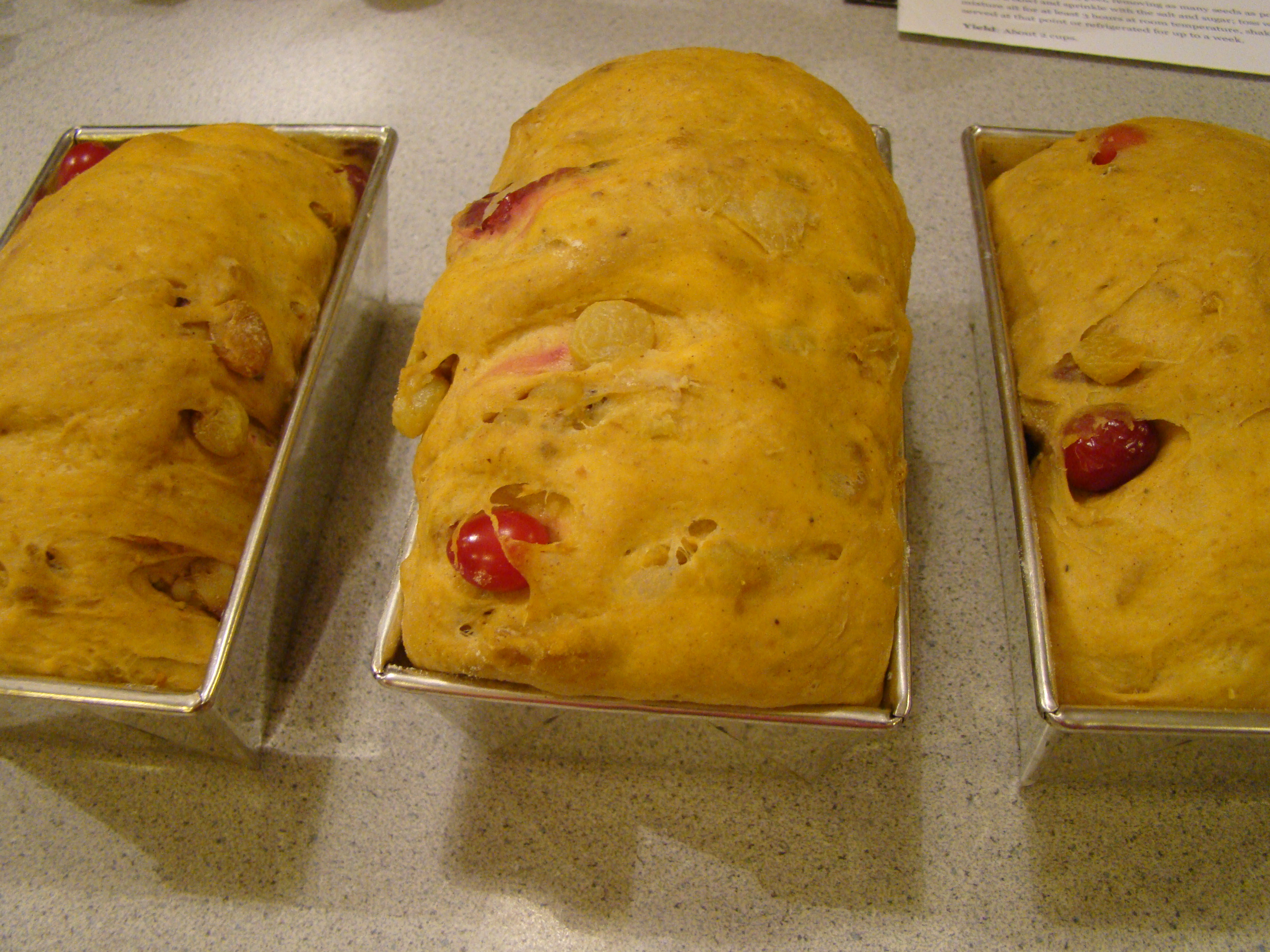
My verdict on this one? I absolutely love the texture of this bread. It’s moist and light and airy. The pumpkin’s flavor wasn’t noticeable, but I’m sure it added to the wonderful texture. I felt lukewarm about the cranberries. They dotted the loaves like rubies, which looked gorgeous, but tasted a bit too tart. Maybe I would have preferred dried cranberries, which are usually sweetened. I also like the smaller loaves, great for sharing.
Much to my surprise, I can definitely see making this again, playing around with the spices and the add-ins. It reminded me of a moister panettone, the Italian holiday bread, so I’m thinking this American cousin would make a great gift around the holidays.
If you’d like to make it yourself, you can find the recipe at this week’s host Rebecca’s site, This Bountiful Backyard. The recipe can also be found in Dorie Greenspan’s book, written with Julia Child, Baking with Julia. And, to see how the other TWD bloggers fared with their pumpkin loaves, check out their posts here.

 A Plateful of Happiness