Blog Archives
Alchemy

Sometimes I’m slow to catch on to trends. It was late 2006 when Mark Bittman wrote about Jim Lahey’s No Knead Bread, and it went viral. That means I’ve been meaning to try this bread for over 7 years. Here’s the original article, or you can watch the video here. (If you don’t know, Mark Bittman makes me swoon.)
The recipe has just four of the most basic ingredients: flour, yeast, salt and water. Why I haven’t I tried it before now? I think it was when I read that the plastic knob on many Dutch oven lids don’t withstand the high temperature called for that I was deterred. My Le Creuset is one of my most prized possessions (not to be materialistic) and I didn’t want to ruin it for bread.
Enter the Bread Dome. An amazing woman I know is the CEO and founder of a company called The Grommet. It is a curated shopping website that launches undiscovered products created by passionate makers with inspiring back stories. You should definitely sign up for their daily emails. One day back in fall, the featured Grommet was the Bread Dome. This seemed like the perfect alternative to my Le Creuset, and a good holiday gift idea.

The Bread Dome is made of similar material to my pizza stone (it’s actually made by the same company). The inside of the bottom bowl is glazed, but everything else is unglazed. Just like a Dutch oven, the dome acts as a vessel to capture the steam released by the wet dough as it bakes at a very high heat.
So, I finally gave it try. I don’t know why I waited so long. It is SO EASY.
First, I combined flour, yeast, and salt with water, which took ust a few minutes, including taking out the bowl and ingredients, measuring, and stirring. Because my house is so cold this time of year, I used warm water, about 100F. The original recipe doesn’t specify, so I think water straight from the tap is fine. This wet dough sat on the counter for 12 to 18 hours to rise. It’s ready when there are lots of little bubbles on top.

Next, I turned the bread onto a floured surface and folded it over itself a couple times like folding a letter in thirds to put into an envelope. I did this twice, one set of folds in each direction. The bread rests again for about 15 minutes.
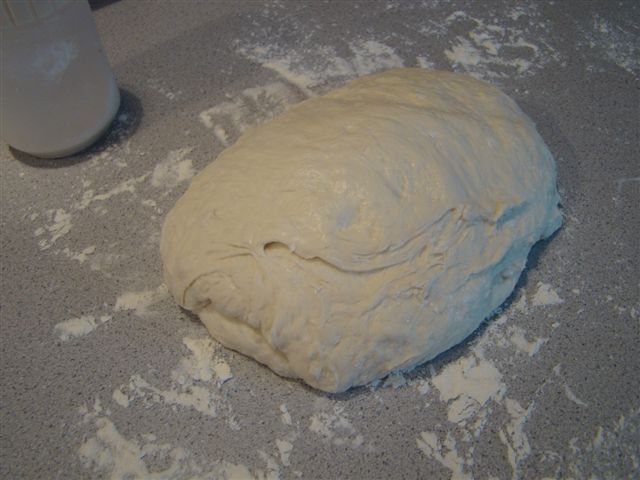
The dough needs one more rise before it is ready to bake. I covered a large baking sheet with a tea towel dusted generously with flour or cornmeal (I prefer how the cornmeal worked). Then, with well floured hands, because the dough is very sticky, I shaped the dough into a ball and placed it seam side down on the towel. Finally, I dusted the round with more flour or cornmeal and covered it with another tea towel before letting it rest for another 2 hours.
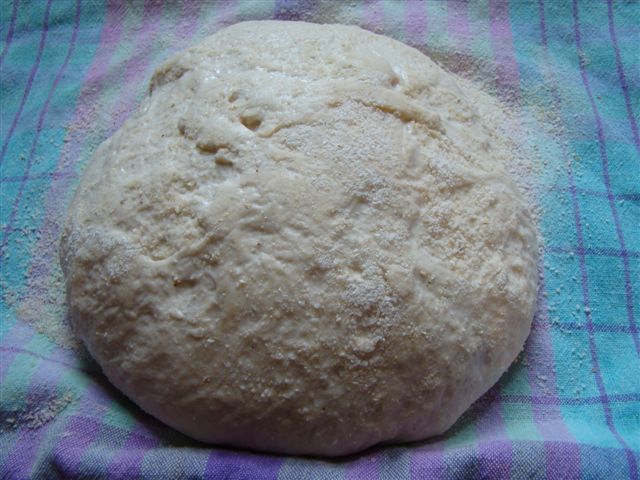
About half an hour before the dough was done rising, I placed the bread dome into the oven and set it to preheat to 450F. When the dough was ready, I carefully took the bread dome out of the oven, opened it up and gently transferred the dough to the dome, seam side up.

The lid goes back on and the dome goes back in the oven to bake for 30 minutes. The last step is to remove the lid and let it back another 15 minutes or so, until the loaf is golden brown.
I let the loaf cool on a wire rack until it’s time to cut it open. The crust is perfect, crispy and not soft at all. The crumb is moist and airy, like my favorite artisan loaves. I’m in love with this loaf. I’ve already made it twice. The outer edge does get stale quickly, but when it’s cut off, the inside is still moist and fresh. I think this bread will make amazing croutons. Next time, I’ll play around with some variations, maybe adding some olives for an olive loaf.
If you have a few minutes, give this bread a try. You don’t really need the Bread Dome (though it is fun to get new toys). You could use your Dutch oven, just be careful with the knob if it’s plastic. I hope you are enamored like I am. Let me know what you think. And don’t forget to sign up for The Grommet emails. You never know what you’ll discover.
moules marinière {ffwd}

We are no strangers to mussels at our house. We eat them a few times a year and always enjoy them. When I saw that this week’s recipe for French Fridays with Dorie was Moules Marinière, I knew we’d be having at least one simple dinner this week. I’ve been thinking about it, and I don’t typically put mussels on the grocery list. I’m usually out shopping, see them, and bring them home for dinner. I’m not sure why I don’t plan to eat them more often because they are always surprisingly quick, easy, and satisfying.
The name marinière reminds me of marinara sauce. However, marinara sauce is always a tomato sauce and the marinière had none. Marinière is more of a white wine based sauce. According to Wikipedia, the origins of the names are the same, “Mariner’s Style”. I suppose Italian and French seamen have different cooking tricks up their sleeves.

For moules marinière, onion, shallot, and garlic are sautéed in butter. White wine is added along with herbs and some lemon peel, and a speck of chicken bouillon cube (Dorie’s secret ingredient). The mussels are added to the pot and cooked for just a few minutes, until they open. With some crusty bread, this makes a hearty meal. Reasonably priced, too, at least where I live. I paid $6 for a two pound bag of mussels from Maine. Not bad for a seafood dinner for two.

As I said, I can’t remember meeting a version of steamed mussels that I didn’t like. Moules Marinière was no exception. We both enjoyed this version.
I made my own no-knead bread in the bread dome my sister gave me for the holidays. It was crusty and airy and perfect with the mussels. I hope to share my results in more detail soon. The second loaf is rising on the counter as we speak.

As I said, I used half the mussels called for, though I made the full broth recipe. Unfortunately, we didn’t have any leftovers. When we do have leftover mussels, I enjoy using them to make something like linguine with clam sauce. I pick the mussels from the shells and save the leftover broth (along with any aromatic vegetables). The next night, I cook a box of linguine, gently reheat the mussels in the liquid and pour it over the cooked pasta. All this dish needs is a little fresh chopped parsley to finish it off. I think leftover moules marinière would work well with pasta too.
I’m looking forward to reading about what my fellow FFwD bloggers thought about this week’s recipe. Check out their links at here. We don’t post the recipes, but consider getting your own copy of the book, Dorie Greenspan’s book Around My French Table. It is well worth it.
 A Plateful of Happiness