Blog Archives
Liquid Gold

I’m the kind of person who saves all kinds of scraps in the freezer. It might seem crazy, but, at the same time, I think of these scraps as treasures. I once read somewhere that the Eskimos teach that if you are going to eat meat, it is respectful to use all of the animal’s parts, and I’ve taken that to heart.
Mostly, I save bones, particularly chicken bones. When I roast a chicken, I save the neck and the carcass. When I bone pieces of chicken, I save the bones. All these jewels get stowed in the freezer, and when enough are saved up, it’s time to make stock. The only thing about stock is the time it takes. That’s not necessarily a bad thing, but it can be a challenge to find the right block of time to make it happen.
Then, I came across the idea of making chicken stock in the slow cooker. All the usually aromatics get added to the pot along with the bones, and it does its thing overnight, while I sleep. The slow cooker cooks low and slow, and I don’t have to be nervous and babysit the gas flame on the stovetop. Perfect!

I love the convenience of the aseptic boxes of chicken broth, which I buy in quantity at Costco. But when the soup is brothy, there’s nothing like using homemade stock and letting the flavor shine.
I’d been craving a bean soup with pancetta. I made stock while I was sleeping, and then put together a hearty pot of soup in the morning to be ready in time for lunch. The soup was chock full of vegetables and beans, and really hit the spot.
I also tried my hand at this recipe for Rosemary Focaccia. I enjoy making homemade bread, but can never seem to get the timing to mesh with my schedule. It was a weekend, so I was able to make it work. Plus, focaccia doesn’t involve quite as much rising and waiting as loaves of bread.
What a perfect weekend lunch!
Tuscan White Bean Soup
Adapted from Joanne Weir’s More Cooking in the Wine Country
Serves 6-8
½ cup dried navy beans
1 Tbsp olive oil
3 oz pancetta, cut into ¼-inch pieces
1 stalk celery, cut into ¼-inch pieces
2 carrots, peeled and cut into ¼-inch pieces
1 onion, cut into ½-inch pieces
2 leeks, cut into ½-inch pieces
2 red potatoes, unpeeled, cut into ½-inch pieces
1 Tbsp tomato paste
3 cups chicken stock
3 cups water
1 bunch kale, stems removed and discarded, leaves cut into ½-inch ribbons, about 1-inch long
Salt and pepper to taste
Sort the beans to remove any rocks or other debris. Place the beans in a large bowl, cover with boiling water, and soak for 4 hours. Drain and transfer to a large saucepan. Cover the beans with cold water, bring to a boil, then reduce heat and simmer until they are tender, about an hour. Drain the beans, reserving the cooking liquid.
Heat the olive oil over medium heat in a large soup pot. Add the pancetta, and cook until it starts to brown, about 10 minutes. Add the celery, carrots, onions, leeks, potatoes, tomato paste, stock and water. Bring to a boil, then reduce the heat and simmer for 30 minutes. Add the kale, and continue to cook, until the vegetables are tender, about 15 more minutes.
In the meantime, puree half the beans with ½ cup of reserved bean cooking liquid. Add the whole beans and the bean puree to the pot. Simmer for 5 minutes, until everything is warm. Season with salt and pepper.
French Fridays with Dorie: Bubble-Top Brioche Rolls

New month, new year, new recipe for French Fridays with Dorie. I actually wanted to try making bread during my end of year break from work. I never got around to it, but when this year’s first recipe for brioche was announced, I was thrilled!
I love the idea of making bread. The alchemy of yeast, flour and a few other ingredients transforming into bread is so simple and magical at the same time. It’s not even labor-intensive. The blocker for me is finding chunks of continuous time in a sequence that works for all the steps to come together. With its 3 eggs and 1½ sticks of butter, brioche isn’t really everyday bread, but I found it easy to mesh the rising schedule of this particular recipe into mine. The overnight rest in the refrigerator really helped with the timing.
I found a jar of yeast in my refrigerator. It was within the “use by” period, but the jar also said “best used within 6 months of opening”. From the 1/11 written on the lid, I could see it had been open for a year, so had some doubts. I followed the instructions to proof the yeast to see if it was still good. After dissolving the yeast in warm water and adding a pinch of sugar, I waited for 10 minutes to see what happened. It grew and grew, so I went ahead and used my “not best” yeast. It was fine.
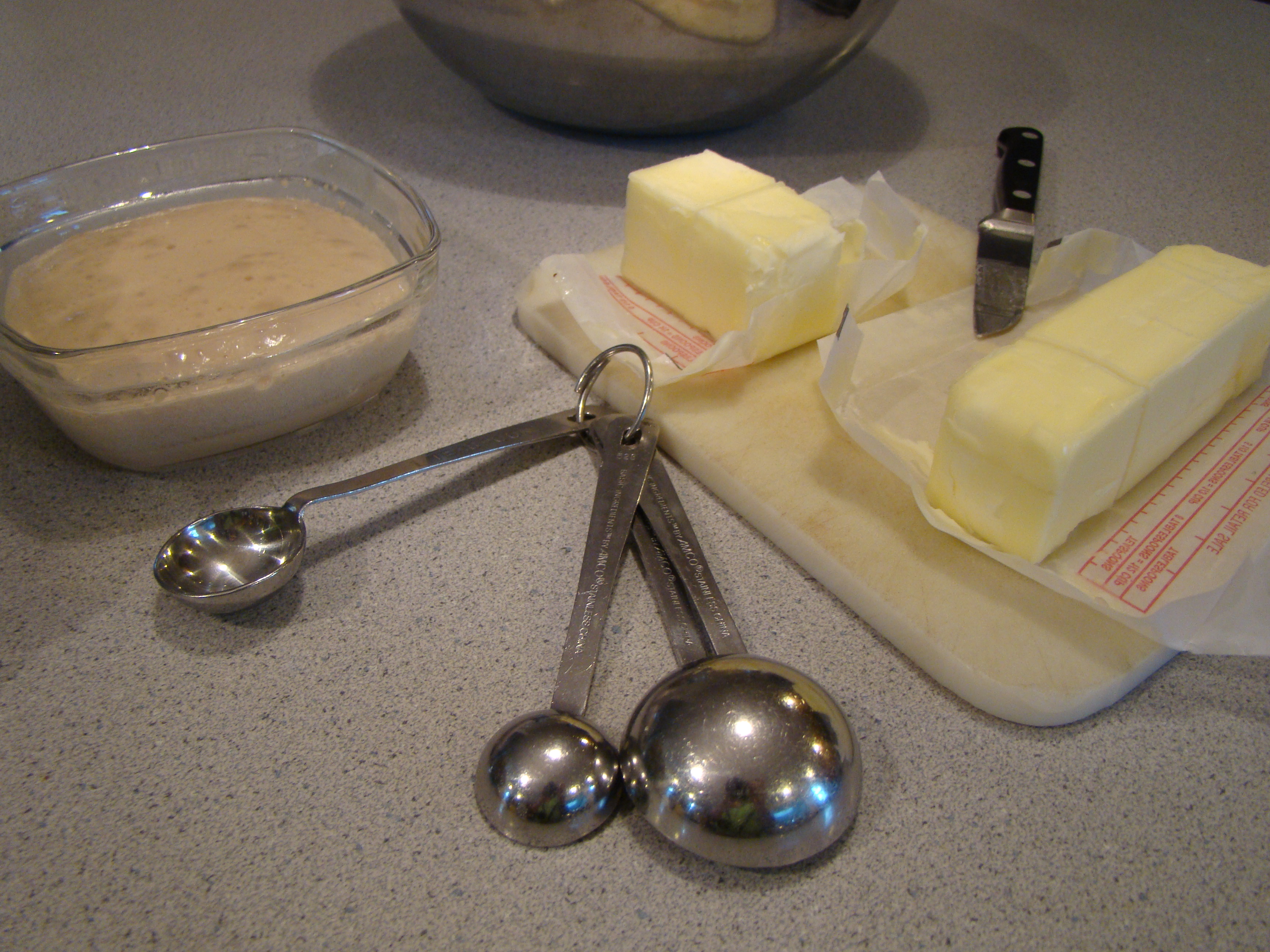
Proof Test on Left
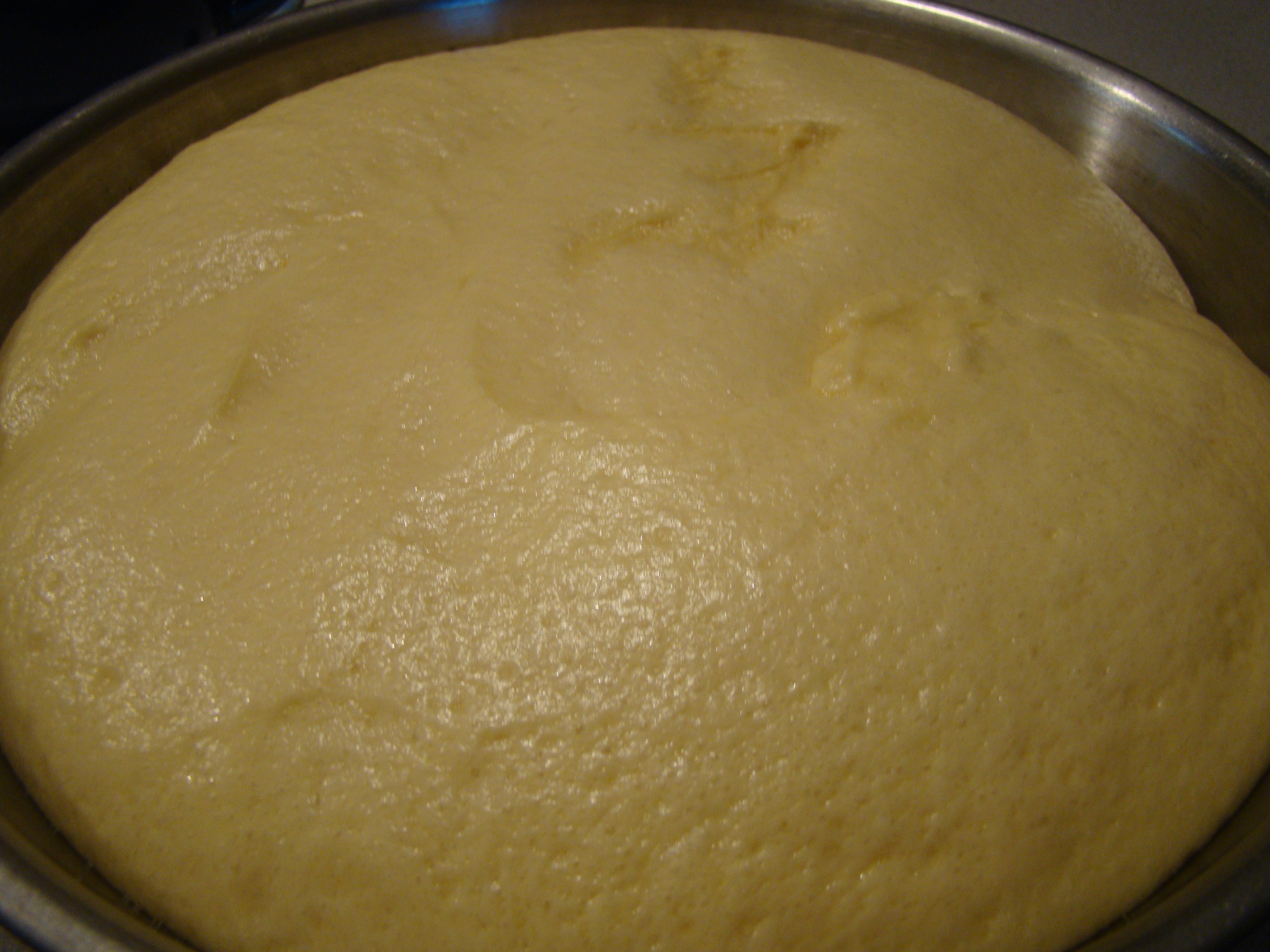
After
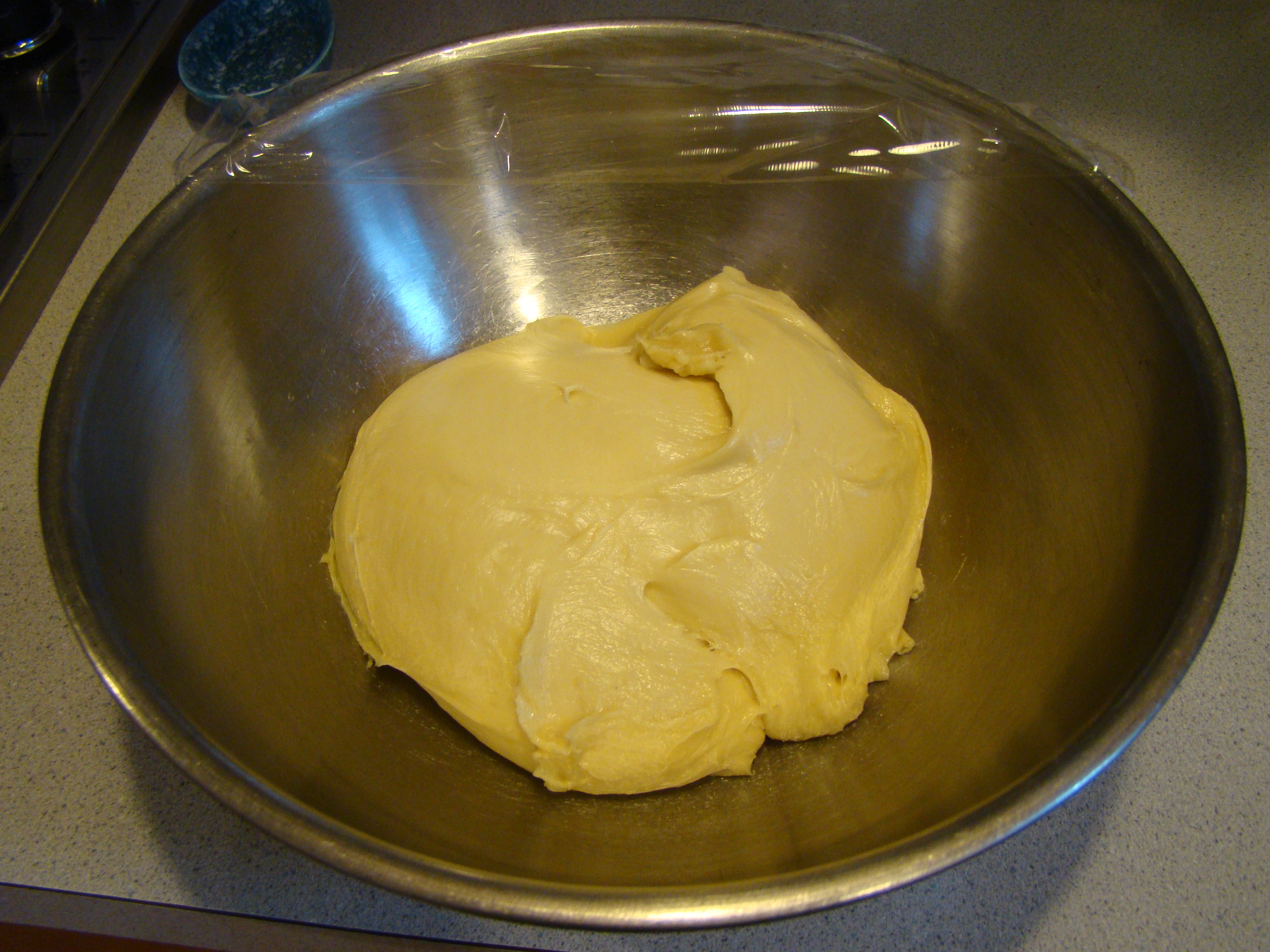
Before
Technology worked in my favor for this recipe. The KitchenAid mixer did all the work of kneading the dough. Plus, I had a chance to try out the “bread proof” setting on my new oven. Ideal conditions for letting bread rise would be a warm, draft-free spot. That sort of spot can’t be found in my cool, drafty, sesquicentennial house in the winter. The cocoon inside the 100F oven worked magic. Voila!
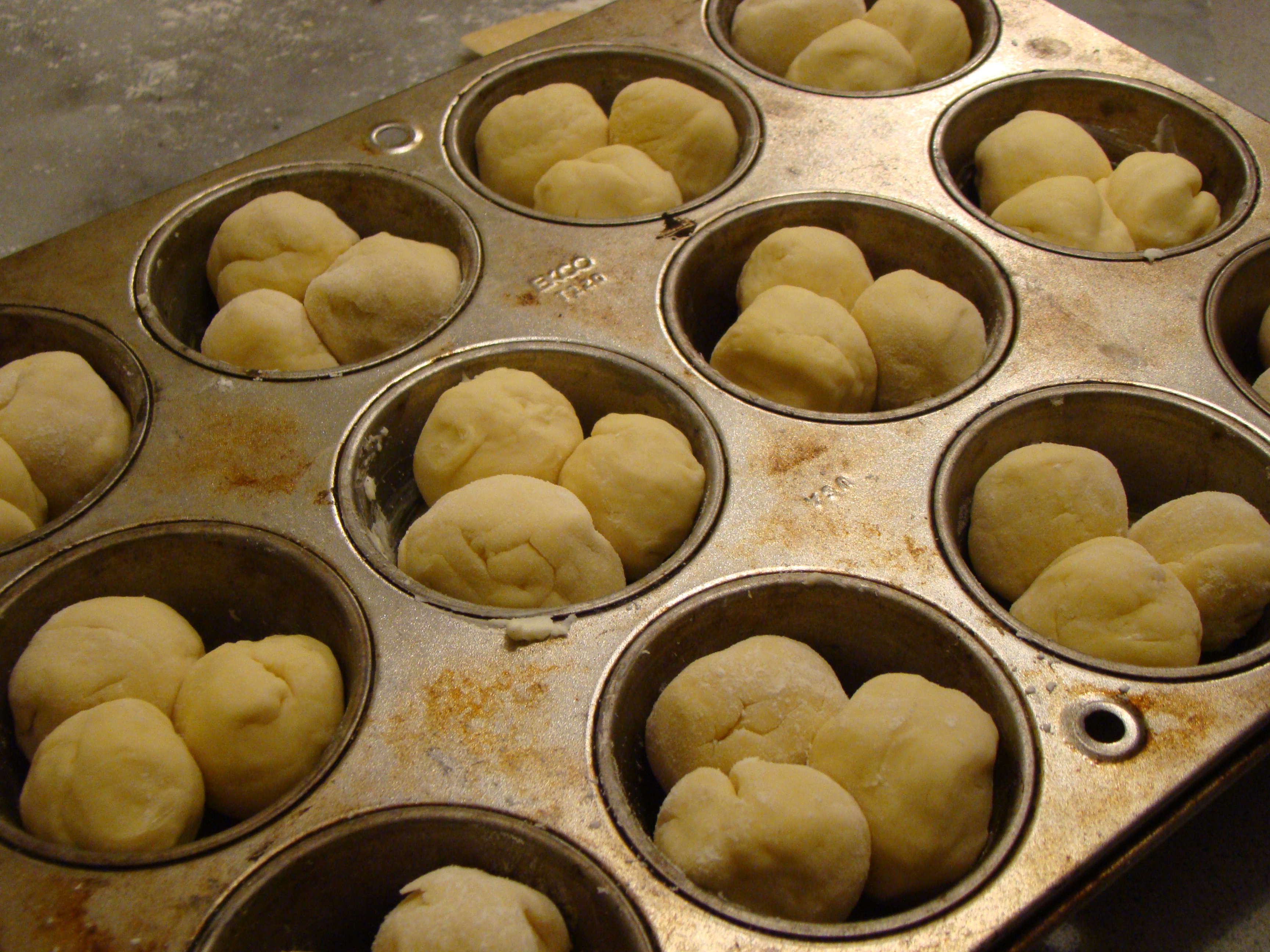
Before

After
I was a little worried as I worked through the recipe because my dough didn’t match Dorie’s description of what to expect. The dough was never like a batter after I mixed in the eggs. It was not sticky when I rolled the dough into the trio of balls for the bubble-tops. It was always smooth and silky. Despite expectations to the contrary, I found the dough was easy to work with.
As I said, brioche isn’t everyday bread. It is quite rich, eggy like a challah, but not as sweet and not as soft and squishy, more elegant. The bubble-top brioche rolls were baked in muffin tins to make little rolls. They are perfect with a bowl of soup or for breakfast. I gave the leftovers a few minutes in the oven to warm them up. (By the way, I’m starting to think that Dorie sets the bar much higher than I do for leftovers. For many of her recipes, including the brioche, she implies the leftovers won’t be good, but, in my experience, they’ve been fine.)
Recently, I wrote about how crazy my dog Bella is about challah (with cute pictures). I don’t know what it is about her and egg breads, but she was hanging out in front of the oven while the bread was baking, and I had to keep a close eye on her while it was cooling on the counter. I used one of the rolls as a treat to keep her still while Howard applied the monthly tube of Intercept (anti-flea and tick treatment, for the non-dog owners) to her back.
I would definitely make brioche again. I’d like to try it in loaf form next time. Besides making a lovely breakfast, I love brioche for grilled cheese sandwiches.
I’m looking forward to reading about how brioche worked out for my fellow FFwD bloggers. I’m hoping someone baked a loaf so I can take notes on that. Check out their links at French Fridays with Dorie. We don’t post the recipes, but this one was already published here on Bon Appetit’s website. Still consider getting your own copy of the book, Dorie Greenspan’s book Around My French Table. And you’re always welcome to cook along with us on Fridays.
Happy French Friday!
 A Plateful of Happiness