Blog Archives
Honey Harvest Time

I’ve been lax about sharing my beekeeping experiences this season. Honestly, they’ve been low-maintenance, and I abandoned weekly inspections during their aggressive period back in late May, so there wasn’t that much to talk about.
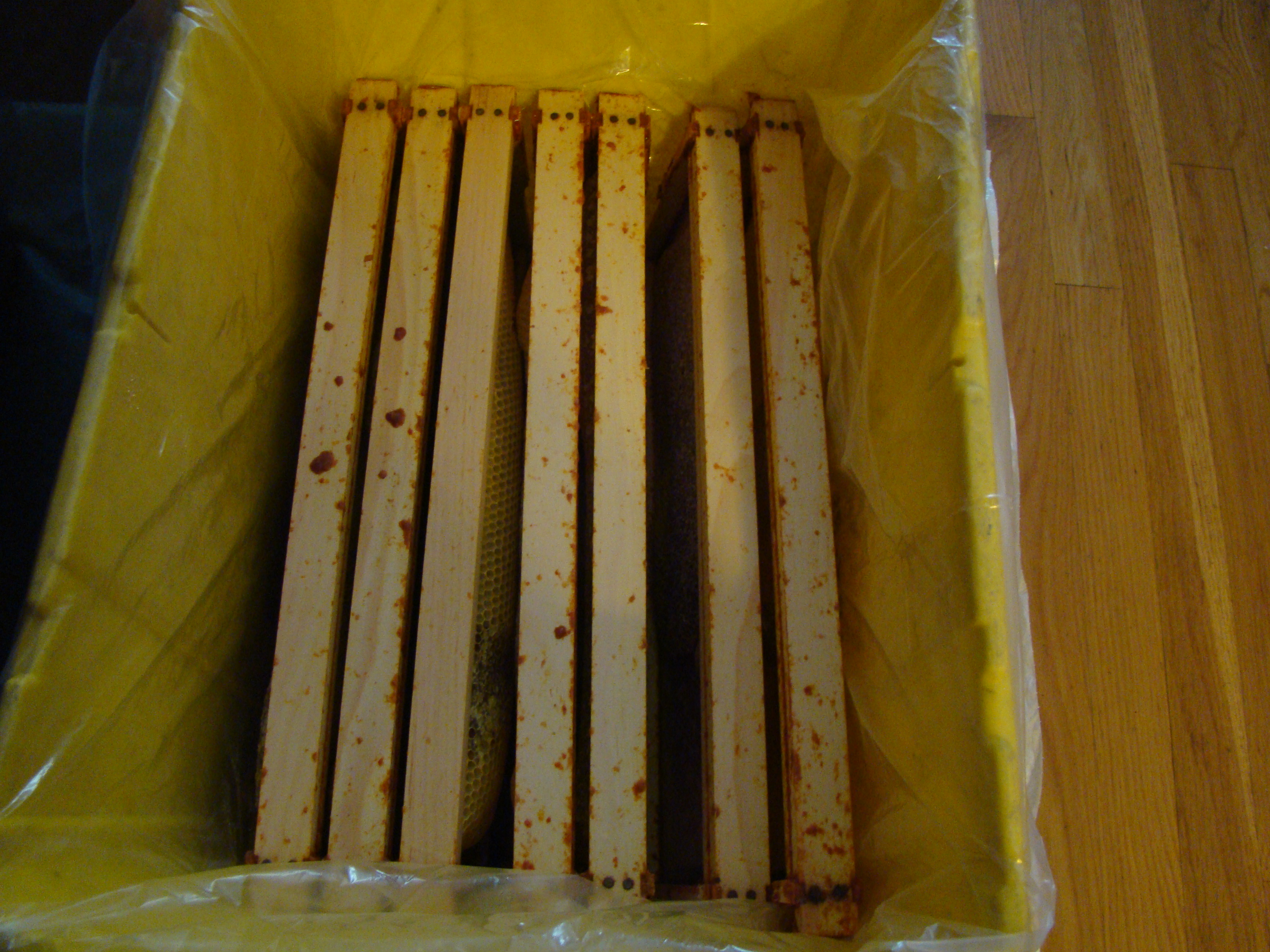
7 Frames with Honey (in the Recycling Bin)
Well, now it’s time to reap the rewards of the season. My bees made and capped honey on 7 of the 10 frames in the honey super. Some frames had just spots of honey, others had honey on just one side, and a few were filled on both sides.
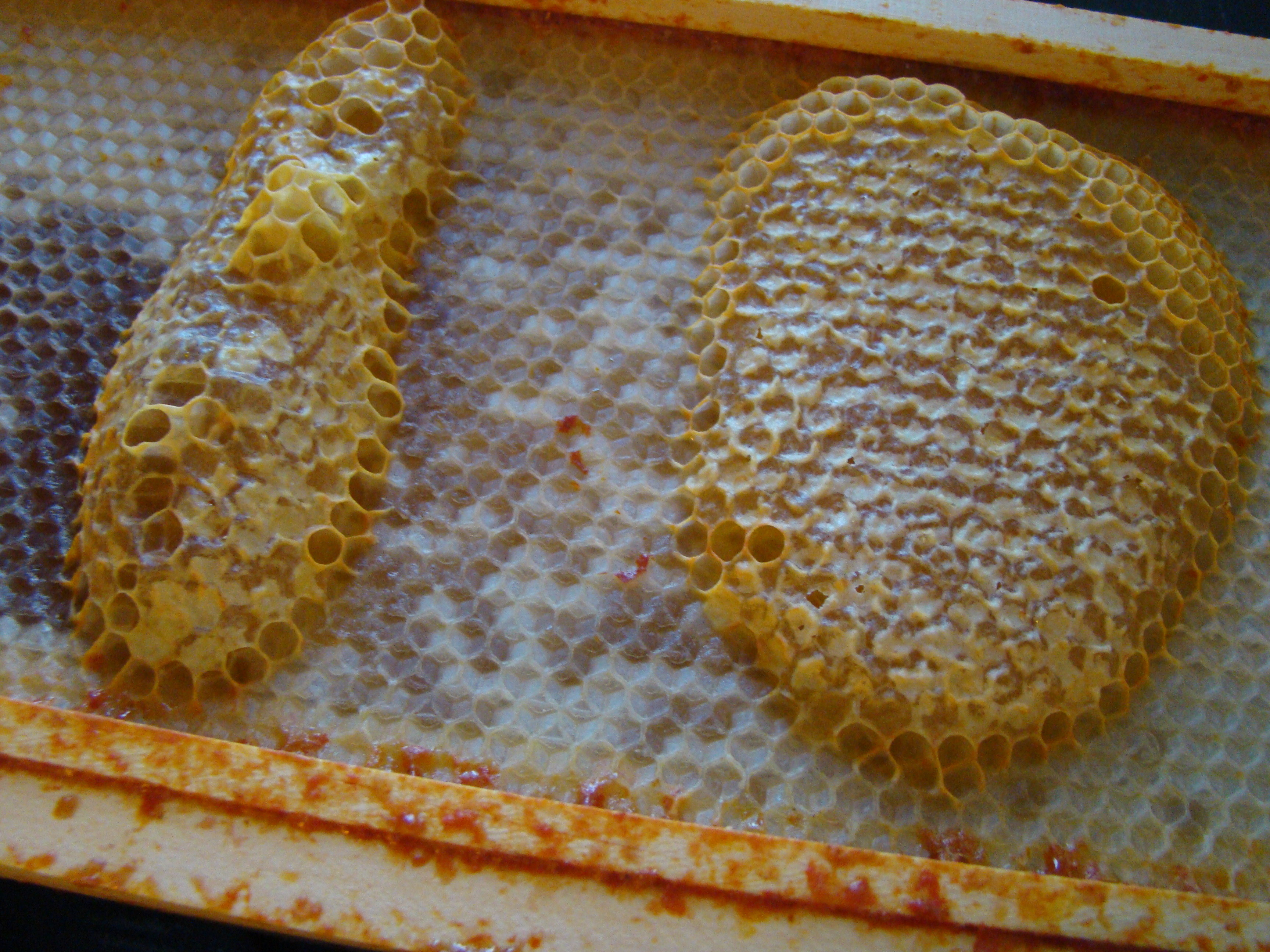
Frame with Spots of Honey
Last week, I “stole” the honey super. I was home alone, and it was a little terrifying. I was taking away the top box on the hive, the honey super, but I wanted (needed) it to be bee-free. I don’t have any pictures, but here’s what I did.
First, I got set up. I lined a recycling bin with a plastic garbage bag, covered it with a wet towel, and placed it about 20 feet from the hive. Then, I removed the honey super and placed it about 20 feet from the hive and 20 feet from the recycling box.
Here comes the exciting part. One at a time, I removed each frame from the honey super. There’s no way this could be simple, so, of course, the frame was covered with bees. I carried the frame over to the hive where I used my bee brush to gently brush the bees off the frame onto the hive entrance. The bees naturally want to protect the honey, so not all the bees came off nor were they happy to be brushed off. I walked backwards towards the recycling brush, continuing to brush bees off the frame. I quickly pulled back the towel and stowed the bee-free frame in the recycling bin. I repeated this for each frame that contained honey. Finally, I replaced the covers on the hive and brought the recycling bin into the basement, away from the bees, which would otherwise tend to try to reclaim their honey.
Many beekeepers will use a mechanical extractor to get the honey out for the frames. They will uncap the capped honey, and the extractor is a centrifuge that forces the honey from the comb when it spins. Because I had only 7 frames, I decided to use a low-tech extraction technique known as “crush and strain”.
This process is a sticky mess! First to get setup, I lined various surfaces with flattened paper bags, flattened cardboard boxes, and plastic bags. I lined a large roasting pan with a flexible cutting board, and I placed a strainer in a large pot.
To extract, using a metal spatula, one frame at a time, I scraped the honeycomb (the wax and the honey) into the roasting pan. Then, I crushed the comb with a potato masher to free the honey from the comb.

Finally, I scraped the crushed honeycomb into the strainer where the honey drips into the pot.

I ended up having to use two different pots because the first strainer filled with wax.

The honey is still dripping right now, so I’m not sure what my final yield will be, but there will be multiple jars. I was licking my fingers and can attest that my bees’ honey is delicious! I also have a lot of wax that I can melt and do something with: lip balm, candles, spoon oil, furniture polish, who knows?
Regardless of the final yield, I can’t tell you how satisfying this experience has been so far.
Bees, Bearding

I continue to admire my bees’ industry. The bees continue to behave. They must be happier as they leave us alone. When Howard cut the grass last week, a few flew into him when he crossed their flight path, but no one linger or chased or stung.
As spring unfolded into summer, a wide array of flowers has been in bloom. I’ve been hyperaware of pollinators in my garden this year. Every time I spot some motion among the flowers, I check to see who is gathering pollen or nectar. Happily, native pollinators are alive and well. The bumblebee population seems healthy, or at least, highly visible.
However, I have had limited sightings of honeybees on my flowers. It’s surprising because thousands of them are residing right in the yard. Well, I am happy to report that I finally spotted some honeybees on flowers in my yard. The purple coneflowers (Echinacea) seem to be popular for the honeybees as I’ve made multiple sightings on the distinctive heads of these flowers. Very exciting!

We’ve been having a little heat wave, again. The bees keep the temperature inside hive quite warm (for my taste). Normally it’s in the low to mid-nineties. When it’s extra hot, the bees try to keep the hive from overheating. Too hot could kill the brood.
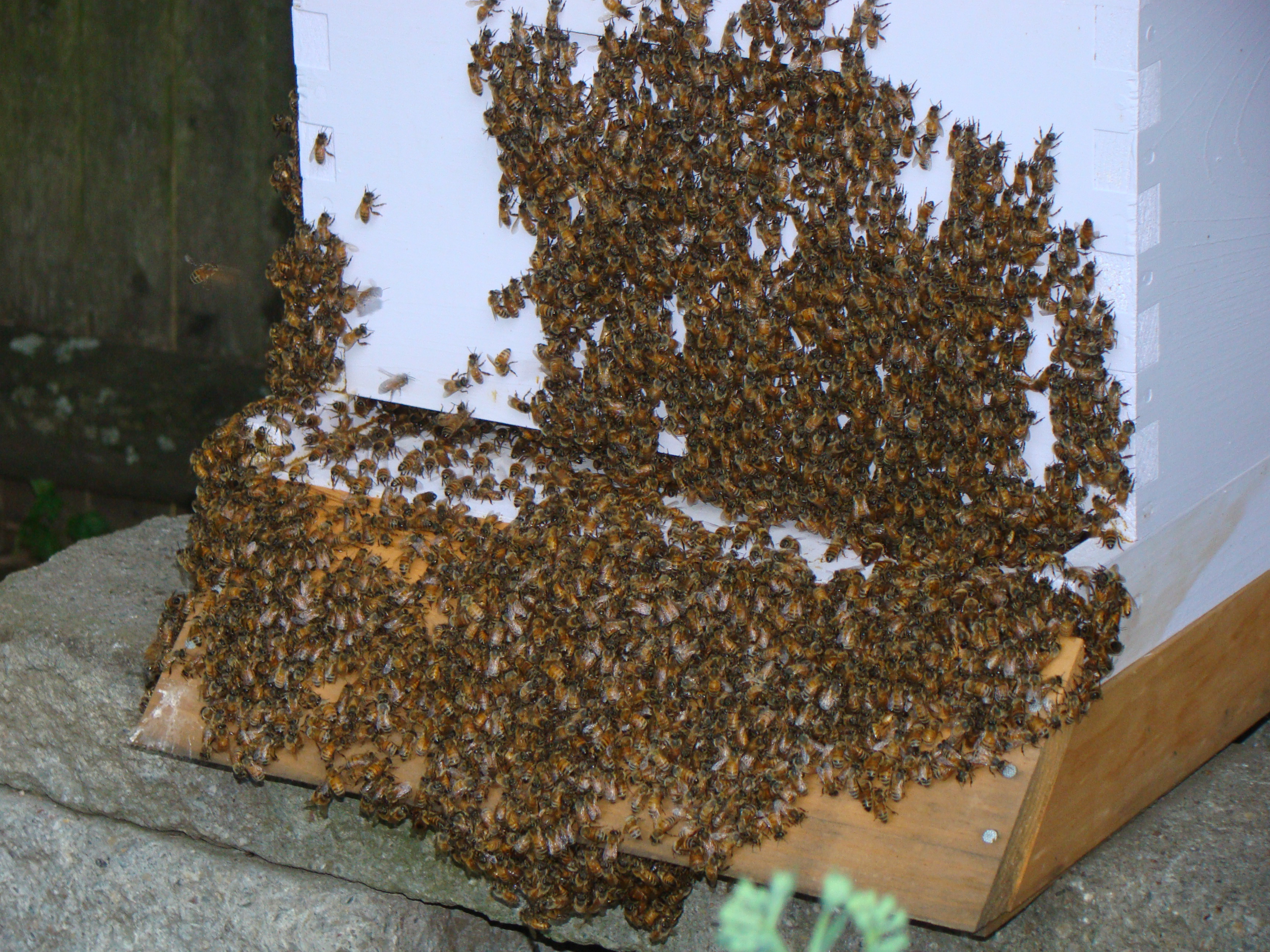
A Hot Night
The way they try to regulate the temperature looks a little scary. It’s called bearding, and to the uninformed, it could like they are ready to swarm. Fortunately, I saw pictures in one of my beekeeping books, so I remained calm when I saw this happen. This will typically happen in the evening as all the bees return home for the night. The more bees inside the hive, the warmer it will be, kind of like when you are in a crowded place. Bees are hanging out outside the hive to reduce the population inside which, in turn, makes the inside temperature less hot than it would otherwise be. In addition, the bees may be fanning to help with ventilation. By morning, the bees usually have gone back into the hive or off to do their daily work.
If the weather cooperates, I’m planning another hive inspection this weekend. I want to check what’s going on inside. I’ll let you know next week how it goes.

 A Plateful of Happiness