Blog Archives
ffwd: crispy-crackly fig-apple-and-almond tart

I’ve always found phyllo dough to be challenging to work with. Those paper-thin sheets are just dying to tear as you delicately peel them off the pile. So, when I saw that this week’s recipe for French Fridays with Dorie for Crispy-Crackly Apple-Almond Tart was built on a crust made of layered phyllo dough, I felt a touch of dread.
Deep down, I think the trick with phyllo dough is “practice makes perfect”. It’s all about comfort and confidence. So, I forged ahead. For this elegant tart, the base is built by oh-so-carefully transferring a sheet of phyllo to the baking sheet, brushing it with melted butter (still carefully), sprinkling with sugar (I used turbinado sugar and sprinkled with abandon, using way more than called for), and repeating. A few of the early sheets had tears that could be hidden, and I had to discard a sheet or two, but that’s why it comes twenty sheets in the pack, I guess.
Next comes the almond cream, also known as frangipane. Almond flour, egg, sugar, vanilla, and cream are whisked together to form a thick paste. This is spread, most carefully over the crust. I tried to leave a little border, but it obviously wasn’t enough of one, because the almond cream oozed over the edges while I was working on the fruit. It still tasted good, but didn’t help with aesthetics.
Finally, the tart is topped with fruit. At the market, a basket of figs called my name, so mine was intended to be a crispy-crackly fig-almond tart. I couldn’t decide whether to place the figs cut side up or down. I’m not sure I love the look of my choice. Unfortunately, the figs didn’t quite cover the top surface, so I added two rows of sliced apples to fill the space. Because I didn’t anticipate this, my fruit arrangement was not symmetrical so looked far from “bakery-ready”.
 The apple slices were challenging, trying to keep them fanned together while transferring them to the tart. I felt like I was playing some kind of motor-skill game that I wasn’t winning. Had I aimed to make a fully-apple tart, there is no way that three apples would have covered the tart. I’m not sure whether Dorie’s apples were huge, or whether she spread her apples less densely. The two crosswise rows of apples on my tart used one and a half apples. I would have needed 4 or 5 to cover the whole thing. I liked the closely packed look, but this was definitely another recipe where a photo would have been very helpful to see the intent.
When the tart comes of out of the oven, there’s one final step, to glaze the top with melted apricot jam. This gives the tart a lovely sheen and a touch of additional sweetness.
On baking, the almond cream spread some more, so I didn’t get many crackly edges. However, the crust still crisped up underneath, so each bite had plenty of crisp and crackle. The figs tasted good, but I preferred the apple. Sliced leftovers look terrific in the cake dome.

Having made this for a weeknight dessert for two, I felt a little like my tart deserved a better audience, like a little black dress with no party to go to, just the kitchen table. I have some work to do on the final appearance. I’m thinking I might like this better fitted into a rectangular tart pan, where the edges will contain the gooey filling without going where it shouldn’t. I do plan to pull out this crispy-crackly tart recipe the next time I’m asked to bring dessert to someone’s house for dinner: the well-deserved party for my elegant (and easy) dessert. If you want to try this one, invite me over!
We don’t post the recipes, but you can find it in Dorie Greenspan’s book Around My French Table. To read about the other FFWD bloggers’ tarts, follow their links here.
ffwd: endives, apples, & grapes

This week’s selected recipe for French Fridays with Dorie epitomizes why I joined this cooking group. Every week, I learn something new. Some weeks, it’s a new technique, some weeks, it’s a new twist on a familiar recipe, and some weeks, like this week, it’s a new combination of ingredients. Some weeks, what I learn is something I incorporate into my kitchen life, and some weeks, what I learn doesn’t make the cut.
What about this week? I’ll admit that on paper, the recipe was uninspiring. Endives, are OK in salad, but eating them cooked, caramelized, no less, with fruit, seemed downright weird. I gave it a try. Endives, apples, grapes, rosemary braised in butter. The ingredients sit on the stove to caramelize, get flipped over, and the same is repeated on the other side. It really couldn’t have been easier.
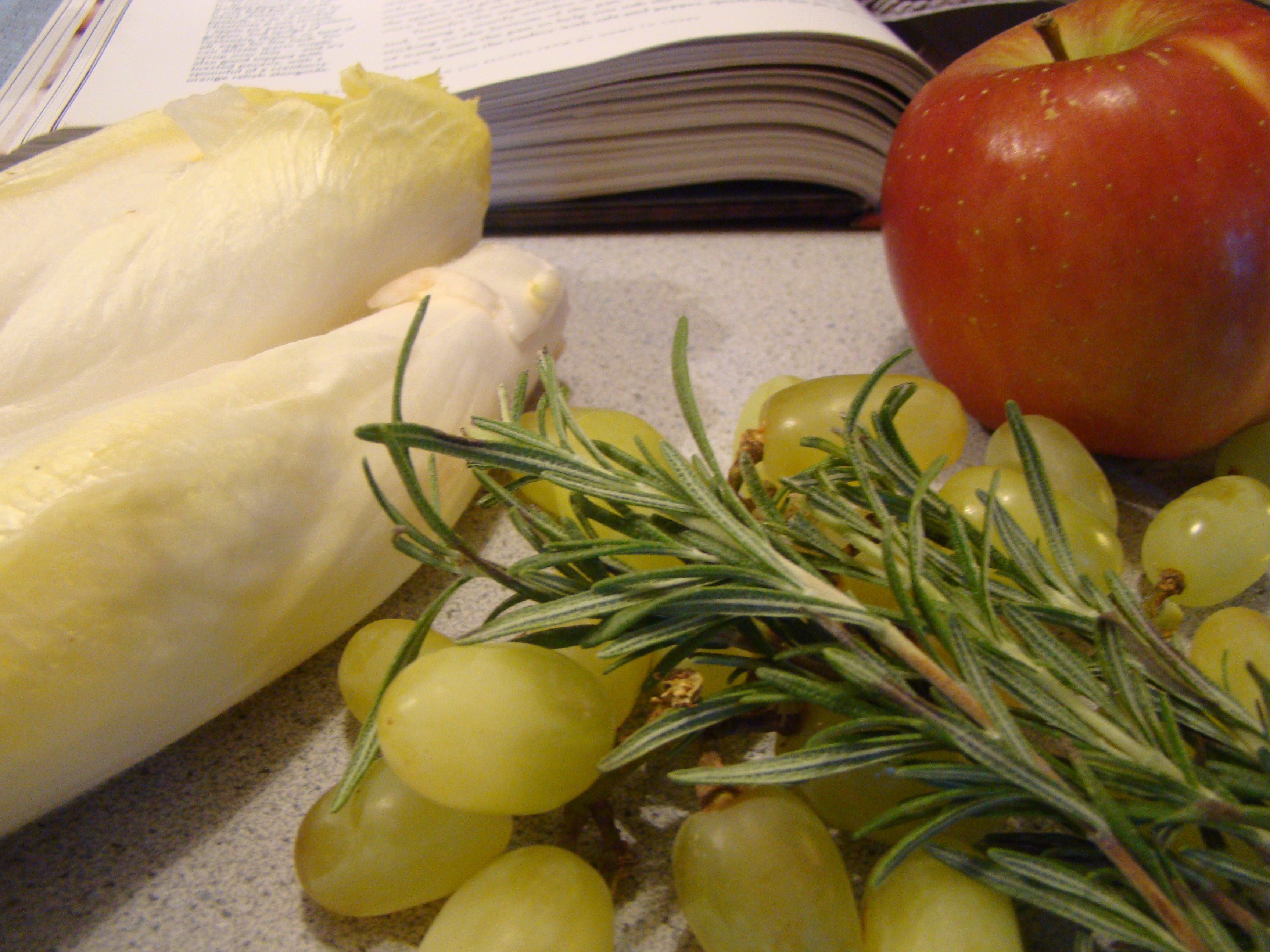
I used a seasoned cast-iron pan to do the work. I didn’t have the recommended salted butter, so used unsalted with a generous sprinkle of sea salt in the pan. My endive didn’t caramelize after 20 minutes, but I flipped it anyway. The second side did a bit better during its turn. I did flip the endive back over one more time, and let it sit while I finished preparing the rest of dinner, and it browned a bit more.
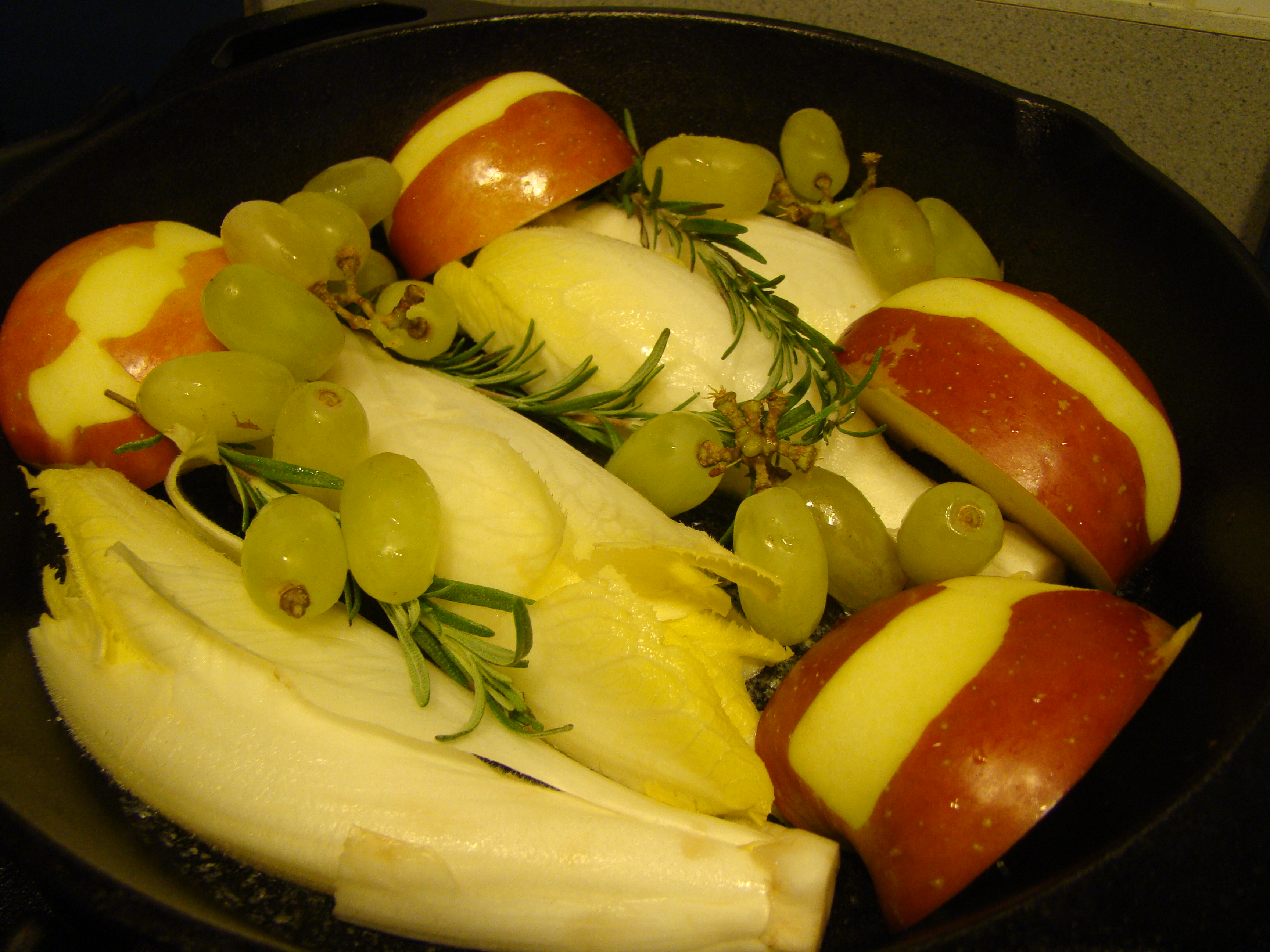
What about the flavors? Much to my surprise, it has promise. On the plus side, I liked the texture of the cooked endive. The caramelization and light fruit juices offset its usual bitterness. The grapes were the star of the show. They caramelized, they softened, they were delicious!
As for what needs improvement, the apple (I used a Fuji) didn’t really soften (the opposite problem I had with the poached apples a few weeks ago). I’m thinking smaller pieces would have worked better, maybe eighths instead of quarters. Also, the rosemary didn’t seem to impart any flavor to the dish. It was quite aromatic when I put it in the skillet, so I’m not sure why I couldn’t taste it.
Conclusion? I liked it much more than I thought it would. Chalk one up for FFwD as I never would have tried this recipe otherwise. As we move into to the season of heartier vegetables, I can see trying this again with a medley of other vegetables, like the winter squash suggested in Dorie’s bonne idée, Brussels sprouts, carrots, parsnips. The list could go on. I might drop the apple, but the grapes are definitely a keeper.
We don’t publish the recipes for this cooking group, but Dorie already shared the recipe on Bon Appetit. You can also find it in Dorie Greenspan’s book Around My French Table.
For other bloggers’ take on this unusual recipe, check out their links here.
 A Plateful of Happiness