Blog Archives
winter ceviche {ffwd}

This week’s selection for French Fridays with Dorie was Winter Ceviche, a quick appetizer that brought a little tropical tease to my kitchen located in the deep freeze of New England.
Ceviche is a preparation for raw fish or seafood which is then “cooked” for a few hours in an acidic marinade. This version started with bay scallops, which are much smaller than the more familiar sea scallops. Bay scallops are seasonal, and I hadn’t seen them around in a while, but I got lucky and found them at my first stop (Whole Foods). They were half the price of sea scallops and because I only needed 6 to make a half recipe, they only set me back $2.25. Miraculous!
The marinade is made from fresh lemon and lime juice plus the lemon and lime zest, some mango nectar and a touch of brown sugar. The scallops are refrigerated in this acidic fruit bath for a few hours to “cook”. In the meantime, thinly sliced shallots are lightly doused in vinegar for a pickled garnish.
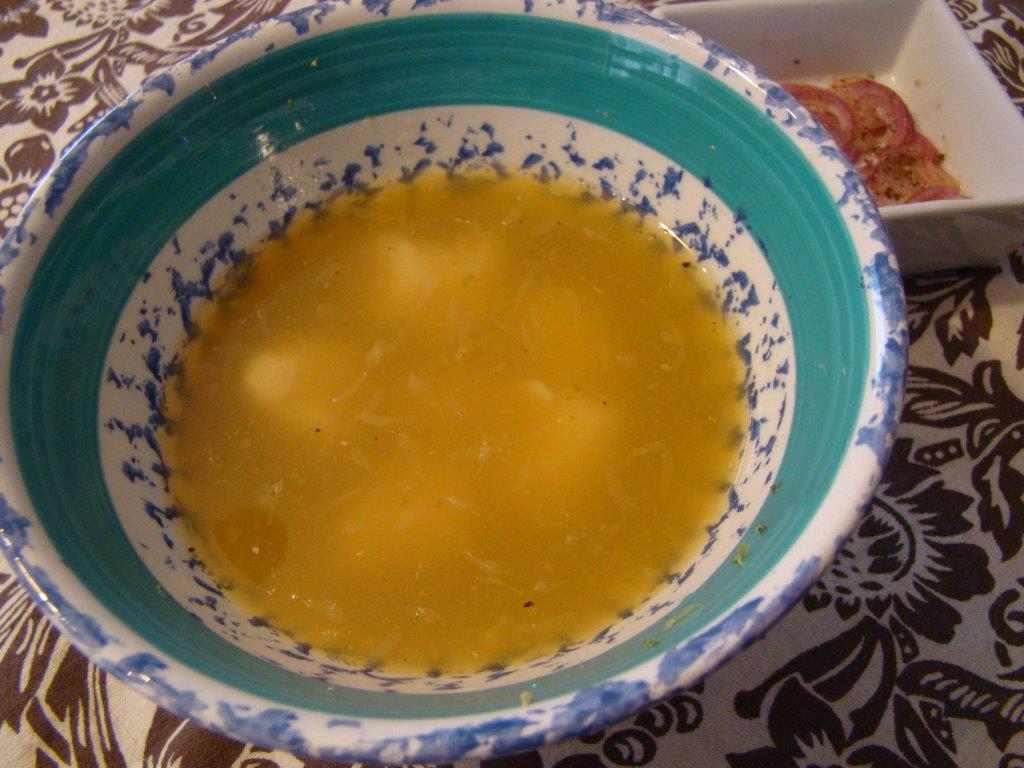
Ceviche “Cooking”
At serving time, all that’s left to do is toss some tarragon leaves with oil and divide them amongst the plates. Then using a slotted spoon, transfer the scallops to the bed of leaves. Dip some halved grapes into the remaining marinade and add to the plate, then top it all with the pickled shallots. As they say in France, “Voilà!”
This ceviche provides a good basic formula. I think it would be equally delicious with another white fish or shrimp, raw or cooked. Or I might try substituting different herbs like parsley, cilantro, or even arugula in place of the tarragon. Some thinly sliced chili would be at home too.
I hope I remember this recipe next time I have a seated dinner party where I want to serve a plated first course. (By the way, don’t overestimate my entertaining skills. A plated first course would put me in much fancier territory than my usual dinner parties which begin at the kitchen island with a help-yourself assortment of cheese and crackers and dips, chosen so I can socialize with the guests while I finish up dinner.)
To see the ceviches whipped up by my Dorista friends, check out their links here. We don’t post the recipes, but you can find it in Dorie Greenspan’s book Around My French Table.
arman’s caviar in aspic {ffwd}

Caviar is always a natural on New Year’s Eve, so I added this week’s French Fridays with Dorie recipe to our appetizer lineup for the night’s holiday dinner. I’d never had aspic, but I like both caviar and Jello, so as odd as this sounded, this had potential!
First, I made the aspic. I couldn’t find fish bouillon cubes anywhere. I had some clam stock concentrate in the fridge, but it was a bit old and I was reluctant to use it here, where the flavor could ruin a main component if it was off. However, given that I made several quarts of fish stock for last week’s simple Breton fish soup, I substituted fish stock for the water and just proceeded from there. I ended up with a loaf pan of thin but very sturdy aspic (or what I keep thinking of as fish jello). As I mentioned last week, the fish stock itself was thick and quivery, in other words, gelatinous, so I’m not sure whether this added to its firm structure.
To serve, I unmolded the aspic, cut it into squares, and, using a grapefruit spoon, carved out little dimples. I did this “right before serving”, as the recipe instructed, but I think I could have done this step an hour or so before serving and chilled until it was time to serve. I think I expected the aspic to be delicate and possibly to melt as it warmed to warm temperature, but it stayed firm even after sitting out for a while.
Finally, I spooned caviar into the divots and on top of the aspic squares and served.
For caviar, I used a jar of herring roe that we picked up at Ikea. They have quite an array of fishy products in the grocery section after you check out. We also bought some herring and a tube of salty fish roe paste. Yum to the fish paste (herring, not so much). I’m not sure this was the best choice. It was extremely salty and had a bit of an aftertaste. I think tobiko, which has similar tiny eggs, would have been a better choice, though I’m not sure where to find that other than the Japanese market. We also had salmon roe as part of another appetizer, and that caviar was much tastier, but I think the size of the eggs would have offered less contrast to the aspic.
Our guests and I thought it was good, a little strange, but not bad. I’m glad I tried it, but I’m not sure it was worth the effort. There are so many other ways I prefer to eat caviar.
To see what my Dorista friends thought of their caviar in aspic, check out their links here. You can find the recipe in Dorie Greenspan’s book Around My French Table.
Stay tuned for more fishiness next week!
 A Plateful of Happiness