Cool as a Cucumber

For the past few weeks, we’ve been getting 10 cucumbers each week as part of our CSA share. Sliced cucumbers sprinkled with spiced salt are a favorite, or of course, adding cucumbers to a salad, but I was looking for something new to do with cucumbers.
For the past year, I’ve been doing some experimenting with cocktails. Usually, I just drink wine or beer. My repertoire of cocktails was mostly limited to frozen margaritas and daiquiris, both based on limeade concentrate. Now that cocktails are trendy, it felt like time to branch out. It all started last summer when we discovered Vena’s Fizz House in Portland which sells different mixers, like the base for the Small Batch Gin & Tonics we like. I also get inspiration from my favorite on-line mixologist and blogging friend, Christy Majors.
When we were out in San Diego in June, we had a few cucumber cocktails. I didn’t pay close attention to what was in them, but, as we sat at the bar sipping our drinks, we did discuss how well they hit the spot on a hot afternoon. Necessity is the mother of invention, and the previously mentioned plethora of cucumbers reminded me to try this at home.
Cucumber juice turns out to be very easy to make — no juicer required. Wash one or two cucumbers, preferably organically grown. Chop them coarsely. Don’t bother to peel or seed them. The skin gives the juice a wonderful chartreuse color. I quartered the cucumber lengthwise, then sliced it into half-inch slices. Throw the cucumber pieces into the blender with a handful of ice cubes for each cucumber. Turn the blender onto a high speed, and puree until smooth. Now strain the puree through a fine sieve. Press on the solids to extract as much juice as possible. You should get about 1 cup of juice for each cucumber.
I’ve been playing around with the combination of cucumber juice, simple syrup, lime juice, and liquor. I’ve had success with both cucumber mojitos (rum) and cucumber gimlets (gin). The margaritas didn’t come out as well.
Mojitos start by muddling sprigs of mint in a tall glass before adding the other ingredients. For the gimlets, simply pour the ingredients over ice. Both are cool, refreshing, and delicious options for relaxing on a hot summer evening.

Cucumber Mojito
Makes one drink
6 sprigs of fresh mint
3 oz cucumber juice (made as described above)
1 oz freshly squeezed lime juice
1 oz simple syrup (made from equal amounts sugar and water)
2 oz rum, preferably Bacardi Limon
Ice<
Slice of cucumber and sprig of mint to garnish
In a tall glass, muddle the mint until it's very fragrant. Leave the mint in the glass, and fill it with ice. In a separate container, combine the cucumber juice, lime juice, simple syrup, and rum. Pour over the ice. Garnish with a cucumber slice and mint sprig.
Cucumber Gimlet
Makes one drink
1 oz cucumber juice (made as described above)
1 oz freshly squeezed lime juice
1 oz simple syrup (made from equal amounts sugar and water)
1 oz gin, preferably Hendricks
Ice
Slice of cucumber to garnish
Fill a short (old-fashioned) glass with ice. In a separate container, combine the cucumber juice, lime juice, simple syrup, and gin. Pour over the ice. Garnish with a cucumber slice. You can also double it and serve in a tall glass (as pictured!)
Cheers!
gâteau basque {ffwd}

I feel like I might say this every time we make a dessert for French Fridays with Dorie (because it’s true), but I am much more of a cook than a baker. And, when it comes to baking, the sweets I like best are simple ones that showcase the main ingredient, be it butter, chocolate, or fruit.
I was thrilled to find that this week’s selection, Gâteau Basque, matches up with what I enjoy so perfectly! I could tell from reading the recipe in the book that the Basque know how to make a cake that I will adore. To me, this was more of a giant cookie sandwich or a double-crusted jam tart than a cake, but that’s OK with me.
This recipe also used a technique that we used once or twice before while cooking from this book, one that I always think “brilliant” when I’m instructed to do it, and then promptly forget about. That technique is to roll a soft dough between pieces of wax paper before chilling it. I don’t know if it works with all dough, but it sure works with this one.
My one set of round cake pans are 9-inch, not the called for 8-inch. I was concerned the resulting dough would roll out too thin, so I used an 8-inch springform pan instead. (For some reason I have many different-sized springform pans.) Worked perfectly. I did trace the base of the pan and cut out the exact size when I was ready to assemble the gâteau for baking. That left some scraps to egg wash and bake for a “cook’s treat”. Those bonus cookies were tasty. They reminded me of the salted butter breakups which hailed from Brittany, I think, which in turn reminded me of Pepperidge Farm Chessmen cookies.

To assemble, one disk of dough is placed in the pan, covered with jam (leaving a small border), then the second disk is placed on top and the edges are sealed. The top is brushed with an egg wash and cross-hatched with a fork. Lovely! I was tempted to use some jam from my pantry, but I bought the traditional cherry jam instead.
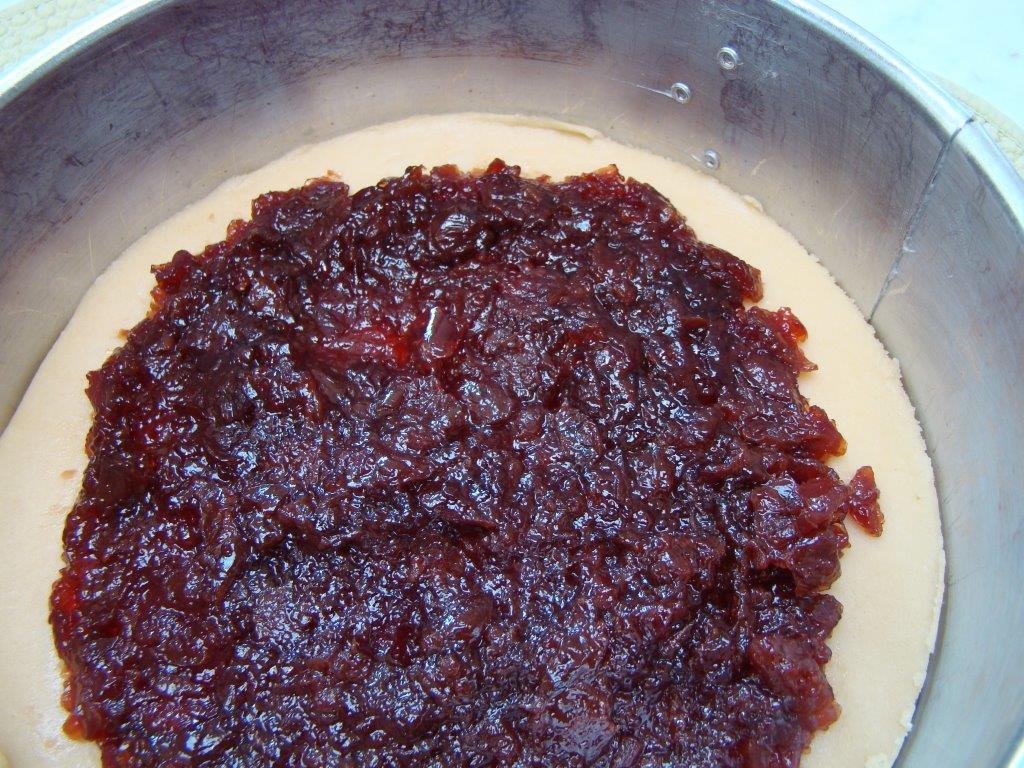
Now that I know what the “original” tastes like, I would not hesitate to vary the filling in the future, and there will be a future. I loved the gâteau Basque. I also love any baked goods that can stay at room temperature and be shown off in my cake dome. Another plus for this one.

To try this at home (which you should), you can find the recipe here on the NPR site, accompanying an interview with Dorie Greenspan. Of course, FFwD recipes can always be found in Dorie Greenspan’s book Around My French Table. To check out my Dorista friends’ gâteaux Basque check their links here.
 A Plateful of Happiness