Inspiration in Ink: A Kitchen in France
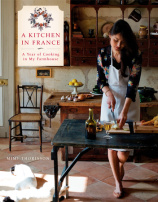 For an armchair traveler like me, Mimi Thorisson’s A Kitchen in France: A Year of Cooking in My Farmhouse transported me to another place. The book as a whole, Mimi’s recipes together with the photographs taken by the author’s husband Oddur Thorisson, offers a glimpse into their world of family, friends, dogs, food, home, and the French countryside in Médoc.
Médoc is a wine-producing district in the Bordeaux region in Southwestern France on a peninsula between the Atlantic Ocean and the Gironde estuary, just north of the city of Bordeaux. Thorisson describes it as the “anti-Provence”, considered off the beaten track even from the French.
For those not familiar with Mimi Thorisson, she writes the blog Manger, where she shares her version of French home cooking and her family’s life in rural France. No country bumpkin, she and her family chose to relocate to this region from Paris. In April 2013, Saveur magazine named this gem the Best Regional Food Blog.
Mimi Thorisson’s approach to cooking is to savor what’s in season and to transform the best ingredients in simple ways. The book is organized by season, starting from the rebirth associated with Spring and working its way through Summer and Autumn before reaching Winter with its instinct for comfort and nesting. Each season opens with an essay sharing thoughts about food treasures she values at that time of year, whether grown in her garden, purchased at the market, or foraged near her home. Her story continues to unfold through the headnotes accompanying each recipe, sharing the provenance of the recipes from her kitchen.
Thorisson has a deep connection to France. Though she grew up in Hong Kong, she spent summers in France with her grandmother and great-aunt where she learned to cook and appreciate seasonal local ingredients.
The recipes in this book cover a broad range of French home cooking, from everyday fare such as simple roasted potatoes to special occasion dishes such as bouillabaise. Many of the main course recipes won’t be easily accessible to the typical American home cook because they call for unfamiliar meats that will require a trip to the butcher. For those with an intrepid palate and access to specialized ingredients like poussin, guinea hen, squab, quail, snails, beef cheeks, sweetbread, and oxtail, uncomplicated recipes to prepare them are on offer. That said, this book has something for everyone. There are plenty of other recipes for starters, side dishes, and desserts that are similarly uncomplicated and use seasonal ingredients that should be readily available to any home cook.
At the end of the book, there is an unexpected group of recipes to celebrate Chinese New Year. These recipes are not out of place in this French cookbook because they reflect the author’s heritage (her father is Chinese) and just as she honors and celebrates the culinary heritage of her French mother’s family, she gives equal respect to her father’s Chinese roots as she passes down the traditions of the Chinese New Year celebration.
By season, these are the recipes I’m tempted to try first:
Spring
- My Aunt Francine’s Fava Bean Soup
- Onion Tart
- Roast Chicken with Crème Fraîche and Herbs
- Roast Lamb Shoulder with Garlic Cream Sauce
Summer
- Tomato Tart
- Tuna Rillettes
- Almond Mussels
- Peach and Cherry Papillotes
Autumn
- Potatoes à la Lyonnaise
- Butternut Gratin
- Apple Tart with Orange Flower Water
- Galette Pérougienne
Winter
- Winter Vegetable Cocotte
- Garlic Soup
- Roasted Sausages with Red Wine and Fennel
- Kouign Amann
This book can be equally at home in the kitchen or on the coffee table. As a cookbook, it is a compilation of recipes, but the gorgeous photos provide a temporary visit to the Thorisson home in the Médoc without leaving your couch.
A Plateful of Happiness Rating: 4 plates (out of 5)
Disclosure: I received this book from Blogging for Books for this review. The opinions expressed are my own.
(faux) osso buco à l’arman {ffwd}

It’s hearty fare on the menu this week for French Fridays with Dorie. We’re down to the last few dozen recipes, so the lineup seems to be the less familiar ones, ones that are a bit off the beaten track. The selected recipe this week is for Osso Buco à l’Arman, Arman being the French artist who gave the recipe to Dorie.
Autumn has always been my favorite season. Even though from nature’s perspective, it represent a period of slowing down, preparing to sleep and restore over the winter, I think of fall as a new beginning, even more so than the New Year’s holiday coming up in January. At this time of year, I reacquaint myself with my love of hearty stews and soups, warming my household from within as the air outside gets crisper. This week’s recipe filled that bill perfectly.
Technically, osso buco is the cut of meat used in this recipe: veal shanks cross-cut into thick pieces. (In Italian, osso buco translates to “bone with a hole”, referencing the marrow bone that runs down the shank.) The modern version of the sauce will include tomatoes and carrots, and the osso buco is served sprinkled with gremolata (a combination of garlic, orange zest, and parsley).
I don’t eat veal, but my research indicated that lamb shanks cut this way would be a reasonable substitute. Before they became trendy, shanks were an inexpensive cut for the frugal cook, requiring the long cooking of braising to tenderize the meat, melt the fat, and soften the collagen in the tendons. Unfortunately, I was unable to locate any lamb shanks or, for that matter, beef. (I didn’t see any veal shanks either.) I opted for lamb shoulder chops, another cheaper cut of meat, but also sporting a “bone with a hole”.
The sauce was straightforward to prepare. First the orange zest gets boiled, then simmered. Then, onions, garlic, and herbs (I used all dried) are sautéed in olive oil before adding tomatoes, both canned and fresh, broth (I used beef), and some of the orange zest cooking water.
While the sauce simmers, the meat is browned. After nestling the lamb in the tomato sauce and adding several strips of the orange zest and the remaining orange zest cooking water, the pot is topped off with sliced carrots before closing the lid and popping the Dutch oven in the oven. Two hours later, dinner was ready.
I wasn’t sure about the purpose of several steps in the recipe. Maybe you can help me out:
- Why do we boil, then simmer, the orange zest? Does it do something to the orange zest, or is it to create the orange-flavored water used for the braise?
- Why canned AND fresh tomatoes? It seemed like the major contribution of the sliced fresh tomatoes was its skin (which wasn’t all that appealing).
- What does the layer of wax paper on top of the stew do?
Osso buco is traditionally served with risotto. Howard helped out and followed my directions for a saffron risotto cooked (in under 10 minutes) in the pressure cooker. (If you’ve never tried making risotto this way, you must. Check out my earlier post on this method.)

This stew was the perfect thing to have bubbling in the oven on a fall Sunday afternoon. The house smelled amazing, and the taste did not disappoint. I found the lamb to work well. The meat was melting off the bone, and the flavors of the sauce complemented lamb just fine. I liked the fresh taste of the gremolata on top of the stew. (Howard, as you might expect, opted to skip that step. The orange rind in the dish was more than enough fruit in his savory meal.)
Another company-worthy recipe that I will make again on a cold winter’s night! To see what the other Doristas thought, check out their links here. If you want to make it yourself, you can find the recipe on-line here, or in Dorie Greenspan’s book Around My French Table.
Happy French Friday and Happy Halloween!
 A Plateful of Happiness