seafood pot-au-feu {ffwd}
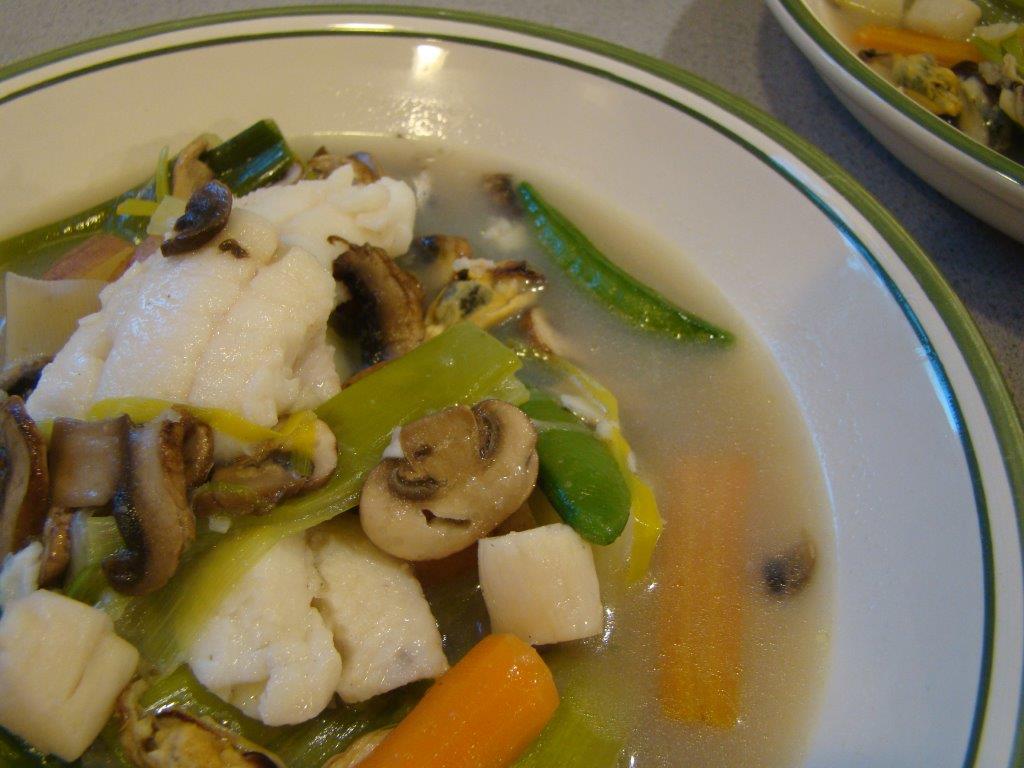
(Sniff, sniff! This is the second-to-last recipe that the French Fridays with Dorie group will cook together. I’ll save my reflections for another week, but it seems impossible to be at this point.)
This week’s recipe was the perfect meal for springtime: Seafood Pot-au-Feu. This light, yet filling, seafood and vegetable stew really hit the spot this week.
I was fortunate that someone offered me their weekly fish share from Cape Ann Fresh Catch for this week. A fish share is like a CSA you might have at a farm, but it’s from a collective of fishermen. Quite a novel idea! You don’t know which fish you’ll be getting ahead of time, but I knew I would use whatever I got in my pot-au-feu.
The selection this week was dab. I wasn’t familiar with this fish, but it’s a flat white fish similar to flounder or sole. It was filleted and super fresh. I received 2 pounds, which was A LOT, so I used some in the stew and froze the rest for some meuniere or amandine (or both) in the next week or so.

Two pounds of Dab
The stew starts out by giving the longest cooking vegetables, potatoes, a head start in simmering broth with some aromatics. Then sliced carrots, leeks and scallions are added the pot. I really loved how you can prep the vegetables as you go along. No need for mise-en-place. Finally, sliced mushrooms join the mix. My potatoes needed some extra time, so I just let it cook until the potatoes were nearly tender.

Once the vegetables are cooked, they are scooped from the broth and the mussels are steamed. Then, the mussels are removed and the vegetables go back into the pot. Seems a little fussy, but I think it was worth it because there was no interference when removing the mussels from their shells. I suppose you could leave the mussels in the shell for the diner to deal with. We’ve done that in other recipes. I’m not always in the mood to eat with my fingers, and I found that I liked being able to just enjoy spoonfuls with no fiddling.
Finally, the fish is poached for a few minutes before adding back the mussels, some scallops, and some sugar snap peas to warm everything up. (I partially cooked the snap peas because I had to buy them frozen — not in season yet).

I took a few liberties with the recipe to adjust to what was at hand, but it was no less delicious. As I mentioned, I used dab for the salmon. I substituted homemade fish stock from the freezer for the chicken broth (seemed like a natural fit). I also used double the mussels because they were only sold in two-pound bags. I opted for half a pound of bay scallops instead of sea scallops because they were half the price. The adaptations reinforce that this delicious meal can easily be made with whatever looks best at the fish counter.
We both really enjoyed this. The weather warmed up with a vengeance, jumping immediately to summer temperatures with not much intervening spring (though I suspect that spring will come back). Honestly, I don’t always enjoy hot soup when it’s hot outside, but this worked. It was more like a fish and seafood dinner, eaten with a spoon.
If you want to try this at home, you can find the recipe in Dorie Greenspan’s book Around My French Table. To see other interpretations of this recipe by my Dorista friends, check their links here.
waffles {ffwd}
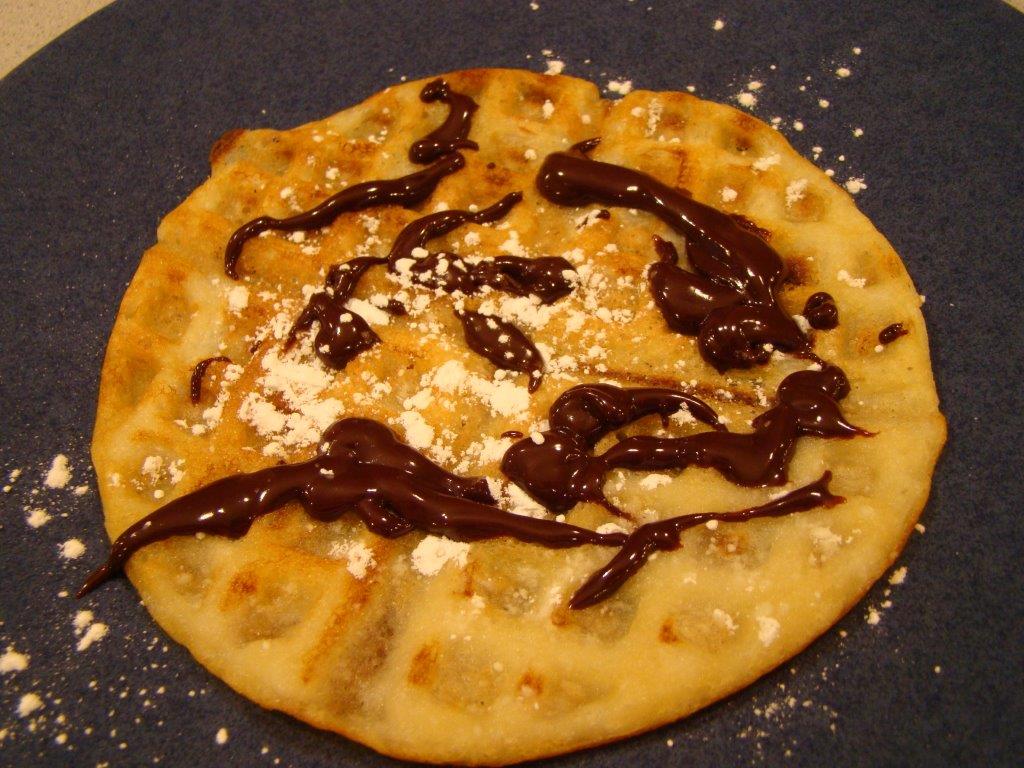
Last month, my friends at French Fridays with Dorie made waffles with cream. That week, I had a momentarily lapse of confusion and made the cheesecake tart which wasn’t scheduled until today. So this week while the Doristas enjoy their tarts, I will share my waffles with you.
I grew up eating waffles at breakfast time. I’m not sure what the difference is between pancake and waffle batter, but my mother made them distinct by using Hungry Jack for pancakes and Bisquick for waffles. Waffles were a considered treat, I think because they are cooked one at a time, and when we had waffles, you didn’t have to wait for everyone, you just ate your waffle when it was hot off the iron. I even have memories of waffles for dinner occasionally, the same ones served at breakfast time but eaten at night.
In France, waffles are not the entrée but dessert. These waffles were more delicate than the heartier ones I sometimes make for breakfast. (I use my college friend Sara’s recipe, not my mom’s.) I’m not sure whether this recipe is typically French, but the waffles were super buttery and light and crispy. The lightness came from beaten egg whites.

I did have some trouble cooking these. I halved the recipe, and I didn’t do a great job of judging how much batter to pour onto the waffle iron. I ended up with three rather thin waffles instead of two. The instructions were a little confusing too. Dorie had us pour the batter and then spread it (straightforward), but unlike the savory waffles with smoked salmon we made last spring, she never says to close the waffle iron. She does tell us to flip them over. I tried both ways (with the waffle iron open and closed) and did flipped all of them, but they didn’t get quite as golden brown as they should have. I’ll attribute that to not using each batter for each waffle.
The waffles being dessert, I sprinkled them with powdered sugar and drizzled them with chocolate sauce (some leftover chocolate ganache that I reheated). Neither of us care for whipped cream, so I had planned to serve ice cream with the waffles, but, uncharacteristically, there wasn’t any in the freezer.
This wasn’t my favorite dessert recipe from AMFT, so I doubt I’ll be making them again. And for breakfast, Sara’s recipe is perfect so I’ll stick with hers.
If you want to read more about the other Dorista’s waffles, check here. If you want to know about the cheesecake tarts they made this week, check here. The recipes can be found in Dorie Greenspan’s book Around My French Table.
After our brutal winter, spring is decidedly here. Here are a few shots from my garden.

My favorite daffodils: Barrett Browing
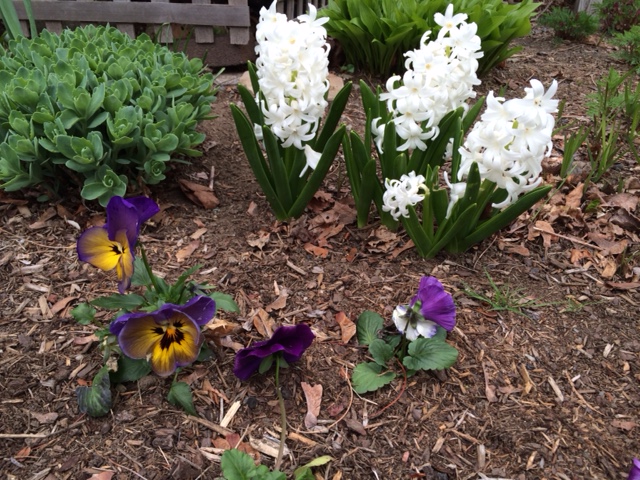
Assorted Spring Flowers
 A Plateful of Happiness