Dessert Incompatibility {CtBF}

As Howard and I say, we’re “dessert incompatible”. I’m far from a chocoholic. I’ll eat chocolate, but it’s never my first choice. On the other hand, for Howard, it’s chocolate all the way. When I try making a new dessert usually only one of us loves it. It’s tough…
Now that we’re cooking through David Lebovitz’s My Paris Kitchen, I’m discovering new twists on familiar and new recipes. Take this week’s choice, for example. Chocolate Mousse is something that I always forget about. I’ve made it a few times before, and it’s always a crowd pleaser. However, it’s not something that comes to mind when I’m deciding what to make for dessert.
Discovering this week’s recipe Salted Butter Caramel-Chocolate Mousse takes things over the top. The name says it all. It’s not just chocolate mousse. It’s chocolate mousse that starts with a salted caramel. I used to be terrified of molten sugar, but the more I make it, the more comfortable I get. Melt sugar, whisk in butter and cream, and you’ve got caramel. Stir in chopped dark chocolate until it melts and you have chocolate caramel.
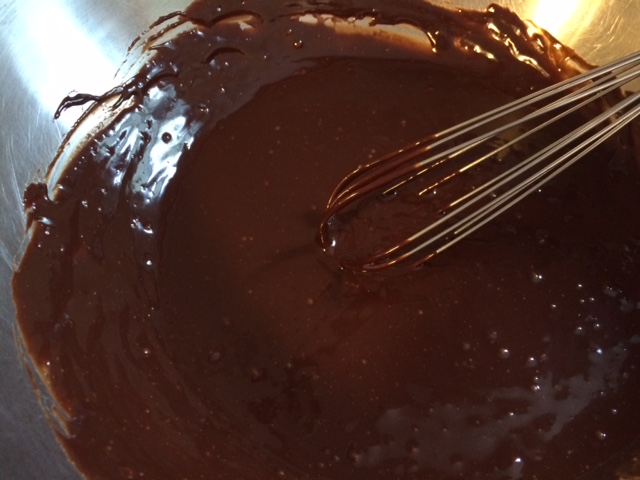
Once it cools to room temperature (we don’t want scrambled eggs in our caramel, do we?), you whisk in egg yolks. Finally, fold in stiff egg whites with some fleur de sel, and you have salted butter caramel-chocolate mousse. Spoon the mousse into glasses. Voilà! Who would think that something so good would be relatively easy to make? The hard part is waiting at least 8 hours for it to chill.
The mousse is packed with flavor. Both the chocolate and the caramel flavors come through. It’s sweet, but not too sweet. It’s light, so not too filling a dessert. The small juice glasses I used are the perfect size for a little treat after dinner.

So far Cook the Book Fridays’ new book choice hasn’t disappointed. I will have to remember to serve this mousse to company so it’s deliciousness can be shared.
If you want to try it at home, you can find the recipe on page 258 of My Paris Kitchen. The recipe has also been published on Epicurious. To see what my friends thought of the mousse, check their links here.
The core of Cook the Book Fridays are bloggers who met through French Fridays with Dorie, have remained friends, and enjoy cooking together (virtually anyway). All are welcome to join us as we continue the journey through another French cookbook, David Lebovitz’s My Paris Kitchen.
Cottage Cooking Club: April 2016

Each month for the past two years, the Cottage Cooking Club, founded and led by Andrea, The Kitchen Lioness, has been cooking through Hugh Fearnley-Whittingstall’s River Cottage Veg, a vegetarian cookbook with many delicious and often easy recipes for incorporating seasonal vegetables into your daily menus. I joined the group a few months after it started in August 2014.
This month, we reach the end of the journey through this book. Unlike my French Friday adventure, I did not cook every recipe in the book, but as a group, we collectively hit every single one.
This month, I chose two recipes. Here’s my take on them in the order I prepared them.
The spinach and thyme pasties were fabulous! I was a little surprised how well the pastry crust recipe worked. According to Michael Ruhlman, the ratio of many classic recipes, such as pastry crust, are used universally. This recipe called for nearly twice as much flour as I’m used to, in fact the same weight of flour and butter. I was concerned the crust would be dry, crumbly, and difficult to roll out. No cause for worry as it worked perfectly. The filling was a mixture of steamed spinach (squeezed dry) along with sautéed onion and garlic, lemon zest, farmers cheese, grated Parmesan, and chopped fresh thyme. After cutting the pastry crust into squares and topping with filling, they are folded over diagonally to make gorgeous pasties (aka turnovers or hand pies). A coat of egg wash burnished to the perfect shade of gold when the pasties baked.

The highest compliment came when Howard brought one for lunch a few days and was asked by several of his colleagues where he bought the hand pie. “My wife made it!”, he said. They were impressed.
I enjoyed the celery rarebit as well. Rarebit was standard fare in my single days. I used the recipe in the original Moosewood cookbook which uses ale instead of milk. In those days, I would spoon the rarebit (which was much runnier than Hugh’s version) over toasted English muffins and sliced apples. I was interested that this version was more of a “toastie”. The rarebit was super thick, definitely spreadable after it cooled down, making it easy to prepare sandwiches on subsequent days. I opted to make the celery variation where thinly sliced sautéed celery is stirred into the cheesy rarebit.
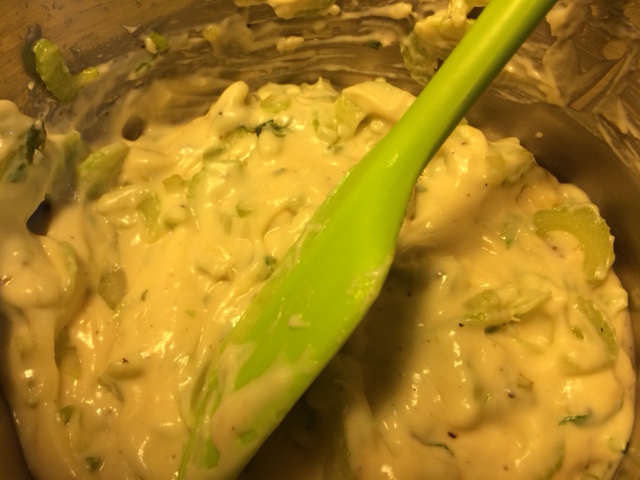
The sauce is spread over toast and broiled until bubbly and browned. I like the idea of the toastie offered in this recipe, though I missed the yeasty beer taste that complements the cheddar cheese so well. I would make this again, but would try substituting ale for some or all of the milk as suggested in the headnote. Also nostalgic for the apple and cheese flavor combination, one day I topped the toast with thinly sliced apples before spreading the rarebit over it. Another winning variation!

As a final note, I managed to make the vegetable biryani after my last Cottage Cooking post. I’m sad to report that it didn’t work for me at all. There was way too much liquid that never evaporated or got absorbed. This seemed to dilute the flavors because it turned out more like a watery rice stew than the interesting rice and curry combination I’ve had at Indian friends’ homes or at restaurants. I couldn’t even finish the leftovers because it lacked flavor of any kind. Bummer, but it happens.

As I wrap up my adventure with Hugh’s River Cottage Veg, I’ll share some reflections.
- Over the course of these many months, in addition to enjoying many satisfying recipes from this book, I was able to cook virtually with some of my old friends from French Fridays and to make new friends that I met through the Cottage Cooking Club.
- It was equally fun to compare notes on common recipes made and to get reviews on ones that I wasn’t sure about or didn’t have time to make.
- While I made only a fraction of the recipes, a majority of the ones I did make deserve an A+. There are a few, including the oven frittata and roasted Brussels sprouts and shallots, that I’ve incorporated into my repertoire and make repeatedly.
- I’ll admit that there were a fair number of recipes that included ingredients or flavoring that wouldn’t fly at my house (fruit – dried or fresh, curry spices, eggplant) but with the collective goal, I could just skip them, guilt-free.
- I will definitely go back and try several that received high ratings from other members but I haven’t had a chance to make yet.
Next month, the group will continue with additional cookbooks by Hugh Fearnley-Whittingstall: River Cottage Every Day and the soon-to-be-published (October 2016) River Cottage Love Your Leftovers. I’m going to bow out for now, but will still avidly read others’ recipe reviews each month.
To check out my fellow Cottage Cooking Club member’s blogs to read their reviews of April’s recipe selections here.
Until we meet again, Ciao!
 A Plateful of Happiness