You Can Teach a Dog New Tricks {CtBF}

It’s summer! I know we haven’t hit the summer solstice yet, but Memorial Day is the informal start date to summer in my mental calendar. Summer means lots of fresh vegetables and salads, salads, salads. I love salads. When I look at my recipe box, the Salad section is nearly as thick as Sweets. Certainly, it’s the most heavily used.
Panzanella, or simply “Bread Salad” as it’s known at my house, is always a favorite. Croutons of rustic bread tossed with lots of savory ingredients and a tangy dressing make regular appearances. I also make Fattoush, which uses crumbled toasted pita for the bread and has a Middle Eastern flavor profile.
Even when I already have a favorite recipe for something, I’m always open to a new twist. This week’s recipe for Cook the Book Fridays offers just that. David Lebovitz’s version is similar to yet different from mine.
Similar are the chopped vegetables (cucumbers, cherry tomatoes, and scallions) and the herbs (parsley and mint). Different: he uses sliced radishes instead of the chopped red pepper in mine. I like the radishes better. Different: he adds a healthy dose of hearty lettuce, making his fattoush more like a green salad. I tried it, but definitely prefer this salad without the lettuce. We both use a lemony dressing and a tangy sprinkle of sumac. David’s dressing with the additions of garlic and mustard has more zing than my simple lemon vinaigrette and is the clear winner.

Lettuce Plus Parsley and 3 kinds of garden-fresh mint!
Fattoush is in the First Courses chapter of David Lebovitz’s My Paris Kitchen. The first night I made it, I was home alone. I made the dressing in a jar instead of the salad bowl so I could use it for several smaller batches of this salad. Dressed salads especially those made with crisp bread are not good keepers. I cut up vegetables to make a quarter of the recipe, even though it serves 6. With a little bit of cheese and crackers on the side, I found that the salad was substantial enough to count as dinner. I made half the recipe another night which Howard and I shared along with a beet salad for our meal.

This recipe was worth trying. It was good, but it won’t displace my own favorite recipe. However, I definitely plan to incorporate parts of his recipe (radishes, dressing) into mine as we move ahead into summer.
The highlight of my Memorial Day weekend was a short hike in nearby Concord Massachusetts to check out a blue heron rookery. I occasionally catch one wading in the pond Bella and I walk around every morning. And I love the prehistoric look of herons flying overhead. They remind me of pterodactyls. When my neighbor (hi, Cass!) told me where to find the rookery, I channeled my inner Mary (Hirsch), had Howard find the binoculars, and we went for a ride.
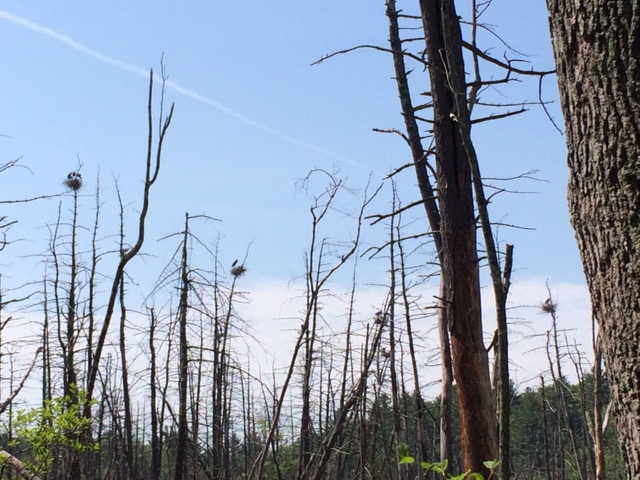
Observing their high nests on top of dead or dying trees in a marsh, I was surprised to see both parents tending one or two babies in each nest. There were 6-8 nests in all. The babies seemed to be getting ready to fly. We saw a couple of them perched on the edge of the nest where it looked like they were working up the courage to step off and test their wings. This week, I expect they have already flown off. I wish them safe travels.
Back to the food, if you want to try fattoush for yourself, you can find the recipe on page 116 of My Paris Kitchen. To see what my friends thought of their salads, check their links here.
Cook the Book Fridays was formed by bloggers who met through French Fridays with Dorie, have remained friends, and enjoy cooking together (virtually anyway). Others have joined us in this new adventure cooking through another French cookbook, David Lebovitz’s My Paris Kitchen. You can too!
Food Revolution Day 2016 {CtBF}
 Today is Food Revolution Day, so named by Jamie Oliver in his crusade to increase awareness about our food systems, globally, and to inspire children (and adults) to take charge of what they eat, starting with a simple revolutionary act: Learning to Cook! In support of this year’s Food Revolution Day theme “Feed the Future”, Jamie has created a set of 10 essential recipes that cover a wide range of cooking techniques to set any cook up for making some delicious meals and then serve as a springboard for variations as the cook’s confidence increases.
My cyber-friends who have been cooking together since 2010, first with French Fridays with Dorie and now under the umbrella of Cook the Book Fridays, are joining forces today to make what we consider to be an essential French recipe from our current project book My Paris Kitchen by David Lebovitz. Can you guess what that recipe might be? Quiche!
I’ve been making quiche since early in my savory cooking career. When I look back in my first recipe card file book (which has served as a chronological history of my favorite things to cook from age 12 through college), it appears that I added quiche to my repertoire in the summer after my freshman year of college. I aimed high. My first favorite version was Julia Child’s Spinach Quiche (Quiche aux Épinards) from Mastering the Art of French Cooking. I doubt I made my own crust at the start, but I made spinach quiche over and over again. In fact, I still make this particular recipe from time to time.
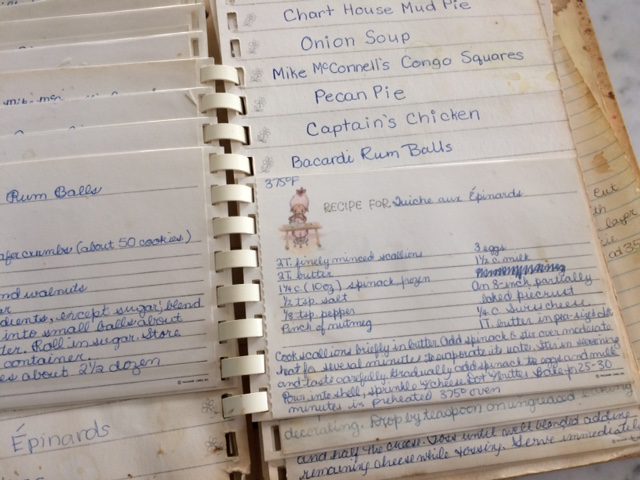
My First Recipe “Filebox”, started in 1973
Now I think of quiche as more of a formula than a recipe. I mix-and-match crusts, custards, and fillings depending on the season and what’s in the fridge. It’s a wonderful way to use up leftover cooked vegetables and other side dishes. Bind them with a custard and you have a filling lunch or dinner.
In honor of Food Revolution Day, we are making David Lebovitz’s version of quiche from My Paris Kitchen: Tarte Salée au Jambon, au Bleu, et aux Poires (ham, blue cheese, and pear quiche).
The recipe starts with a sturdy crust made with standard ingredients (flour, butter, salt) plus cornmeal and egg. I usually make my pâte brisée in the food processor, but this crust mixed up easily in a stand mixer. I liked that the crust didn’t require pre-baking, though it wasn’t as flaky as the other crusts I use for quiche.
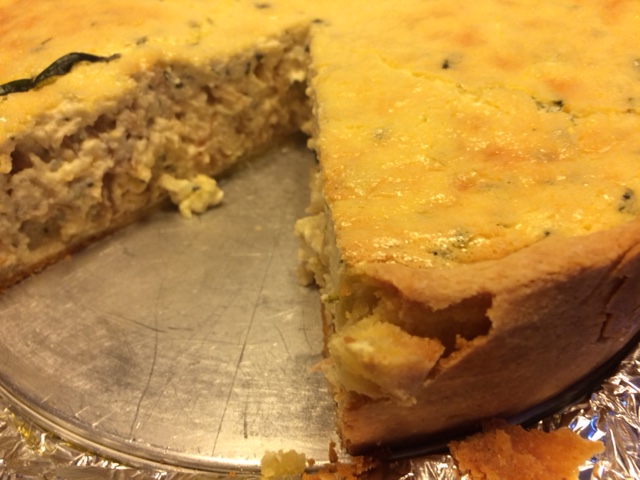
The custard was INCREDIBLY rich. My usual formula combines eggs and milk (sometimes skim). David’s recipe combined cream cheese and heavy cream with a combination of whole eggs and egg yolks. Wow was it decadent! Once baked it had a silky texture and practically melted in your mouth. This rich custard isn’t something I could justify indulging in every week, but I would pull it out for special occasions.

Tarragon Leaves mark “my” half of the quiche, the half WITH pear
As for the filling, sautéed shallots, diced ham, crumbled blue cheese, diced pear, and a generous amount of minced tarragon (fresh from my garden) added substance to the mix. Any of you familiar with my husband Howard’s rules about when he’ll eat fruit might wonder how I handled this recipe. David said the pear flavor wasn’t strong, but if noticed, I didn’t want Howard to have to come up an alternate meal on the fly. Aren’t I nice? I combined all the ingredients except the pear and added them to the pan. Then I marked halves of the quiche with tarragon leaves and gently stirred the diced pear into one half of the quiche. His and hers!
This deep-dish quiche is a keeper. As I mentioned, the custard isn’t for every day, though I might take inspiration from the ham and cheese combination to add to a lighter custard.
For anyone trying to round out their culinary skills to feed themselves in the future, quiche is a “must know” kind of recipe. This recipe is a really good version to start with. The crust is manageable, even for a beginner, and the end result is a hearty and delicious meal.

I served slices of quiche with a white bean salad on the side. A green salad would also be a good accompaniment. The vinaigrette on the salad will help cut the richness of the quiche.
If you want to take your quiches to the next level, try this recipe on page 155 of My Paris Kitchen. To find out more about my friends’ quiches, check out their links here.
 A Plateful of Happiness