Cocktail Hour, Anyone? {CtBF}
What do you snack on with a drink while you prepare dinner? Or set out for guests while you apply the final touches on a meal? Depending on the menu or the drink, we typically serve cheese and crackers or chips and salsa. If company is coming over, I put more thought into it, offering a variety of textures plus accommodations for dietary restrictions or sensitivities. I’m always looking for new ideas and inspirations for easy cocktail time nibbles.
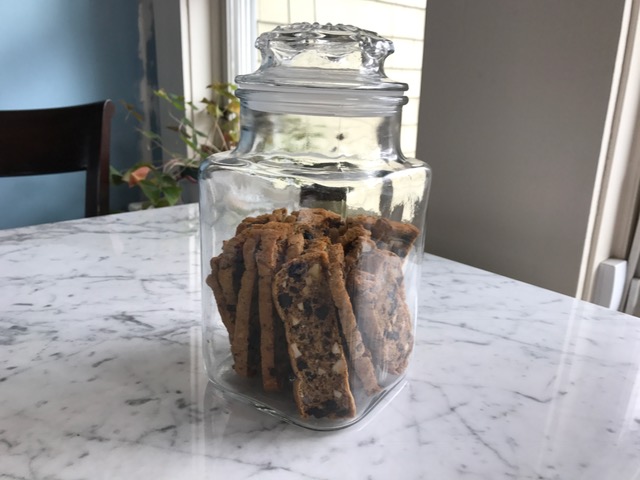
This week’s recipe for Cook the Book Fridays fits the bill. I’d describe Salted Olive Crisps as something between a thin savory biscotti and a full-loaded cracker. You start by making a shallow loaf of something like a quick bread with a healthy dose of Herbes de Provence and oodles of chopped olives and almonds. After the loaf is baked and slightly cooled, you slice the loaf as thinly as you can and bake the slices again to crisp them up. Once cooled, you have a treat to offer (to yourself or others) alongside a glass of wine or other beverage.

Though I used a good bread knife, as recommended, to slice the loaf, my crisps weren’t quite as thin as they were meant to be. I think it’s because the recipe wasn’t clear about how long to cool to bake the loaf before slicing. I only let it cool until I could handle it, about 10 minutes. It was still warm. However, when the recipe said to turn down the oven temperature after the loaf came out of the oven, it seemed like I was meant to bake the slices shortly after the loaf was done. I felt like if the loaf had cooled completely, it would have been easier to slice thinner.
The slightly thicker slices took longer to get to golden brown and still felt a bit soft. I baked these after dinner, so they weren’t cool enough to put in a closed container before bedtime. I put them back in the warm (turned off) oven to spend the night. In the morning, they were beautifully crisp.

I used oil-cured olives that have a slightly sweet flavor and a chewy texture like moist raisins or prunes. In fact, I often use these same olives as a substitution for dried fruit in recipes that Howard would otherwise eat. I can see this recipe serving as a springboard for many other combinations, varying the herbs, the olives, the nuts, and adding other savory ingredients such as sun-dried tomatoes or capers. I think it would be nice with a combination of sweet and savory ingredients, but I’d have to try that when I’m bringing treats to a friend (refer to constraint above).
If you’d like to try these yourself, check out the recipe on page 42 of David Lebovitz’s My Paris Kitchen. You can learn more about other bloggers’ experiences with this recipe here. Or let me know when you want to stop by for cocktail hour chez moi, and I’ll whip up a batch and share!
Snail Butter! {CtBF}

My first memory of the concept of “snails as food” is the image of a plastic tube of giant snail shells with a tiny can at the bottom that my mother kept in our pantry of my childhood home. (See the tiny picture at the right.) I’m not sure where it came from, but most likely, it was a souvenir, either brought home by my parents from a trip or bestowed on them by travelling friends. To the best of my knowledge, no one ever ate the snails inside the can, but the tube sat there year after year.
Fast forward to adulthood. I know I’ve eaten snails once or twice in French restaurants, but I couldn’t tell you where or when. What I can tell you is that the most memorable thing about them is the delicious garlic butter that is the essence of escargot. Sure, the butter coats the chewy snails and makes them marginally appealing. However, sopping up any remaining butter with fresh bread is the main event.
The name of this week’s recipe for Cook the Book Fridays, Green Beans in Snail Butter, was filled with intrigue for me. Based on the title alone, I assumed that snails would be incorporated into some sort of compound butter to be served over the green beans. Fussy and complicated on the face of it. In reality, the recipe is so much simpler. What we’re actually making is that amazing butter the snails are traditionally served in. Instead of providing a bath for snails, green vegetables are immersed instead.
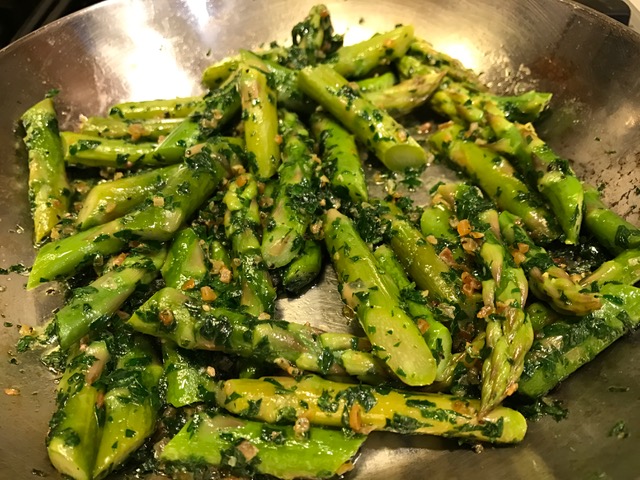
Desperate for spring, I had picked up asparagus earlier in the week. I decided to go with what I had on hand. I cut the asparagus spears into green bean length pieces and steamed them.
I also discovered that all the heads of garlic I had were spoiled. I had some minced garlic from Penzey’s that I had picked up when I had a coupon for a free jar. I used this instead. I found that the freeze-dried pieces added a subtle texture, and the garlic seemed to resist the urge to burn that often happens when I freshly minced garlic.

Minced garlic sautéed in butter with a generous amount of freshly chopped parsley is about all there is to it before seasoning with salt and pepper and a squeeze of lemon juice. I tossed the asparagus in the fragrant butter and Voila!
I will definitely make Snail Butter again when I feel like dressing up green vegetables or maybe fish or seafood. I count this recipe as yet another winner.
The asparagus in snail butter was the perfect side for the New York Times’ Roasted Provencal Chicken.

You can find the recipe here on Serious Eats or on page 222 of David Lebovitz’s My Paris Kitchen. If you haven’t picked up a copy of this book, I highly recommend it. There are so many delicious recipes that I’ve added to my repertoire. To see what my blogging friends thought of snail butter, check their links here on the Cook the Book Fridays website.
Bonus note: Last night, I saw my friend Lisa of Hawley’s Food Path at our garden club’s meeting. We made beaded dragonfly garden ornaments. Here’s a picture of Lisa and me with our finished projects.

Lisa (right) and Me (left) with our dragonfly ornaments.
Happy French Friday! See you in April!
 A Plateful of Happiness