French Fridays with Dorie: Buckwheat Blini with Smoked Salmon and Crème Fraîche

This week flew by. I can’t believe it’s already Friday again. It seems like I haven’t been writing any posts except when it’s time for French Fridays with Dorie. I’ll have to work on that…
This week’s recipe for the cooking group was Buckwheat Blini with Smoked Salmon and Crème Fraîche. This one could go in one of two directions: appetizer or brunch entrée.
I planned ahead and convinced my husband Howard to make gravlax. He’s been doing it for years and it always comes out perfectly. We bought half of a wild Alaskan salmon, ate some for dinner, and he cured the rest. A few days later the salmon was ready. I had the best of intentions of making my own crème fraîche, but my forethought didn’t extend to myself. Typical.
The blini are made from a yeasted buckwheat batter. It needs to sit for at least 60 to 90 minutes to get the rising action going. Since I chose to try this for brunch, I made the batter the night before, letting it sit out for 90 minutes at room temperature, then stashed it in the refrigerator for the night. I was a little worried because my foil packet of yeast didn’t quite measure the 2 teaspoons called for in the recipe, but I had major bubble action, so it was fine.
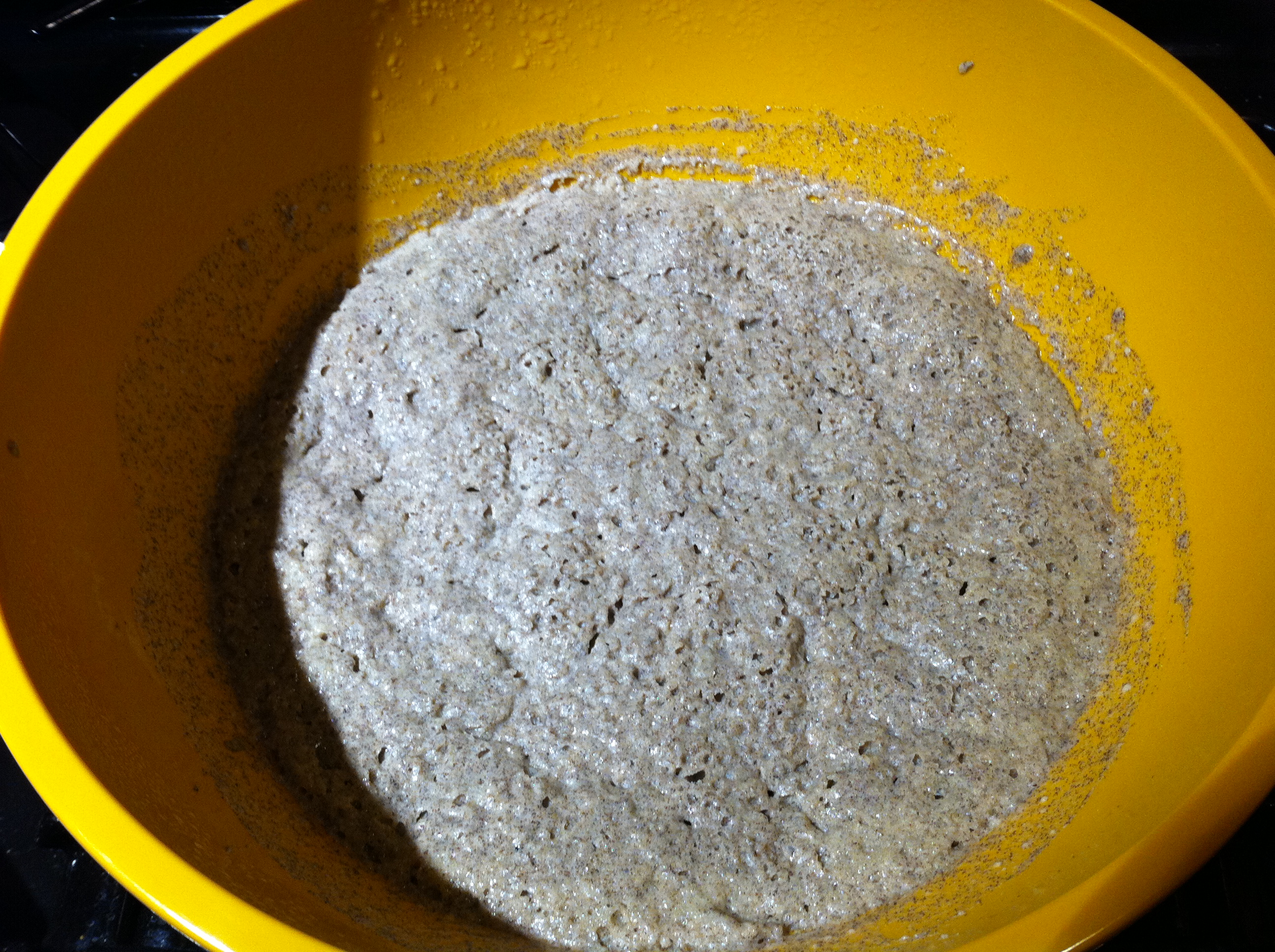
In the morning, we made lots of little pancakes. Each pancake was dolloped with crème fraîche, topped with a slice of gravlax, and sprinkled with some dill. (I forgot to look for salmon roe, which would have been a nice addition.) They made a lovely presentation.

We thought the blini would make a better appetizer than brunch. First of all, it felt more natural to eat with your fingers than a fork, which seems more like an appetizer. Then, to fill up, you would need to eat a lot of blini, so again, it seemed like a better appetizer. Finally, I think the earthy, tangy taste of the blinis themselves were such a contrast to buttermilk breakfast pancakes that they suffered by the comparison. They would have shined as an appetizer. Conclusion: I liked this dish, but served it for the wrong meal.
I’m also excited to be able to experiment with the rest of the bag of buckwheat flour. I found a nice selection of recipes to try on Heidi Swanson’s 101 Cookbooks blog. The figgy buckwheat scones look especially appealing. This link will give my search results.
For the cooking group, we don’t publish the recipes. For that, you’ll need to check out Dorie Greenspan’s book Around My French Table. You won’t be sorry. What did the other FFwD bloggers think of the blini? You can see their links here and find out for yourself.
Next week, something I’ve wanted to try for a long time: Pissaladière!
French Fridays with Dorie: Olive-Olive Cornish Hens

It’s hard to believe it’s been one full year since French Fridays with Dorie started in October 2010. I’ve really stuck with the program and missed only one recipe (Parisian Gnocchi). It’s been so much fun to try such a wide variety of recipes, some in my comfort zone, and some outside of it. I’ve met so many wonderful people from around the world. I love reading about everyone else’s experience with the common recipe, and their variations to adjust for dietary restrictions, preferences, or just inspired creativity. It’s one of my favorite parts of every week. Happy Anniversary to the other Doristas! I’m enjoying this shared adventure with you.
This week’s recipe from Around My French Table was Olive-Olive Cornish Hens. I actually suggested this one. It looked intriguing and was a little out of my comfort zone. It also seemed like a hearty dish for our cooler evenings. For this recipe, the hens were first “spatchcocked” or butterflied. You cut out the backbone, open up the bird, and break the breastbone so it will lie flat on a baking sheet. (Coincidentally, the New York Times has a video of Melissa Clark spatchcocking a chicken this week.)
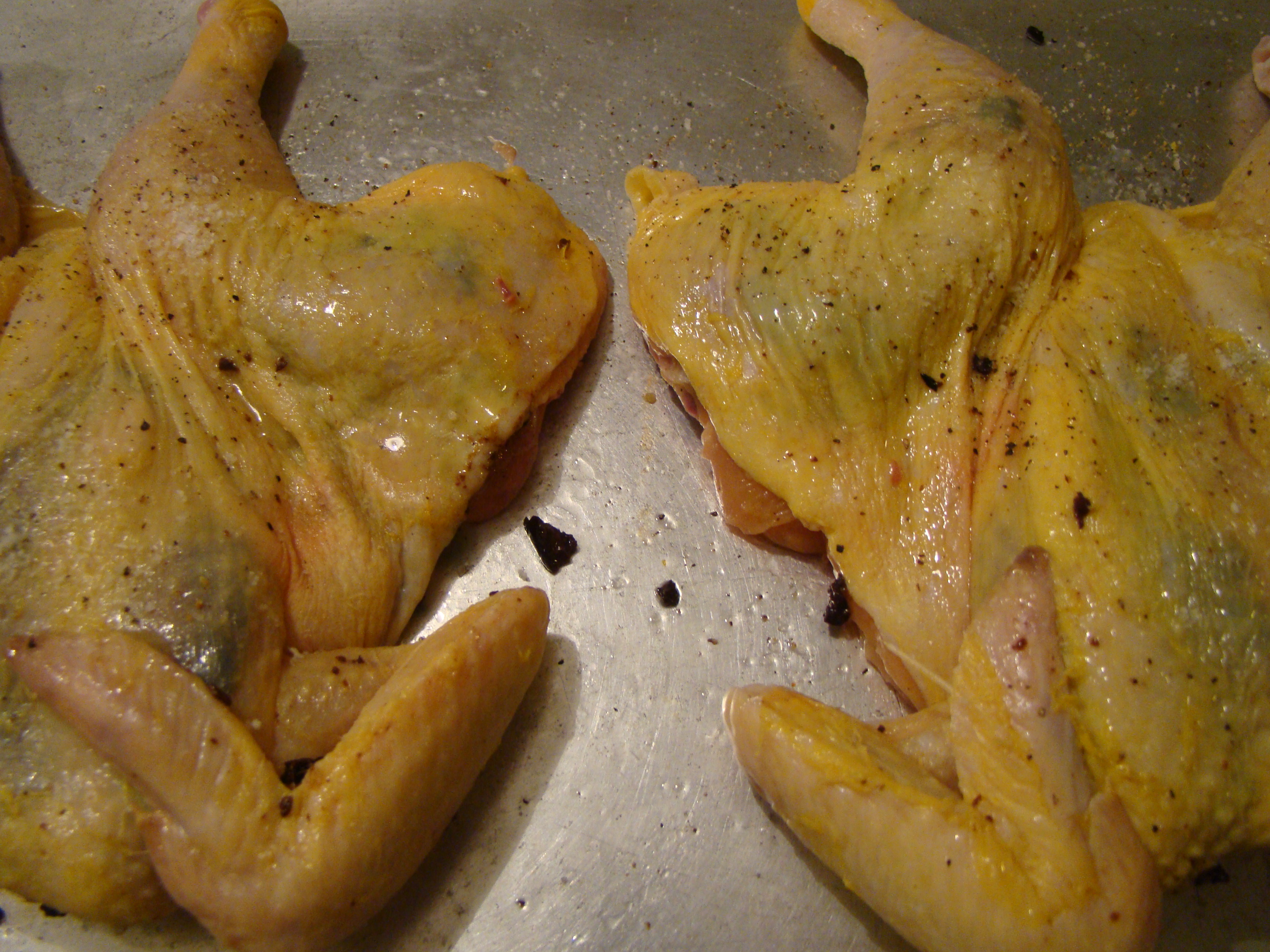
Earlier in the week, I made Dorie’s recipe for Tapenade. It only took a few minutes, pureeing black oil-cured olives, an anchovy, some herbs, lemon, and olive oil to make a paste. I rubbed some tapenade under the hens’ skin, then rubbed them down with olive oil and sprinkled them with lemon juice. It’s as simple as that. The hens roasted for just 25 minutes in a very hot oven. The birds were sizzling when they came out of the oven with perfectly crisped skin.
We split the hens in half and shared one for two nights in a row. To accompany the hens the first night, I made Rapid Roastini, (from Nigella’s Kitchen, which I had out from the library) which are pan-fried potato gnocchi. They browned up beautifully and tasted like adult tater tots. I also made sautéed kale with almonds. For night #2, I just served the hens with steamed rice and a green salad.
The Cornish hens offered unexpected weeknight elegance. It was definitely fast enough to make for everyday, but would impress guests. Other than the cute factor, I don’t know if I would bother with Cornish hens for regular dinner, but I could see rubbing the tapenade under the skin of chicken pieces and roasting them in the same way. Less bones!
I still have quite a bit of tapenade to use up. What ideas do you have for using it?
Check out everyone else’s hens here. We don’t share the actual recipes, but you can find this recipe and more in Dorie Greenspan’s Around My French Table.
Next week’s recipe looks like another winner: Buckwheat Blini with Smoked Salmon and Crème Fraîche. Can’t wait for that one.
 A Plateful of Happiness