french fridays with dorie: nutella tartine
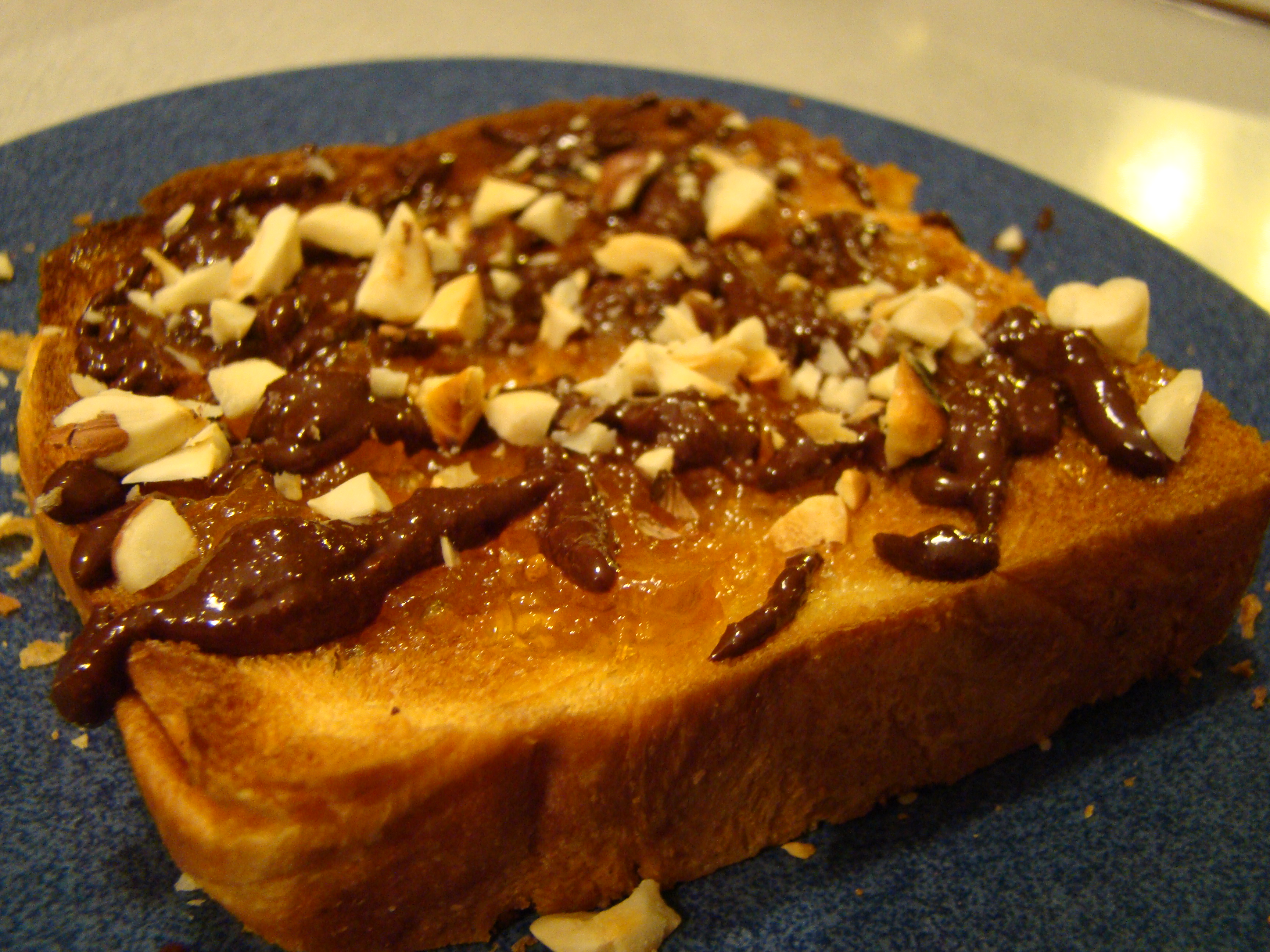
This week’s recipe for French Fridays with Dorie is Nutella Tartine. A tartine is an open-faced sandwich, French-style. I think tartines are usually savory, but a nutella tartine is a typical after-school snack for French children.
For Dorie’s version, the main event is really orange marmalade spread on a thick slice of challah and then drizzled with nutella and sprinkled with some sea salt and chopped hazelnuts. The bread remains soft because it’s just toasted on one side, the spreading side.
The recipe was so simple, that it almost seemed like cheating. So, I thought it was a good opportunity to try out one of the recipes for homemade nutella that I’d seen. This was a good idea in theory, but when the melted chocolate cooled, it was no longer spreadable. I have to chip it out of the jar with an ice cream scoop. It gets soft and spreadable again when heated, but was not what I expected. I used bittersweet chocolate instead of milk chocolate because that’s what I prefer. I don’t know if that’s what made it harden up.
I think some of my husband Howard’s food quirks have rubbed off on me. I don’t really like chocolate mixed with fruit flavors. So the flavor combination of the orange marmalade with the chocolate-hazelnut drizzle didn’t work for me.
I had a whole loaf of challah and the jar of homemade nutella, so for round 2, I tried spreading the nutella on the bread and sprinkling with chopped nuts and salt. Time for true confessions: I don’t like peanut butter on bread. I like it on a spoon or on something wet, like celery or apples, but not on bread. I know, this post is supposed to be about nutella, but it matters. Nutella is chocolate-hazelnut spread. Sort of like peanut butter, but with hazelnuts instead plus chocolate. The conclusion, I don’t like nutella on bread either.

At the same time, I’ve always been fascinated by this European concoction. One Valentine’s Day, I used it to sandwich heart-shaped shortbread cookies together, but other than that I’ve never been able to figure out exactly how to use it on a more regular basis. Any suggestions for using up the rest of my jar of homemade (and hardened) nutella?
One more helpful tip I wanted to offer up this week. I’ve never had much luck getting the skin off of hazelnuts just by toasting and rubbing with a towel. I seem to get less than 25% of the skin off that way. I saw a different method on TV that works like magic. In a large pot, dissolve 3 tablespoons of baking soda in 2 cups of water, and bring the water to a boil. Add up to a cup of hazelnuts, and boil for 3 to 5 minutes. The mixture will bubble up and look disgusting. The water will turn black. It’s ready when you can run a nut under cold water and the skin comes off. Drain the nuts in a colander and run cold water over them to cool. Now, rub them in a towel. The skin will come right off. Just be sure to use a much bigger pot than you think. The mixture will really bubble, and you don’t want it to overflow. It’s a mess to clean up (I speak from experience).
Each Friday, I make a recipe from Dorie Greenspan’s book Around My French Table along with other bloggers. If you want to see their take on this recipe, check out the links at French Fridays with Dorie.
Elegant and Easy Paella

A highlight of a New England winter is the Maine shrimp season. These delightful pink shrimp have a lot going for them. They’re wild, they’re local, and, most importantly, they’re delicious. The season varies each year. This year, it started on January 2, but with a significantly lower quota than last year. The limit is what keeps the population sustainable, but, at the same time, it also limits the fisherman’s income. The whole question of sustainability raises lots of sticky questions.
We went to Maine for a quick overnight last weekend, so I stopped at the store to see if they had shrimp. The season is nearly over, but they had some in the case. I picked up a couple of pounds. One thing that’s different about the Maine shrimp is that they are pink even before they are cooked. .They are also really easy to clean: the shells are really thin which makes them easy to peel, and they don’t have any noticeable vein to remove. They are on the small side, but so cute when they cook up.
The first night, I made a shrimp scampi over linguine. I winged it, making it like my linguine with clam sauce, but with shrimp. And I simmered the shrimp shells with some butter, lemon and garlic cloves to use instead of clam broth. I didn’t remember to take any pictures, but it was delicious.
With the second half of the shrimp, we made a simple paella. This recipe can easily become part of a weeknight repertoire, though the final product is not at all ordinary. The ingredients were few, and the technique a little different, so I’ll admit I had some doubts. The part that made me nervous was the delicate shrimp spending nearly half an hour in a 500 degree oven. I was sure the shrimp would dry out. However, the recipe was Mark Bittman’s and the book was Amanda Hesser’s The Essential New York Times Cookbook, so I should have had more faith. The shrimp was perfectly cooked, as was the rice. The only “note to self” for next time is to add a handful of peas to add some color to the dish.
Easiest Paella
Adapted from this recipe
Serves 4 to 6
4 cups chicken stock
Pinch saffron
2 tablespoons olive oil
1 medium onion, minced
2 cups Arborio rice
Salt and fresh black pepper to taste
2 cups raw Maine shrimp, peeled
½ pound chorizo, cut into ½-inch slices, then quartered
½ cup frozen green peas
Preheat the oven to 500F. While the oven preheats, heat up the stock and saffron in a saucepan.
In a 10-inch cast-iron skillet, heat the oil over medium-high heat. Add the onion and cook, stirring occasionally, until translucent, about 5 minutes. Add the rice, and cook, stirring occasionally, until coated with oil. Season with salt and pepper. Add the warmed stock. There will be a lot of steam, so stand back. If you wear glasses, they will fog.
Stir in the shrimp, chorizo, and peas. Carefully, transfer the pan to the oven.
Bake about 25 minutes, until all the liquid is absorbed and the rice is dry on top. Serve immediately.
 A Plateful of Happiness