A Sweet for my Sweetie

Today, Howard and I are celebrating our 22nd wedding anniversary. My, how time flies! Seems like just yesterday…
We went to Maine and celebrated with a special dinner out last night at Fore Street in Portland. Tonight, on the actual day, we treated ourselves to a home cooked meal: steaks on the grill dotted with leftover rosemary butter, fresh corn on the cob, green beans (dotted with more of the rosemary butter), and a salad.
As I describe it to you, I realized the meal was a locavore’s dream. The steaks were from a steer raised by my brother-in-law’s father, the corn was from our favorite farm stand in Maine, the salad fixings were from this week’s CSA share, and I picked the green beans myself at the CSA. It was our favorite kind of home cooking, perfect for celebrating a homey event.
For dessert, Howard wanted a bumbleberry pie. It’s a mixed berry pie topped with a crumble topping. We often get one at the farm stand in Maine. We stopped there on our way out of town, but they were sold out of that flavor. Howard was very disappointed. To make it up to him, I put together my own interpretation when we got home.
I prefer making tarts instead of pies. I’m not sure why. I think it’s their elegant shape and how most tarts look like they could have come from a bakery. So, I made a bumbleberry tart for dessert. We have tons of berries in the freezer from picking earlier in the summer. I think you could make this with fresh berries but I didn’t try it.

I tossed frozen raspberries, blueberries, and blackberries with some sugar and cornstarch. I filled the tart shell with berries and topped it with an oatmeal streusel topping that I use for fruit crisps. The cornstarch thickened the berry juices as they bubbled in the oven. The topping turned golden brown.
Howard’s verdict? Thumbs up! Happy Anniversary, Honey!
Bumbleberry Tart
Makes a 9-inch tart
Pastry crust for a 9-inch tart (use my favorite or your own)
Filling:
½ cup sugar
¼ cup cornstarch
3 cups frozen berries (a mixture of blackberries, blueberries, and raspberries is nice)
Topping:
¼ cup + 2 Tbsp flour
¼ cup + 2 Tbsp packed brown sugar
½ tsp cinnamon
¼ tsp kosher salt
¼ cup (½ stick) unsalted butter, cut into ½-inch pieces
½ cup + 1 Tbsp rolled oats (not instant)
On a lightly floured surface, roll the dough into a 10-inch circle. Fit the rolled dough into pan and fold the edges back to the base of the tart to reinforce the sides. Prick all over with a fork and chill for at least 30 minutes to firm up.
Preheat the oven to 425F. Place the tart pan on a baking sheet optionally lined with parchment paper (the paper will make it easy to move the finished tart to a rack).. Line the tart shell with parchment paper or buttered foil. Fill with dried beans or pie weights. We are partially baking the crust. Bake for 15 minutes. Remove from the oven, and carefully remove the liner. (You can do this up to a day in advance.)
While the pastry bakes, make the topping (or you can do this a few days ahead). In the bowl of a food processor, combine the flour, sugar, cinnamon, and salt. Add the butter and process until clumps start to form (10-15 seconds). Transfer the mixture to a bowl. Add the oatmeal, and use your hands to combine. If you are making this in advance, store in the refrigerator.
Preheat (or turn down) the oven to 350F.
In a medium bowl, mix the sugar and cornstarch together, removing any lumps. Add the berries and stir until most of the sugar dissolves. Transfer berry mixture to the tart shell. Sprinkle oatmeal topping over the berries.
Bake the tart for 30-35 minutes, until the berries are bubbly and the topping is browned.
Transfer the tart to a rack to cool. After 10 minutes, remove the rim of the tart pan. You can serve this warm or let it cool to room temperature. Store leftovers in the refrigerator.
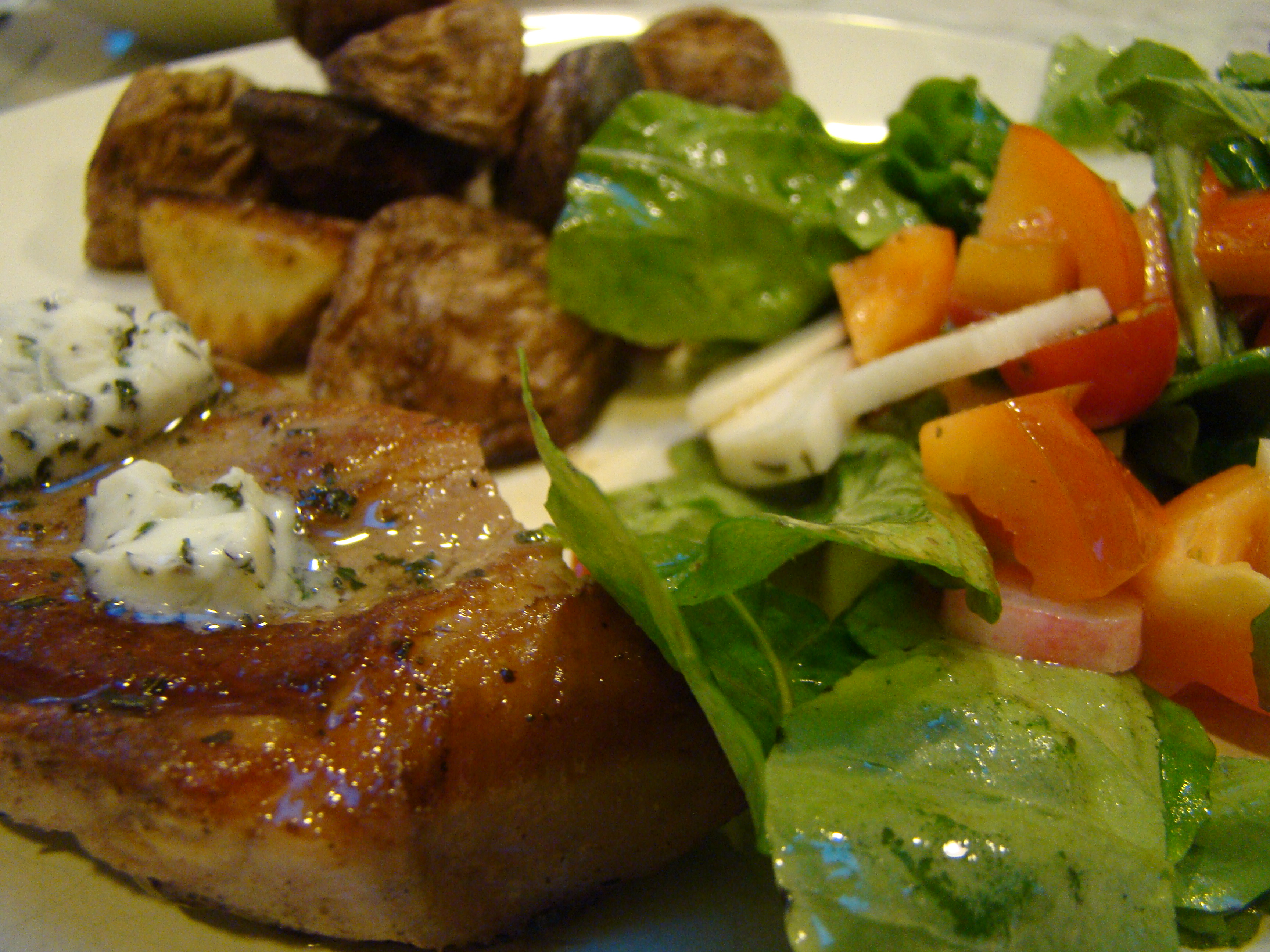
ffwd: veal chop with rosemary butter
(Warning: If you don’t like to think too much about where your food comes from, skip the first few paragraphs of my post.)
It’s been more than a decade since I last ate veal. I stopped when I learned how cruelly calves are treated in anticipation of turning them into veal. I won’t judge you if you eat veal because everyone’s food choices are personal, but I decided veal wasn’t for me.
It’s only in the past few years that I have come to the realization that in order for animals to give milk, they must have babies first. Female babies have value in growing a dairy herd. Male babies, not so much. This is why lamb and veal have made it into our food system. With veal, conventional practice has been to crate the calves to prohibit exercise and normal muscle development in any effort to create a highly tender and white meat. This is what caused me to drop veal from my diet.
(As an aside, while goat is the most popular meat globally, it hasn’t made inroads in the American diet. That means that male baby goats, bucklings, have it particularly hard. Check out this cool effort to create a market for the bucklings from several goat dairy farms in the Northeast.)
(If you were skipping ahead, I think it’s safe to start reading here.)
At a winter Farmer’s Market, I was talking to a local cheese maker while sampling her wares. When I noticed a sign on the table advertising veal for sale, I shifted the conversation in that direction. At Lawton’s Family Farm, the excess calves are raised in fields alongside the other grass-fed cows raised for beef. This is also known as “rose veal” because the color is pink, a natural result of the exercise and muscle use from gamboling in the fields. This was veal I was open to trying. I bought the last chop, stashed it in the freezer, and forgot about it.
When I saw this week’s recipe for French Fridays with Dorie would be Veal Chops with Rosemary Butter, I remember the lone chop in the freezer. Rather than substituting another kind of meat, I gave it a try.
I only make compound butters sporadically, when a recipe calls for a specific blend. I don’t know why they aren’t part of my regular pantry. I made half the recipe because I knew I was cooking just one chop. Fresh rosemary and thyme (for my garden!) were mixed into softened butter before adding a pinch of salt. I used Maldon salt and the flakes gave it a great texture when I tasted it straight.
The chop is rubbed with olive oil, rosemary, thyme, salt and pepper. The chop should be seasoned for at least an hour, and up to a day, ahead. I didn’t read the recipe carefully before I set out to make dinner, so 15 minutes is all it got.

Olive oil is infused with garlic and more rosemary in the pan before searing the chop for two minutes on each side. Then, the pan is deglazed with white wine and chicken broth to make a sauce. (I didn’t have any broth readily available, so just used water and salt.) The sauce is drizzled over the chop before topping it with a few dots of the rosemary butter.
The preparation was delicious, and so was the veal. One of the things cooking from this book continually teaches me is indoor ways of cooking meat. This technique is a winner. It might seem simple, but I honestly have never pan-fried meat outside of recipes in this book.
Howard and I shared the half-pound chop with a generous serving of roasted potatoes and an arugula salad on the side. I will try to remember to make this with lamb and pork shops over the winter. I would make a perfect meal for company.
My favorite part of this particular recipe was the rosemary butter. I accidently cut up a little more than I needed to top the meat. I’ll admit to eating a few dots plain instead of throwing it out. I’m thinking of making some biscuits or picking up some dinner rolls as a vehicle for the leftover herby, salty spread. It was amazing.
If you want to read about other interpretations of chops with rosemary butter, check out the Dorista links here. The recipe can be found in Dorie Greenspan’s book Around My French Table.
Happy Friday! I can’t believe that next Friday I’ll be in Seattle and will meet about a dozen of you in person. Can’t wait!!!!!
 A Plateful of Happiness