Category Archives: my paris kitchen
Salt Cod Double Take
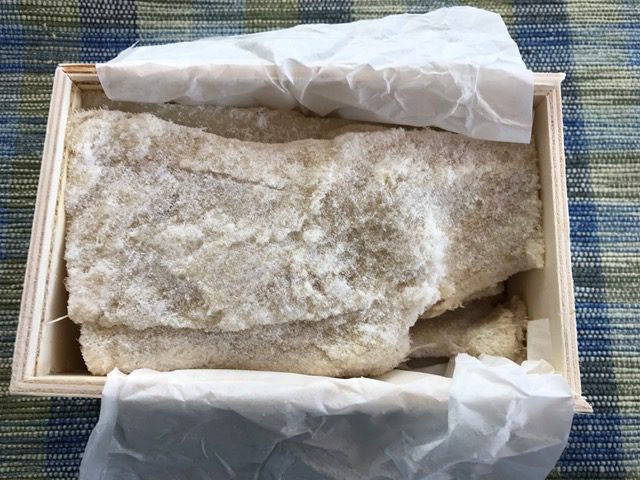
Salt cod has been around for a long time. Back in the days before refrigeration, salting was one way to preserve foods for longer storage. I first became acquainted with it when I moved to New England and noticed that a barrel of dried fish would appear in the grocery store around the holidays. Ever curious, I bought some and looked up what to do with in “The Joy of Cooking” (this was pre-Internet). Brandade, a salt cod and potato puree, was the “gateway” recipe for preparing this flavorful (from the salt) mild fish. Over the years, I’ve prepared salt cod a few times, when I saw it for sale, but it had been a while since I’ve seen it around.
When Brandade came up as December’s bonus recipe for Cook the Book Fridays, I smiled, remembering this hearty dish fondly. It took me a while to track down the dried fish, so I missed the earlier recipe, but it came up again this week with Salt Cod Fritters.
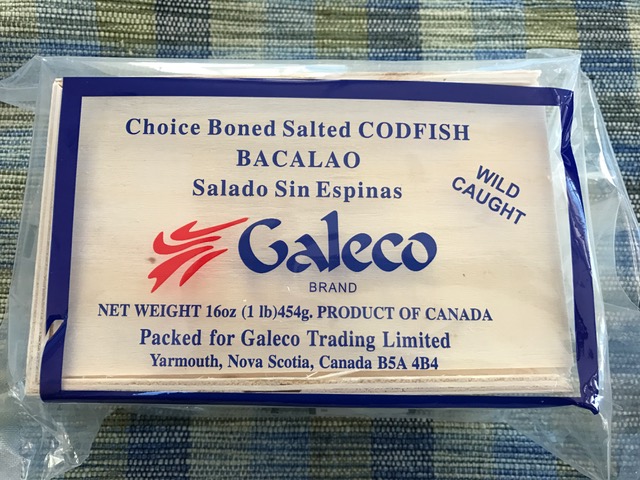
When using salt cod, you must plan ahead. A day or two of soaking with regular water changes is required to leach the salt from the fish so that it’s edible (i.e. not unbearably salty). Once the fish has been de-salted, it’s time to make brandade, which is surprisingly simple, not much more work than making mashed potatoes.
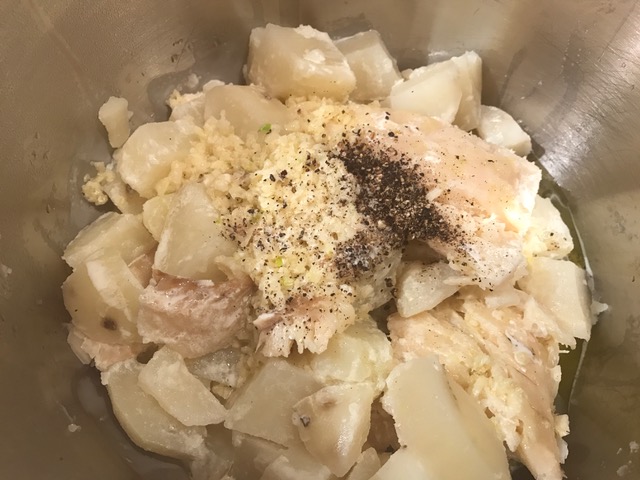
David Lebovitz’s version starts by infusing olive oil with garlic and thyme. Then, the fish is simmered with chunks of peeled potatoes until everything is tender. After draining, the fish and potatoes are pureed in a stand mixer along with cream, the garlic-infused oil, salt and pepper, which makes the richest, most delicious mashed potatoes you’ve ever had. To turn this into dinner, there’s one more step. The brandade is transferred to a baking dish, sprinkled with bread crumbs and grated Parmesan cheese, and baked until lightly browned and bubbly. The dish of brandade can be served with a salad for dinner (that’s what we did) along with some toasted bread. It could also be served as a spread for a party appetizer.

We ate half of the brandade for dinner. A day or two later, I made salt cod fritters with the other half. You might know that I’m terrified of deep-frying. I also can’t get my head around the volume of oil required to do this. It grosses me out. I was happy to hear from some of the other cooks in this group that shallow-frying worked too.
I liked that the salt cod balls, made from brandade mixed with bread crumbs, could be rolled earlier in the day. That left only the step of mixing the batter and cooking for dinnertime. The well-seasoned beer batter sits for half an hour, which leaves ample time to mix up the tartare sauce.

To cook the fritters, the salt cod balls are dunked in the batter and the excess drained off (as best as you can, not so easy), then fried in hot oil. The batter was thick and when I placed the balls in the oil, more of the batter dripped off, creating a little pancake base. This happened each time I turned the fritters, resulting in pyramid shapes instead of balls.
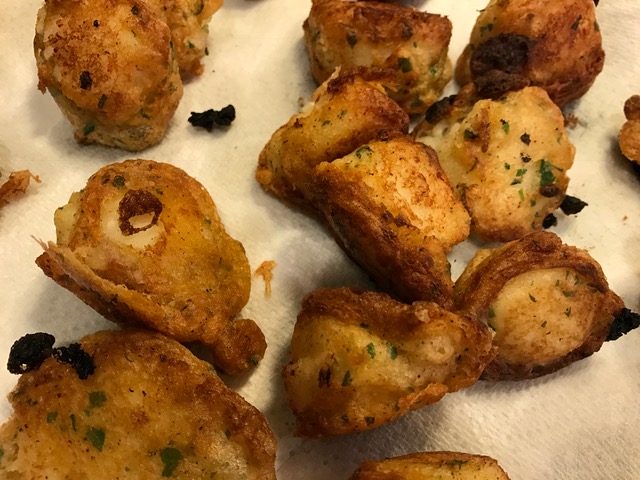
Towards the end, I tried flattening the balls into patties before dipping and frying. I found this to be less frustrating. I’ve successfully converted from pan-frying to baking my crab cakes, so I also wonder whether the batter-coated patties can be baked instead of pan-fried.
I think the fritters are intended as an appetizer, but I served them with salad for dinner.

I would definitely make brandade again and might make the fritters. Both would make fabulous additions to the Feast of Seven Fishes that we attend on Christmas Eve. Lauren, if you’re reading this, what do you think? I’ll try to remember to ask you again in December.
Check out what the other bloggers from Cook the Book Fridays thought about salt cod fritters or brandade. You can find the recipes in David Lebovitz’s delicious book My Paris Kitchen on page 73 (fritters) and page 144 (brandade).
Egg-actly What I Needed! {CtBF}

Happy New Year! A new start. A new opportunity to reset. A chance to work on a new set of intentions. I’m up for the challenge, though I’ve already gotten behind on some of the projects I started this week.
Spending more time on my blog is one intention I have for 2017. I cook endlessly, I invent new recipes, I record my notes, I sometimes remember to take pictures, but I don’t take time to share the winners.
Other than my participation with the Cook the Book Fridays gang, I seldom write a post. I am glad that as this community of home cooks and bloggers approach a year of cooking through David Lebovitz’s My Paris Kitchen, we’re still at it. So many of these recipes are delicious discoveries. Even when they appear to be nothing special on paper, I’ve learned that simplicity has a lot to offer. This week’s recipe, Fresh Herb Omelette, is the perfect example.
Let’s back up so I can tell you a few egg stories. The first one is about my mother. My mother was an excellent cook. One of the many gifts she gave me (and my sisters) was a love of cooking, eating, and sharing food. As in any family, there were a few things she made that were not my favorites. I only remember a few of them now. One stand-out “not favorite” was my mother’s scrambled eggs. I’m not sure who taught her to make them, but they were FLAT. I longed for the scrambled eggs my friend Cheryl’s mother made, which were fluffy with big curds. I would ask my mom for those, but I still got flat eggs that she cut into pieces with the side of the spatula to mimic curds. Sigh.
I eventually learned to make myself the scrambled eggs I craved. The next logical step after scrambled eggs is an omelette. I’m highly competent at scrambled eggs, but I continue to struggle with omelettes. I keeping with my scrambled egg preference, I enjoy puffy omelettes, filled with cheese and sautéed vegetables. I’ve watched cooking shows and videos on cooking omelettes. As hard as I try, I can’t seem to master the timing for folding the egg over the filling without cracking the egg base. My omelettes resemble sandwiches where the cooked egg stands in for two pieces of bread above and below the filling.
When I saw that we’d be making an omelette for this week’s recipe challenge, I was excited that I might finally crack the code. The recipe is super simple. It called for ingredients that are always in my refrigerator: eggs, cream, herbs, cheese, and butter. The recipe called for a large skillet. As I poured the whisked egg mixture into the pan and swirled it around, I was concerned because the eggs just coated the pan, like a large pancake. It set up quickly. I didn’t need to pull up the edge and let extra egg run underneath what was cooked. I sprinkled a line of cheese down the middle, which melted almost immediately, then quickly folded the omelette in half. The egg was soft and pliable and didn’t tear or break.
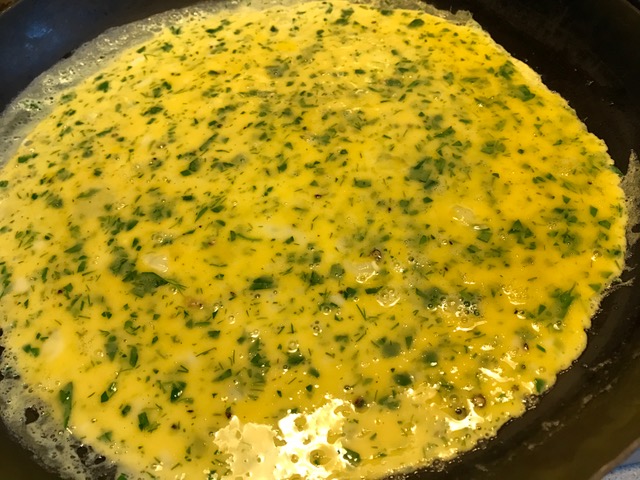
One bite took me back to my mother’s kitchen. This time, instead of being disappointed, her scrambled eggs made much more sense to me. They weren’t really scrambled eggs after all, but rather, her version of an omelette. With herbs and cheese, this one was more interesting than her plain one but they were definitely related.
Admittedly, I’m still more partial to fluffier filled omelettes, even if I don’t know how to keep them whole, but David’s omelette makes a pretty great lunch. I liked it enough to make it two days in a row. One day I used the last of some dill plus some parsley matched with Manchego cheese, and the next with cilantro and cheddar. I didn’t bother to warm the plate, as suggested, but should have because the plate (like my house) is on the cold side, so the egg cooled down as I ate it.
The only step that didn’t make sense to me was to position the cheese down the middle of the eggs in the pan, which meant there was cheese in the fold, but nowhere else. Maybe I read the recipe wrong. In the future, I’ll either sprinkle it all over the eggs or fold the eggs in thirds.

These eggs have earned a place in my lunch rotation, and maybe even breakfast too.
To read about other bloggers’ omelettes, check out their links here. You can find the recipe on page xxx of David Lebovitz’s My Paris Kitchen or online here.
 A Plateful of Happiness