Category Archives: General
Pasta e Fagioli
 Last weekend, Howard read about winter farmers’ markets in the area. For six weeks, from January 17 through February 27, on Saturdays from 10 a.m. to 1 p.m., Russell’s Garden Center in Wayland is hosting a Winter Farmers’ Market. Yesterday, we went to check it out. It was fabulous. There were several vendors offering fresh vegetables. Given that it is January, that means salad greens, bitter greens, and stored root vegetables. There were other vendors selling cheese, meat, eggs, honey, bread and other local products like root beer, granola, and preserves. There were at least 15 different vendors. They were scattered throughout the greenhouses, so it was hard to count. The place was crowded with enthusiastic customers. It was exciting to discover this winter shopping option. We’ll be back!
With the refrigerator was empty of leftovers, so I decided to make a hearty soup for lunches during the upcoming week. I still had some not-so-good ribs from earlier in the week, so, initially, I planned to make a soup that would invite the addition of the leftover rib meat. I settled on a pasta e fagioli, where the meat would stand in for the chicken and ham. In the end, we finished the ribs for lunch yesterday, so I ended up with a vegetarian soup instead.
Pasta e Fagioli (Bean and Pasta Soup)
Serves 8 – 10
(Adapted from Italian Classics in One Pot by Anna Teresa Callen)
1 lb dried beans (an assortment of red and white beans)
3 qts. water
¾ tsp dried thyme
½ tsp dried sage
2 bay leaves
¼ tsp black pepper
1 (28 oz) can whole tomatoes, coarsely chopped, juice reserved
2 onions, chopped
2 carrots, chopped
3 stalks celery, chopped
2 cloves garlic, minced
1 tsp salt
¾ cup pastina (small soup pasta)
Generous handful of Italian parsley, chopped
The beans need to be soaked before starting the soup. You have two choices:
- Soak the beans overnight (at least 8 hours). I prefer to use boiling, rather than room temperature, water for soaking.
- Place the beans in a large pot. Cover with water by a few inches. Bring the water to a boil. Turn the heat down, and simmer for 1 hour. The beans will not be cooked, they will be “quick-soaked”.
Drain and rinse the soaked beans.
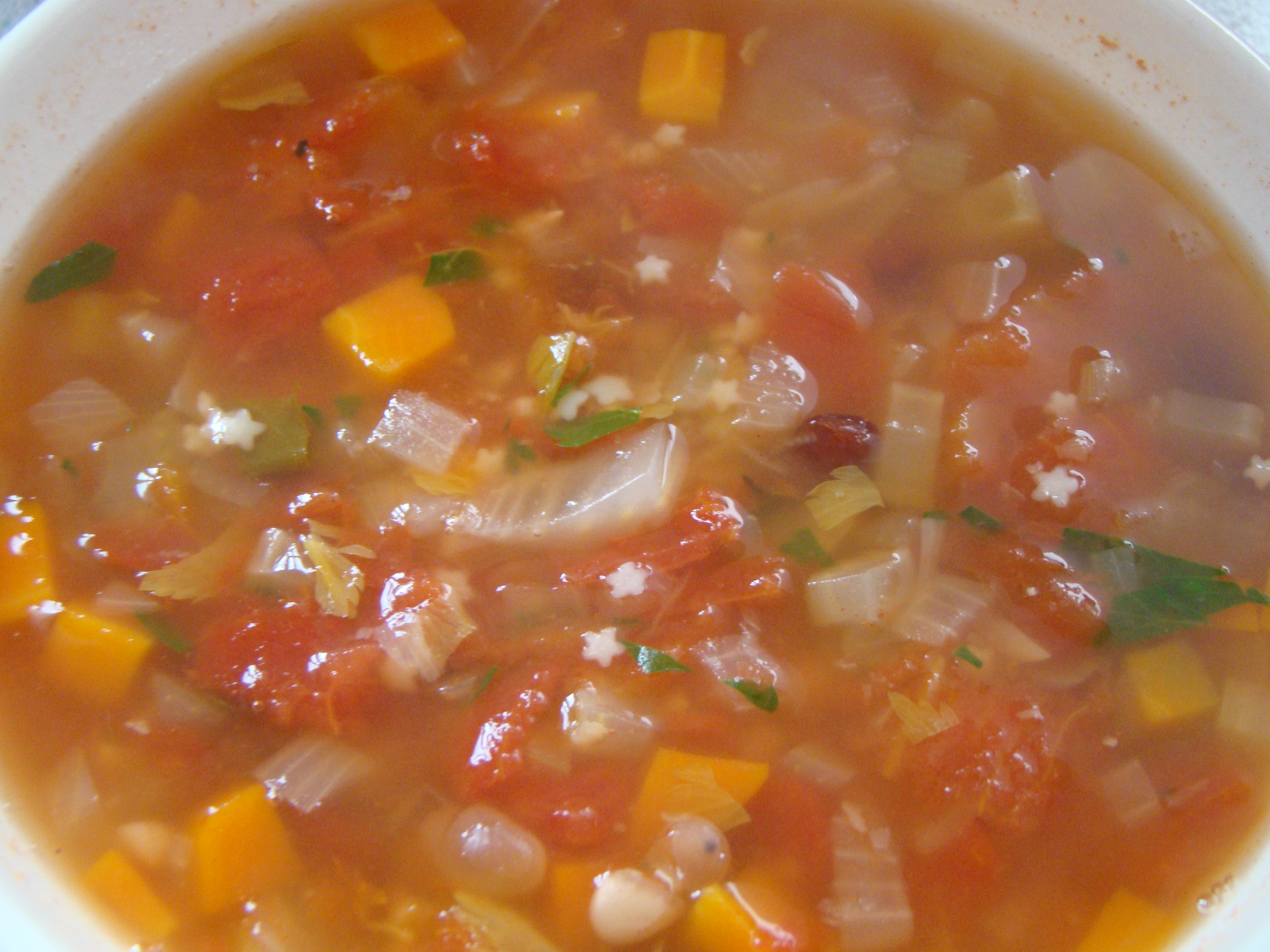 Place the soaked beans in a large soup pot. Add 3 quarts of water, thyme, sage, bay leaves, and pepper. Bring to a boil over high heat. Reduce the heat to medium-low, cover, and simmer until the beans are softened, but not completely tender, about 45 minutes to 1 hour.
Add the tomatoes, onions, carrots, celery and garlic. Simmer until the beans are tender, another 30 to 45 minutes.
Turn up the heat to medium, add the pasta, and cook until tender, about 8 minutes.
Discard the bay leaves, and stir in the parsley.
Food for Thought
 I just finished an eye-opening book that turned everything I thought I knew about eating seafood upside down. The book is called Bottomfeeder: How to Eat Ethically in a World of Vanishing Seafood by Taras Grescoe. It caught my eye at the library, perhaps because I saw it shortly after I heard a related interview on NPR’s Fresh Air with Daniel Pauly from the University of British Columbia’s Fisheries Centre. That led me to look up his article in The New Republic, “Aquacalypse Now”, which started me off thinking about fish.
This book joins the list of books I’ve read over the past several years that make me both thoughtful and anxious about all the things I eat. Now, I’ve added fish to the list. If you spend time thinking about what you eat as I do, I highly recommend this book.
In some ways, I found the information discouraging. After all that I’ve read about meat animals raised on an industrial scale, I assumed fish and other seafood were a better ethical choice. I already knew there were issues with farmed Atlantic salmon and do try to avoid that. However, I had no idea about the issues behind farm-raised shrimp from Asia, maguro tuna (bluefin), and other seafood.
On the positive side, the author hasn’t given up eating fish and seafood himself. He offers information on the more responsible choices and where to find further information.
 Since finishing the book, Howard and I went out for sushi once, armed with the Sustainable Sushi and Northeast Region pocket guides from the Monterey Bay Aquarium’s Seafood Watch. We managed to craft a meal from the “good choices” columns. I don’t know if we chose 100% sustainably, but we did avoid everything on the really bad list – tuna, salmon, and yellowtail (former favorites). It was definitely challenging.
This weekend, we went to our house in Maine. This is the season for Maine shrimp, a sustainable option, so we got some to cook for dinner. In past years, the season was a mere six weeks, from December 1 through mid-January, but both last year and again this year, the season has been extended until May 1 due to an abundance of shrimp.
I made a variation on a favorite recipe for BBQ shrimp from a New Orleans cooking class Howard took before we were married. Despite the name, the shrimp is actually prepared on the stovetop, not the grill. The original recipe calls for large shrimp in the shell. After cooking the shrimp in the buttery sauce, you peel and eat, licking your fingers as you go, and finally sopping up the extra sauce with French bread.
Maine shrimp are small and sweet and very pink. These came without the shell, which makes cooking them very easy, but not quite right for finger food. So, I prepared the shrimp in the same sauce and served it over steamed rice. It was less fun to eat, but just as tasty.
New Orleans BBQ Shrimp
Serves 2-4, depending on appetites
½ stick (4 Tbsp) butter
½ tsp black pepper
¼ tsp red pepper flakes
¼ tsp white pepper
½ tsp paprika
1 lb shrimp
Juice from 2 lemons
2 Tbsp Worcestershire sauce
1 dash Tabasco
2 cloves garlic, minced
Salt to taste
½ bunch scallions, sliced thin
Melt the butter in a skillet. Stir in the black, red, and white peppers and the paprika. Add shrimp, and cook, stirring, until most of the shrimp is opaque. Add lemon juice, Worcestershire, and Tabasco. Stir again. Add garlic. Season with salt to taste. Stir in scallions, and serve over steamed rice.
 A Plateful of Happiness