Category Archives: Eggs
coddled eggs with foie gras {ffwd}

According to the dictionary, coddle means “to treat in an indulgent or overprotective way”. So, you might wonder, what does coddling have to do with eggs? If you intend to prepare the egg with foie gras, as we were challenged to do for French Fridays with Dorie this week, that’s certainly one way of being indulgent. However, I would argue foie gras counts as indulgent treatment for you, the eater, not for the egg itself.
I suppose we need to examine the second definition for coddle which is “to cook an egg in water below the boiling point”. That makes much more sense. This week’s recipe has you place pieces of foie gras mousse on the bottom of a ramekin, break an egg on top, spoon cream over the white, sprinkle with chopped tarragon and parsley, and steam it all over simmering water (i.e. coddle the egg).

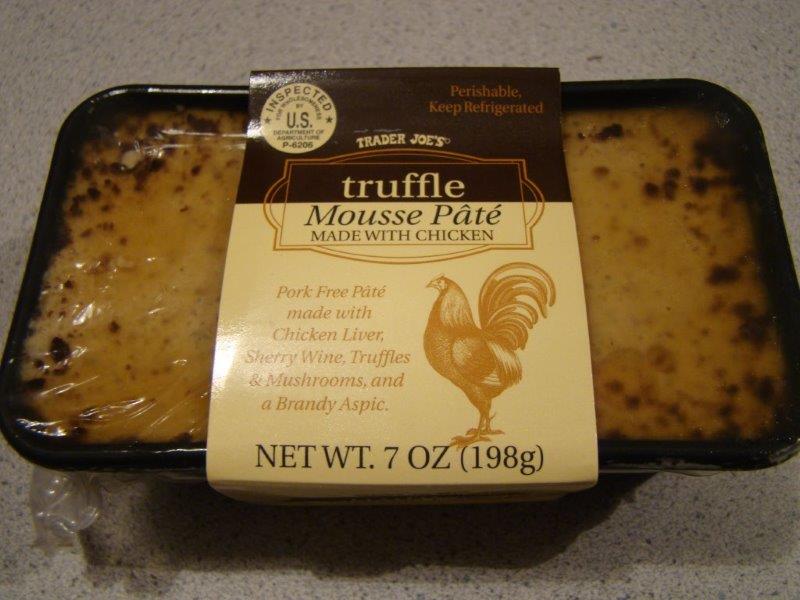
OK, I’ll admit that I didn’t find foie gras mousse. I’ll also admit that I didn’t look that hard. My first stop was Trader Joe’s. I didn’t expect to find foie gras there, however, on my way to the cheese case, I spied some chicken liver mousse with truffles. It was only $5 for 7 oz. My pragmatic side told me that this was a fine substitute for the probably more elusive and certainly more expensive foie gras. I put it in the basket and never looked back.
Howard also scored a dozen freshly-laid eggs. There’s a tiny farm stand on his way to work, on the property of the former governor’s mansion. It’s one of our favorite sources for fresh eggs. Perfect for this dish (and any other).

Back to coddling… I’ve scrambled eggs, fried them, boiled them, poached them, and baked them. I had NEVER coddled them. I vaguely remember my grandmother having a beautiful set of porcelain egg coddlers with Victorian flowers painted on them, but she never prepared coddled eggs for me. I’m excited to discover this new preparation for eggs (with or without the pâté). It’s more elegant than poached, but less kitchen-warming than baked eggs on a hot day. I’ll definitely experiment with this technique again.
This recipe is in the Starter chapter of Dorie Greenspan’s book Around My French Table, but I chose to serve this as the main event for dinner. An arugula and tomato salad and a piece of toast rounded out the plate. Howard and I both enjoyed the fancy eggs. Bella wanted some, but we didn’t succumb to her begging.

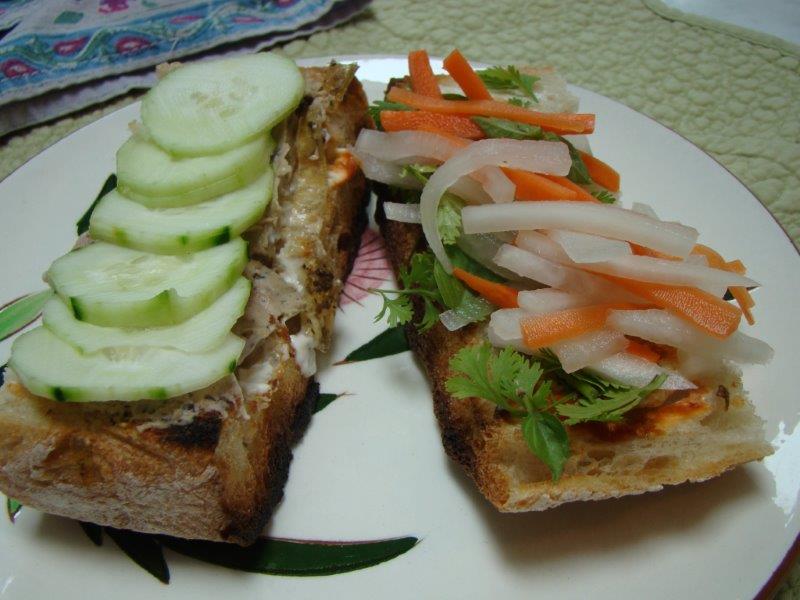
The eggs only used half of the pâté. Even at a reasonable price, I didn’t want the leftovers to go to waste. No problem. I’ve recently fallen in love with the Vietnamese sandwiches, banh mi. The protein can be flexible to work with what you have around, like chicken or sliced steak, but my favorite is liver, typically leftover chopped liver. I’ll tell you my sandwich with the chicken liver mousse was outstanding.
To make your own, cut a roll in half and spread both halves with mayonnaise and sriracha. Place the protein on one half and top with sliced cucumber and springs of cilantro and basil (Thai basil is best). On the other half, spoon some pickled carrot and daikon and maybe some sliced jalapenos if you want more heat (these candied jalapenos are amazing). Put the two halves together, slice, and enjoy!
If you want to make these eggs, you can find the recipe on-line here or in Dorie Greenspan’s book Around My French Table. To check out my Dorista friends’ eggs, follow the links to their posts here.
I’m really excited to be hanging out in New York City this weekend with some of my Dorista friends: Cher of The Not So Exciting Adventures of a Dabbler, Kathy of Bakeaway with Me, and Diane of Simple Living and Eating. Stay tuned for photos and stories of our adventures! Happy Weekend!
ffwd: coupetade

This week’s recipe for French Fridays with Dorie is a dried-fruit-studded French toast bread pudding called coupetade. On many fronts, there was no way that Howard was going to try this one, so I didn’t even consider trying to adapt it to his tastes. The only concession I made was to halve the recipe.
I’m indifferent to French toast, but I adore bread pudding. This was a new take on it that I’d never seen. First of all, you don’t just start with stale bread. You first make French toast out of the stale bread. Some sugar is added to the milk and egg for extra caramelization. The best French toast is made with egg bread, like brioche or challah, and that was the recommended base here as well. I didn’t make my own bread, but bought a small loaf from a favorite local bakery. The recipe calls for cooking the French toast in a sea of butter, but after my recent greasy pancake experience, I opted to lightly coat my electric griddle with some butter and cook the French toast as I would for breakfast.
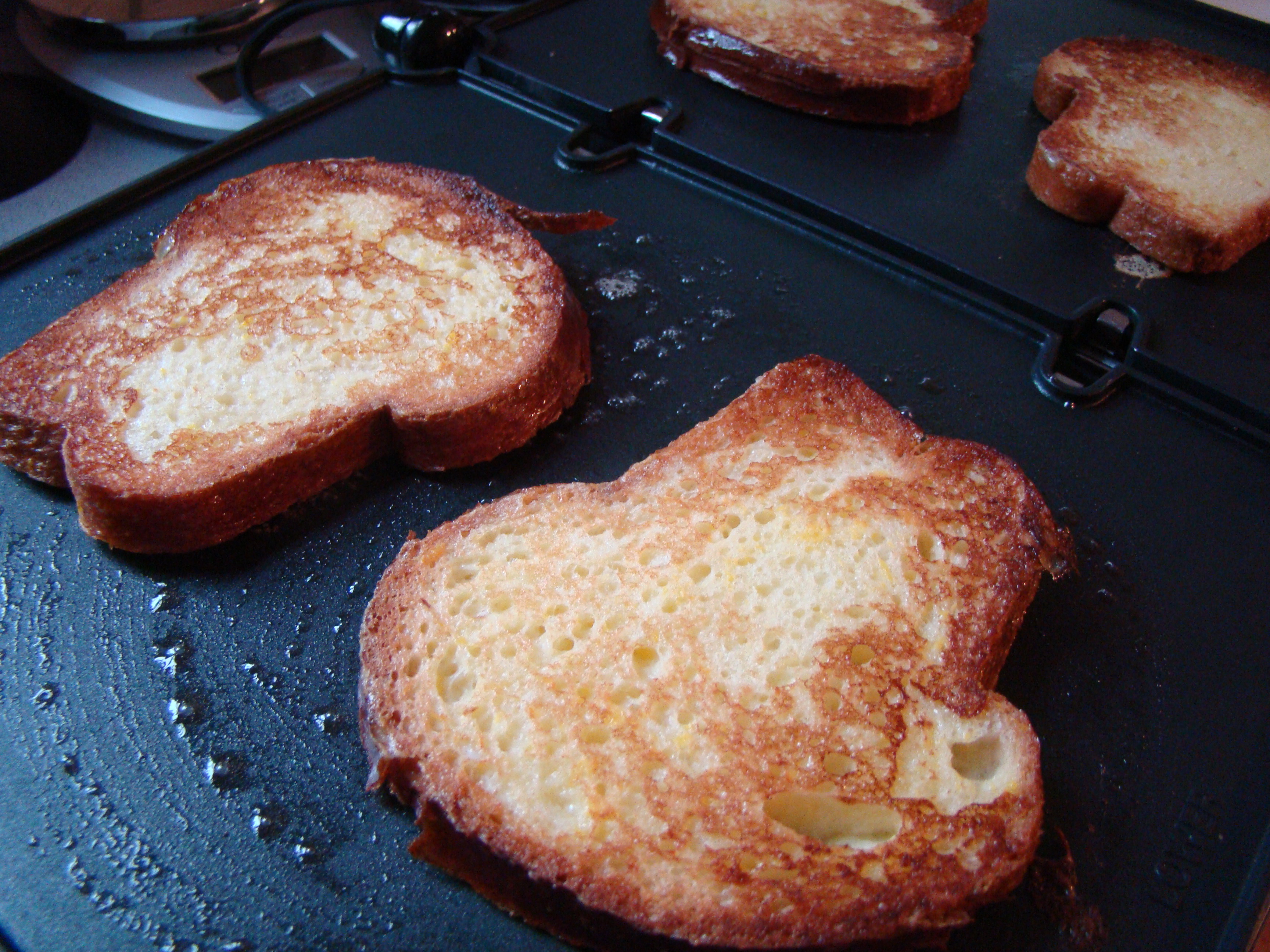
The French toast is cut into smaller pieces and placed in a baking dish and garnished generously with dried fruit. My dried fruit wasn’t as moist or plump as it should have been, so I applied a tip that I’ve picked up over the years from the Dorista crew.
A bit of liquor can only improve things.
While the French toast cooked, I soaked dried apricots and dried cherries is some warm kirsch, both to plump up the fruit and to give the coupetade an extra kick.
A simple custard mixture of eggs, sugar, milk, and vanilla is poured over the bread and fruit and baked in a water bath for an hour.
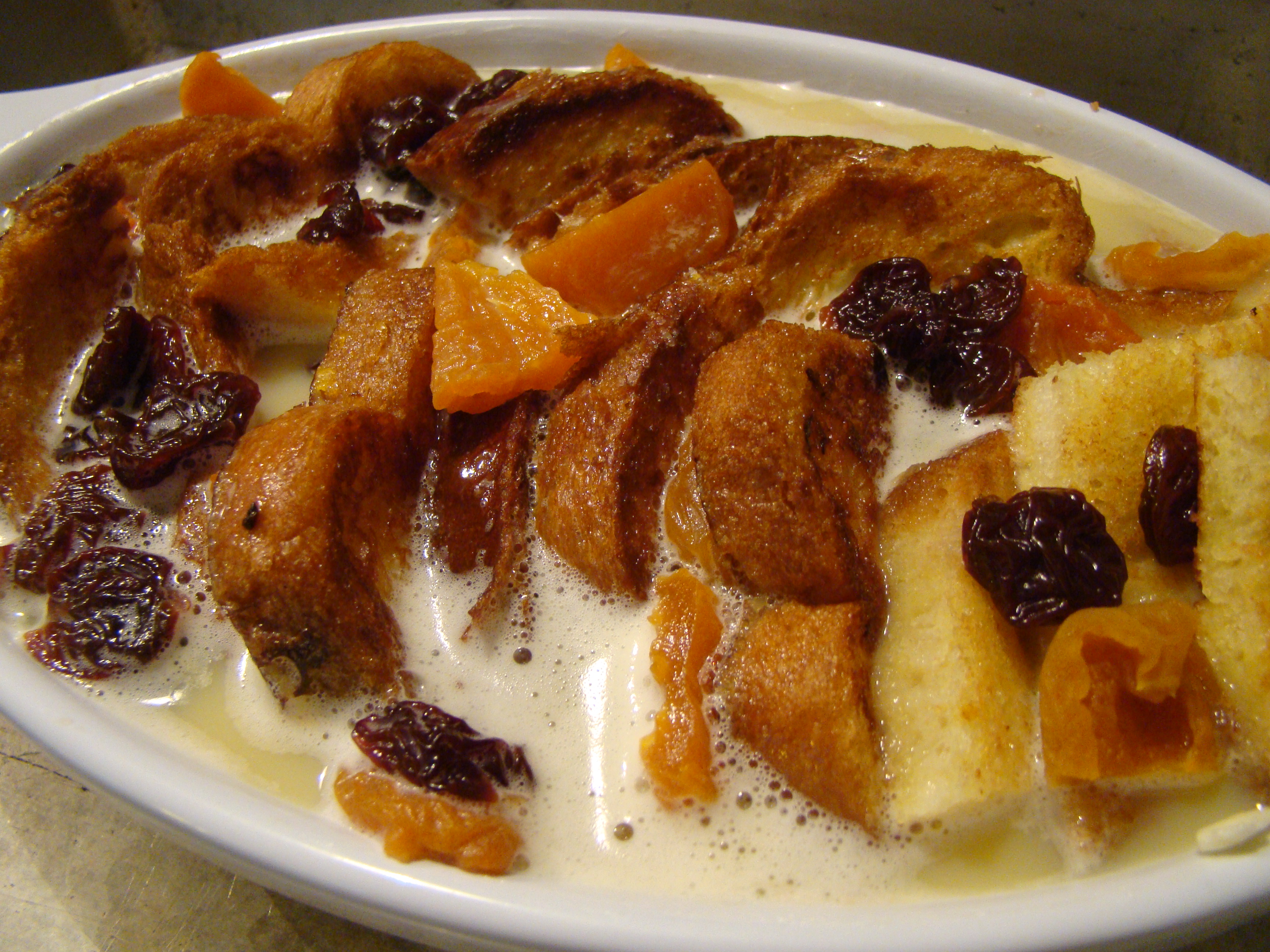
This dish can be served warm or cold. Traditionally, the French eat it cold, but I couldn’t wait and ate it warm.
I really enjoyed this. It is perfect comfort food! The creamy bread and custard contrasted nicely with the slightly tart and chewy fruit bits. You could use prunes, raisin, or dried cranberries, whatever happens to be on hand. Any non-savory bread would work too (I can’t quite imagine seeds in this one.) Even though I might be eating alone, I would definitely make this one again.
My sister Jane AND her family are huge bread pudding fans, so, Jane, make this one! You’ll love it.
We don’t post the recipes, but you can find it in Dorie Greenspan’s book Around My French Table. To read about other interpretations of coupetade, check out the other French Fridays with Dorie bloggers’ posts here.
 A Plateful of Happiness