Category Archives: Cottage Cooking Club
Cottage Cooking Club: March

The Cottage Cooking Club is halfway through their journey of cooking through Hugh Fearnley-Whittingstall’s cookbook, River Cottage Veg. To mark the milestone, our fearless leader Andrea of The Kitchen Lioness declared March a makeup month. As a farewell to winter and storage vegetables, I chose a couple of recipes that looked very appealing when my colleagues made them during the cool-weather months.
First, I made Roasted beet soup with horseradish cream which was in the lineup last month. Beets are one of my favorite vegetable. I never ate them until I was an adult, but once we were introduced, the love affair never stopped. I nearly always roast them, which makes them extra sweet, and I was excited to learn a new trick for roasting beets with this recipe. A few crushed garlic cloves, sprigs of thyme, and a bay leaf are added to the roasting pan and everything is tossed with olive oil and seasoned with salt and pepper before covering the pan to go in the oven. I didn’t expect it to make much of a difference from my usual method (which is to just roast the beets plain), but let me tell you, the house smelled amazing while they cooked.

Once cooked, cooled, and peeled, the soup practically makes itself. Coarsely chopped beets are processed in the blender with just enough stock to get a smooth puree. Then, more stock can be added to get the desired thickness. I left it on the thick side, adding only about half the liquid called for. Howard was very excited that we were starting our meal with “borscht”. Even though he looked up and read me the definition of borscht from Wikipedia, I’m not sure this simple soup fits the definition. Regardless, with very few ingredients, this soup tasted of pure beet. All it needed was a dollop of crème fraîche mixed with horseradish and a sprinkle of dill for a gorgeous starter. We loved it.
I still had a few random root vegetables from my farm shares languishing in the vegetable drawer since fall. With winter officially over, it seemed time to use them up and get ready for greener times. The Oven-roasted roots frittata that the group made back in September was the perfect vehicle. I chopped a daikon radish, a kohlrabi bulb, and some carrots, then added a sliced shallot and roasted them until they caramelized. Before adding the eggs, I added some leftover roasted broccoli. I also steamed and chopped the beet greens from the soup beets and added them to the mix along with thyme and rosemary. Topped with some grated gruyere, the frittata was ready to pop in the oven.

Another success! I frequently make frittatas as a way to use up leftovers, but this recipe used a slightly different technique. I usually start it on the stovetop in a cast-iron skillet and finish it in the oven. Howard thinks the edges get too browned and take away from the dish. Cooking it entirely in the oven, as this recipe does, in a square pan, yielded an easier and more attractive result. This will be my new go-to technique! The only adjustment is added cooking time. Though it appeared the eggs were set, when I cut slices to serve, the middle was still a little runny. We were eating the outer pieces, so it was fine. For next time, I will raise the oven temperature, or it bake it longer, more like 30 minutes.

To see what the other members of the Cottage Cooking Club chose to make this month, check out their links here.
It’s March 28 and snowing outside. I know it won’t stick around long but, please, bring on springtime!!!!!

My backyard this morning (March 28)…
Cottage Cooking Club: February
I know, it’s March, not February. So I’m a little late. I cooked my selections for Cottage Cooking Club in February, but didn’t plan my time well enough to write my recap post until today. For the past seven months, I’ve joined Andrea of The Kitchen Lioness and a bevy of other home cooks to try out recipes from British chef Hugh Fearnley-Whittingstall’s cookbook, River Cottage Veg, under the umbrella of the Cottage Cooking Club.
I tried out three recipes in February, though many of Andrea’s choice of recipes looked tempting. These were all I could fit in.
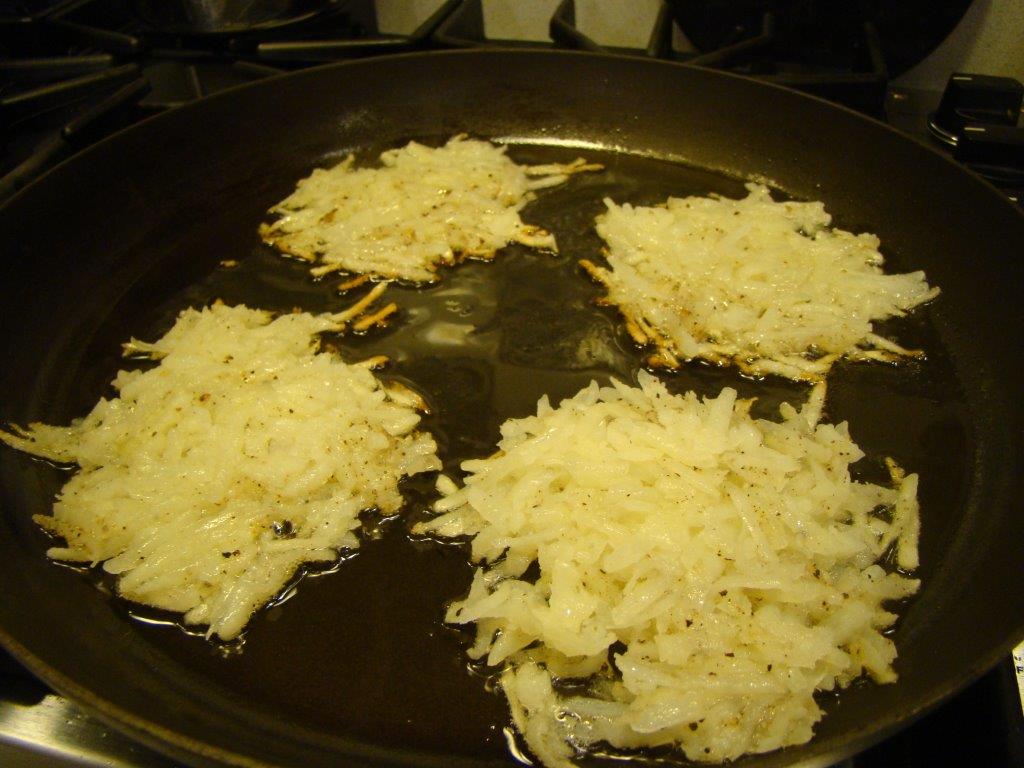
First, I made Potato Rösti, the Swiss version of potato pancakes. I actually made them twice because my first attempt failed. This is really the simplest of recipes with just four ingredients: potatoes, salt, pepper, and the cooking oil. The potatoes are parboiled, cooled, then shredded.
How could I mess this up, you might wonder. Well, I think the instructions are a little misleading. I quartered large baking potatoes. The recipe says that after boiling for 5 minutes, they should be just underdone. After 5 minutes, they were much closer to raw than to done, so I decided to cook them a little longer. At 10 minutes, they fit my description of just underdone. I set them aside to cool. Later, when I tried to grate them, they fell apart in my hand. I ended up turning them into mashed potatoes and calling it a night.
On my second attempt, I drained and cooled the potatoes after they cooked for 5 minutes. I didn’t make a judgment call as to how done or underdone they were. In reality, the residual heat keeps on cooking the potatoes. Once cooled, they are much more cooked than when they come out of the pot, perfectly “just underdone”.
This time, the potatoes grated easily. Shredded potatoes are tossed with salt and pepper. Then, handfuls of the potato mixture are fried in oil to make the laciest and crispiest potato pancakes. We loved them!

Potato Rösti served as a side to our Valentine’s Day lobster dinner
I am more accustomed to the potato latkes I make once a year for Hanukkah which start with raw potatoes and also include eggs and flour to bind them together. I enjoyed the lighter texture and pure potato flavor of the rösti. Like the latkes, these aren’t everyday fare, but rösti is definitely a new side dish I’ll add to my repertoire.
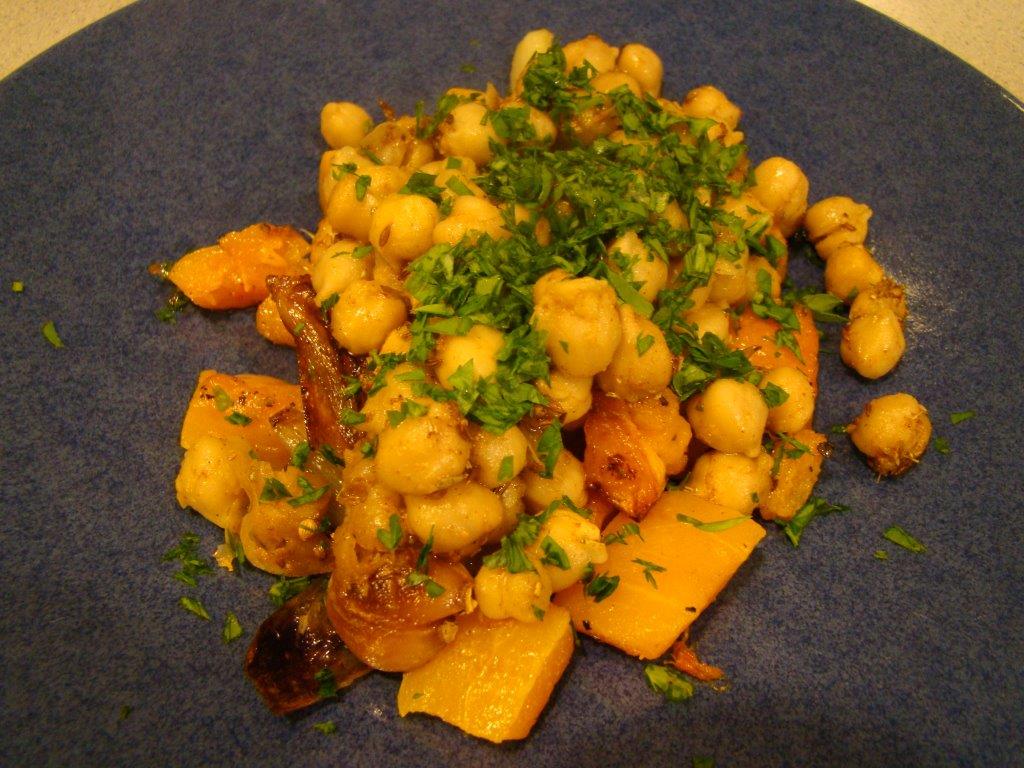
Next up was Roasted Squash and Shallots with Merguez Chickpeas which makes an easy and hearty winter weeknight meal. Merguez is a heavily spiced North African sausage, usually made with lamb. This is a vegetarian cookbook, so sausage wasn’t an ingredient. For this recipe, the spice mixture takes its inspiration from merguez. Coriander, cumin, fennel, and caraway seeds plus peppercorns are toasted in a skillet, then coarsely ground. The spice mixture is warmed rosemary, garlic, smoked paprika, cayenne, and salt in oil. Your house will fill with a wonderful aroma.

Can you smell this toasting?
In the meantime, cubes of butternut squash and halved shallots are roasted until tender. I didn’t have time to cook my own chickpeas, but canned worked out fine. To emulate drained freshly cooked chickpeas, I warmed the canned ones in some boiling water for a minute or two. To finish the dish, warm chickpeas are tossed in the spiced oil, then served over a bed of roasted squash and shallots sprinkled with chopped parsley. This is a winning dish. Both components of the dish (the roasted vegetables and the spiced chickpeas) could be prepared and served independently, making it versatile as well.
This month has been a trip around the world, starting in Switzerland, moving on to North Africa, and ending in Mexico. For the last recipe I tried, I made Magic Bread Dough and formed it into flatbreads for Refried Beans Foldovers. The dough was easy to prepare, though too messy to get a photo because my hands weren’t clean enough to pick up the camera. After stirring water into the dry ingredients, there was still a lot of flour that didn’t incorporate. On faith, I dumped it all onto the counter and started kneading. After a few minutes, all the loose flour disappeared into the dough. Perhaps that’s why this is called Magic bread dough.
My house is really cold right now (55°F during the day) which made me doubt the dough would rise much at room temperature. I took advantage of my oven’s proofing setting which holds the oven at a constant 100°F temperature. I let the dough rise for about 2 hours. It probably could have gone a little longer, but I was impatient. Then, I punched it down and divided the dough into 8 pieces that I rolled out into circles. My circles about 6 inches across, though I wish they had been a little bit bigger. The rolled out dough rests for five minutes and then gets cooked in a dry, very hot skillet to brown both sides. The flatbreads reminded me of pocketless pitas. We weren’t going to eat all the flatbreads at one meal, so I wrapped each one in a dishtowel and let them cool. Once cooled, I stored them (without the dishtowels) in a plastic bag, reheating before using them later.
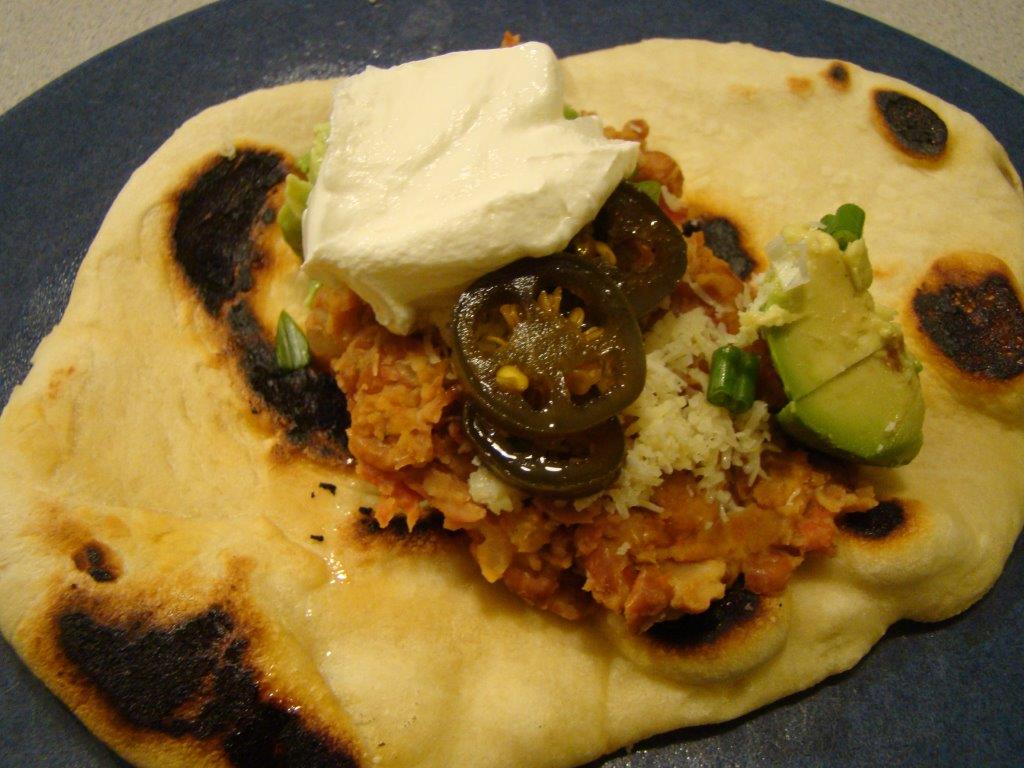
The flatbreads were the base for Refried Bean Foldovers which resemble a cross between a burrito and a pizza. The refried bean filling starts with sautéed onions and garlic. It being the dead of winter, I added canned diced tomatoes with their juices instead of grating fresh ones. Finally, a can of pinto beans is added and mashed for a spreadable consistency. The foldover is assembled by spreading the refried beans on a warm flatbread then topping with sour cream and your choice of extra garnishes. I served with diced avocado, grated Cheddar cheese, diced scallions, and candied jalapenos. Fold and eat! This makes a tasty light dinner and an even better lunch. Now that I’m familiar with the foldover concept, I’m thinking that leftover Roasted Squash and Shallots with Merguez Chickpeas would make a delicious filling too.
You can find the recipes in Hugh Fearnley-Whittingstall’s River Cottage Veg. To get reviews of other recipes the Cottage Cooking Club made in February, check out other posts here. I always find these reviews inspiring and add more recipes to my ever-growing “must cook” list.
 A Plateful of Happiness