Category Archives: Baking
baked apples filled with fruits and nuts {ffwd}

We’ve been on dessert overload at home. There was the Chocolate Chip Cake I made for New Year’s Eve, which lasted through the weekend. Then, there was an apple crisp to help combat the frigid temperatures early in the week. We now have a Meyer Lemon Tart in the refrigerator to celebrate Howard’s birthday.
Because I didn’t plan ahead, there wasn’t really room in the lineup for this week’s recipe for French Fridays with Dorie: baked apples filled with fruits and nuts. On top of that, baked apples isn’t something Howard eats. Fortunately, it was easy enough to make a one apple version just for me.
After the indulgences of past six weeks or so of the holiday season, a baked apple is a relatively virtuous dessert. I think the recipe’s name in French sounds much more special: pommes au four (apples in the oven). And, it was so simple to make.
You core the apple (melon baller works best, thanks, Diane). Then you peel the top half and score the boundary between peeled and not peeled so it doesn’t explode. The filling can be any combination of your favorite dried fruits and nuts bound together with some honey and a dash of warm spice. I used apricots, prune, golden raisins and cherries for fruit, walnuts and pistachios for nuts, and ginger for spice.

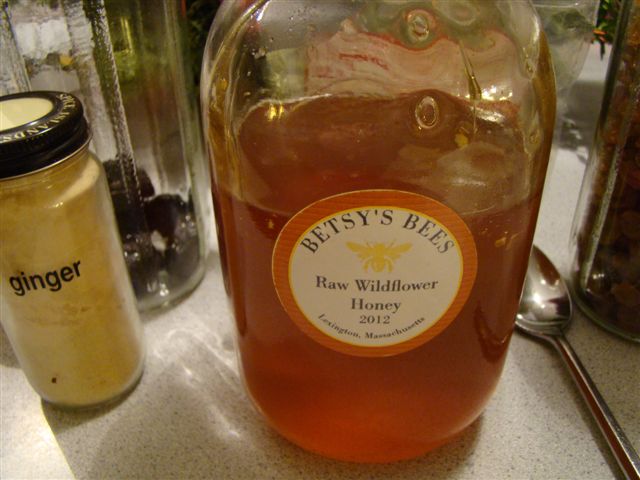
I even used a spoonful of my own honey from the 2012 harvest.
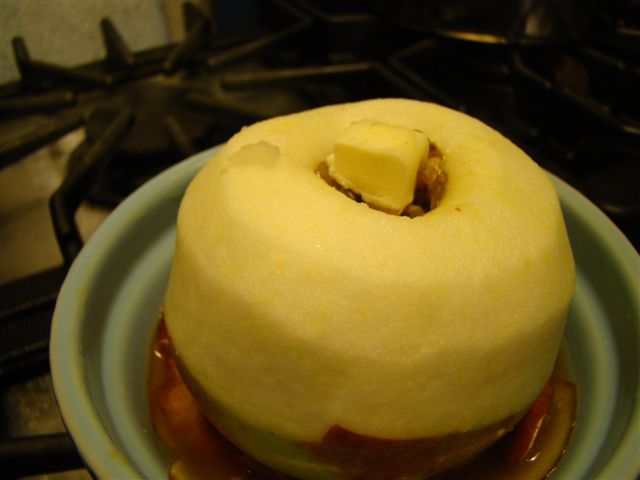
To stuff, a dab of butter goes in the core followed by as much filling as will fit, then another dab of butter on top. The apple bakes in a small amount of apple cider, some more butter, and the apple peelings. This liquid is used to baste the apple while it’s baking.
I ended up eating my lone apple cold for breakfast (see wide array of desserts above) topped with warmed juices. I can’t remember ever making or eating baked apples before, though the taste reminded me of so many apple desserts I’ve had. I liked it, but I’m not sure I’d bother making it just for myself again. So, this might be a one-hit wonder.
I don’t have much else to say today. I hope you are staying warm where you and that the weather is treating you gently. Happy Friday!
You can find the recipe on-line here. As always, the recipe is also in the most-used recipe on my shelf, Dorie Greenspan’s book Around My French Table. To see the combinations my Dorista friends used, check out their links here..
almond-orange tuiles {ffwd}

I’ve been baking cookies for most of my life. For my 13th birthday, I received a copy of the classic Betty Crocker’s Cookie Book and a cookie press and I’ve been at it ever since. (I still have both the book and the cookie press!) I’ve dropped them, rolled them, and made them as bars. I’ve made biscotti, icebox cookies, and would say I’ve tried most of the cookie techniques out there. However, I was surprised at how challenging it was to make the seemingly simple recipe for this week’s French Fridays with Dorie assignment, Almond-Orange Tuiles.
Dorie tells the delightful story of enjoying these cookies in a Parisian bistro and after inquiring about their unusual flavor, being sent home not only with a container of dough but also the recipe to make them herself at home.
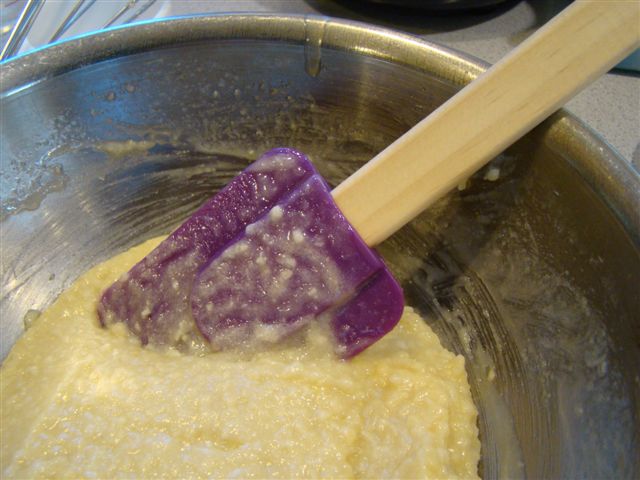
The tuile dough is simple to whip up. The cookie has only five ingredients, and the batter is light enough to mix by hand. You start with finely chopped blanched almonds. I chopped slivered almonds (the only kind I can easily buy that are already blanched) in my mini-chopper, then whisked in sugar and a small amount of flour. Next, the secret ingredient, orange juice, is stirred in, followed by melted butter. The dough needs to rest overnight.
Tuiles are named after the curved Provençal roof tiles they resemble. Shaping the cookies sounds simple enough. You bake the cookies until they are lacy and golden. Then, hot cookies are draped over a rolling pin to give them a perfect curved shape. For me, this was much easier to read on the page than to execute.
I baked a dozen balls in the first batch. The cookies spread and bubbled, and the edges turned golden. It was easy to transfer the first few from the pan to the rolling pin. Even though I was working fast, they were cooling too quickly and stuck to the pan. A few revisits to the oven helped, but none were as easy to transfer as those first 2 or 3.
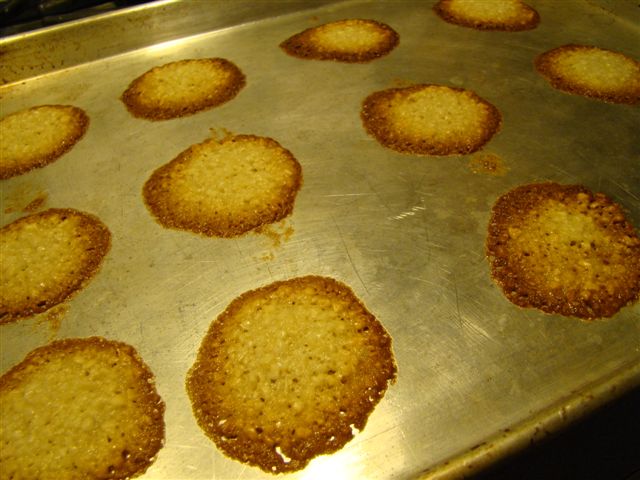
For the next batch, I decided I’d try baking just six at a time. The smaller batch baked much faster than the first and didn’t transfer so well, so for the next six I turned the oven temperature down. Things got worse instead of better. In between batches, I ran cold water over the pans to cool them down and scrubbed the pan to remove the caramelized bits. I even stowed the bowl of dough in the fridge between batches. Even so, each batch seemed to race towards being burnt, in less and less time per batch.

A Rainbow of Browned-ness
I had VERY mixed success with these cookies. I don’t know whether I was overcooking them or undercooking them. All I know is that it was a struggle to remove the cookies from the pan, a key step in the process. After I made these, I saw a photo of what they should look like. These are much more golden than mine, but mine would have burnt before they reached the same even hue.
I did like the curvy shape and also how I could nest the cookies in the tin. However, these cookies were much more trouble than I have patience for. I don’t think I’ll try them again. In the meantime, we’ve been nibbling and enjoying them while they last.
If you are braver than I and want to try, you can find the recipe in Dorie Greenspan’s book Around My French Table. To hear other tuile tales, follow my Dorista friends’ links from here.
One final note, decades after the gift mentioned above, today is my birthday again. It’s one of my favorite days of the year! Many thanks to all of you who’ve already left me good wishes on Facebook. Each one makes me smile and feel so lucky to have friends from all over the world who are fellow food enthusiasts.
 A Plateful of Happiness