Category Archives: Autumn
(faux) osso buco à l’arman {ffwd}

It’s hearty fare on the menu this week for French Fridays with Dorie. We’re down to the last few dozen recipes, so the lineup seems to be the less familiar ones, ones that are a bit off the beaten track. The selected recipe this week is for Osso Buco à l’Arman, Arman being the French artist who gave the recipe to Dorie.
Autumn has always been my favorite season. Even though from nature’s perspective, it represent a period of slowing down, preparing to sleep and restore over the winter, I think of fall as a new beginning, even more so than the New Year’s holiday coming up in January. At this time of year, I reacquaint myself with my love of hearty stews and soups, warming my household from within as the air outside gets crisper. This week’s recipe filled that bill perfectly.
Technically, osso buco is the cut of meat used in this recipe: veal shanks cross-cut into thick pieces. (In Italian, osso buco translates to “bone with a hole”, referencing the marrow bone that runs down the shank.) The modern version of the sauce will include tomatoes and carrots, and the osso buco is served sprinkled with gremolata (a combination of garlic, orange zest, and parsley).
I don’t eat veal, but my research indicated that lamb shanks cut this way would be a reasonable substitute. Before they became trendy, shanks were an inexpensive cut for the frugal cook, requiring the long cooking of braising to tenderize the meat, melt the fat, and soften the collagen in the tendons. Unfortunately, I was unable to locate any lamb shanks or, for that matter, beef. (I didn’t see any veal shanks either.) I opted for lamb shoulder chops, another cheaper cut of meat, but also sporting a “bone with a hole”.
The sauce was straightforward to prepare. First the orange zest gets boiled, then simmered. Then, onions, garlic, and herbs (I used all dried) are sautéed in olive oil before adding tomatoes, both canned and fresh, broth (I used beef), and some of the orange zest cooking water.
While the sauce simmers, the meat is browned. After nestling the lamb in the tomato sauce and adding several strips of the orange zest and the remaining orange zest cooking water, the pot is topped off with sliced carrots before closing the lid and popping the Dutch oven in the oven. Two hours later, dinner was ready.
I wasn’t sure about the purpose of several steps in the recipe. Maybe you can help me out:
- Why do we boil, then simmer, the orange zest? Does it do something to the orange zest, or is it to create the orange-flavored water used for the braise?
- Why canned AND fresh tomatoes? It seemed like the major contribution of the sliced fresh tomatoes was its skin (which wasn’t all that appealing).
- What does the layer of wax paper on top of the stew do?
Osso buco is traditionally served with risotto. Howard helped out and followed my directions for a saffron risotto cooked (in under 10 minutes) in the pressure cooker. (If you’ve never tried making risotto this way, you must. Check out my earlier post on this method.)

This stew was the perfect thing to have bubbling in the oven on a fall Sunday afternoon. The house smelled amazing, and the taste did not disappoint. I found the lamb to work well. The meat was melting off the bone, and the flavors of the sauce complemented lamb just fine. I liked the fresh taste of the gremolata on top of the stew. (Howard, as you might expect, opted to skip that step. The orange rind in the dish was more than enough fruit in his savory meal.)
Another company-worthy recipe that I will make again on a cold winter’s night! To see what the other Doristas thought, check out their links here. If you want to make it yourself, you can find the recipe on-line here, or in Dorie Greenspan’s book Around My French Table.
Happy French Friday and Happy Halloween!
Cottage Cooking Club: October
I felt ambitious this month and chose 3 different recipes to make for Cottage Cooking Club, a cook-along group for Hugh Fearnley-Whittingstall´s “River Cottage Veg”. Started in May 2014 by the talented German blogger, Andrea, of Kitchen Lioness, this group is collectively making all the recipes in this book in one year.
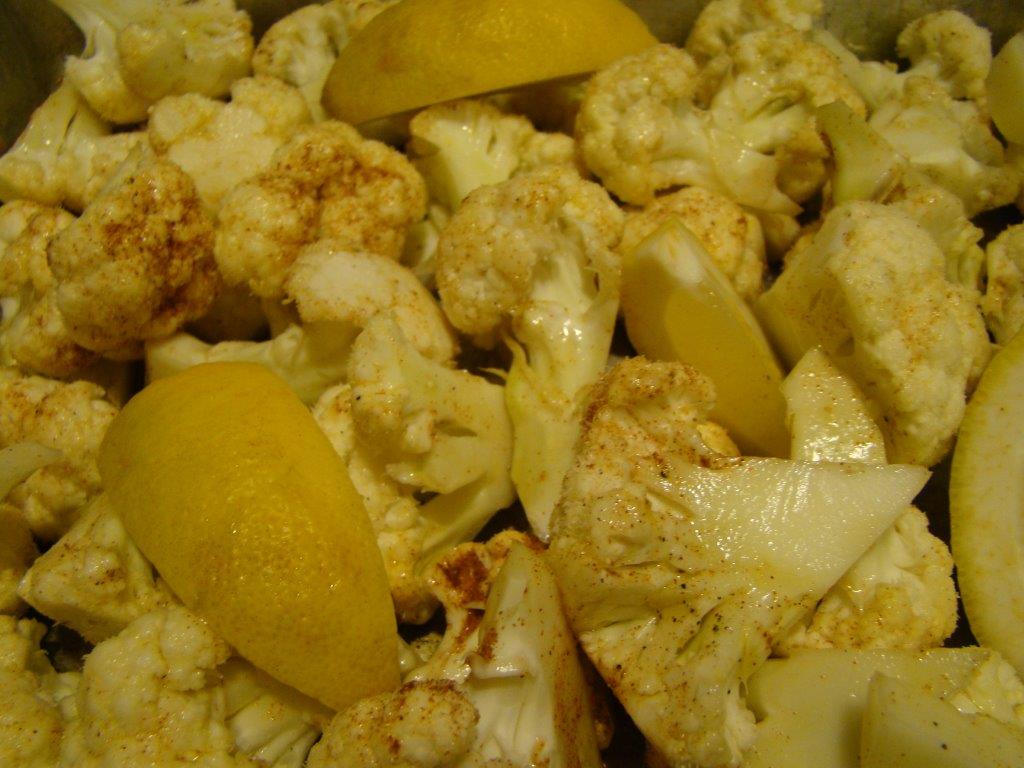
The first recipe I tried was for Roasted Cauliflower with Lemon and Paprika. Cauliflower and broccoli are two vegetables that I’ve only recently started to enjoy. I like them best roasted. I’d never tried this seasoning combination before: roasted lemon wedges and smoked paprika. The flavors were delicious, but I mistakenly chose to roast the cauliflower in a high-sided roasting pan because it came out more steamed than what I expect for roasted. I might try this again, but if I do, I’d use a baking sheet with the hopes the cauliflower would caramelize.
The other two recipes were salads with warm interesting toppings.
One was topped with white beans with artichokes. This comes from the Pantry Suppers chapter. If your pantry is stock with a can of white beans and a jar of marinated artichokes you can whip this up whenever you wish. The beans and artichokes are sautéed together with garlic. This simple combination tops mixed greens for a light lunch.

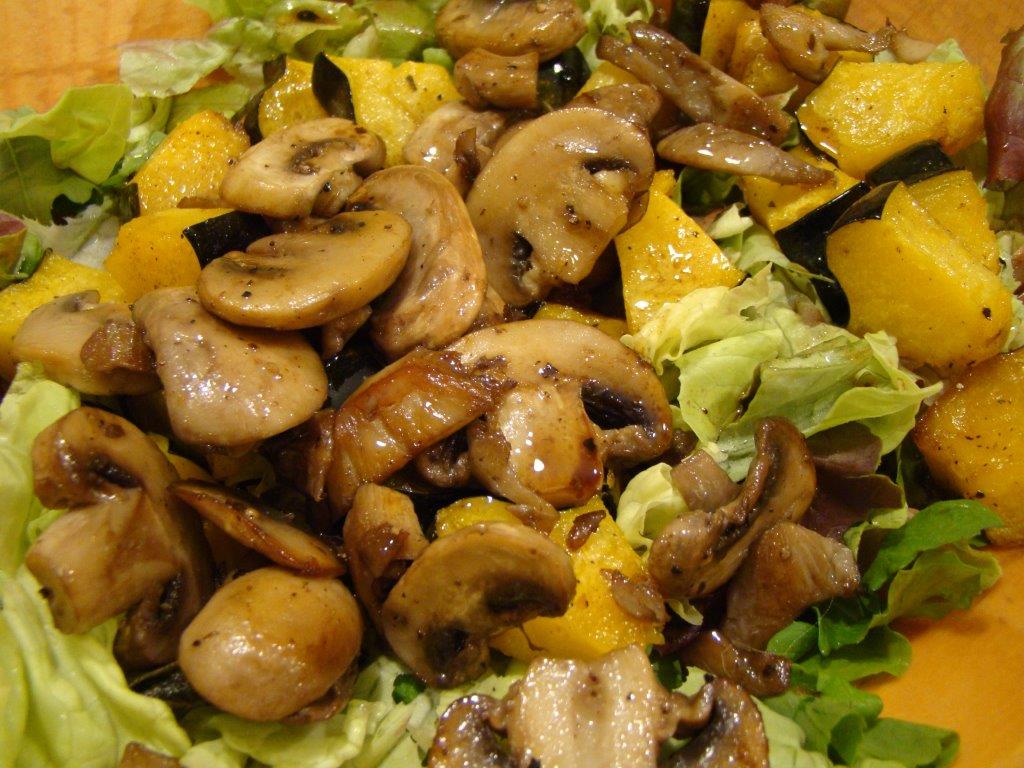
Finally, what’s not to love about roasted squash and sautéed mushrooms on top of salad greens? I think this was my favorite of the three, so it’s pictured at the top of the post. The sweet roasted squash and the earthy mushroom were the perfect pairing. The tangy balsamic vinaigrette tied this hearty salad together. (This recipe called for blue cheese, I skipped it completely.)
After three months cooking along, I have to say that I’m really enjoying this book. The recipes are straightforward and delicious, offering flavor combinations that are sometimes familiar and sometimes new. I also value Andrea’s seasonal selections, allowing me to make the most of the best vegetables around each month. I wonder what November will bring?
If you are interested in reviews of other recipes selected this month, follow participant links here.
 A Plateful of Happiness